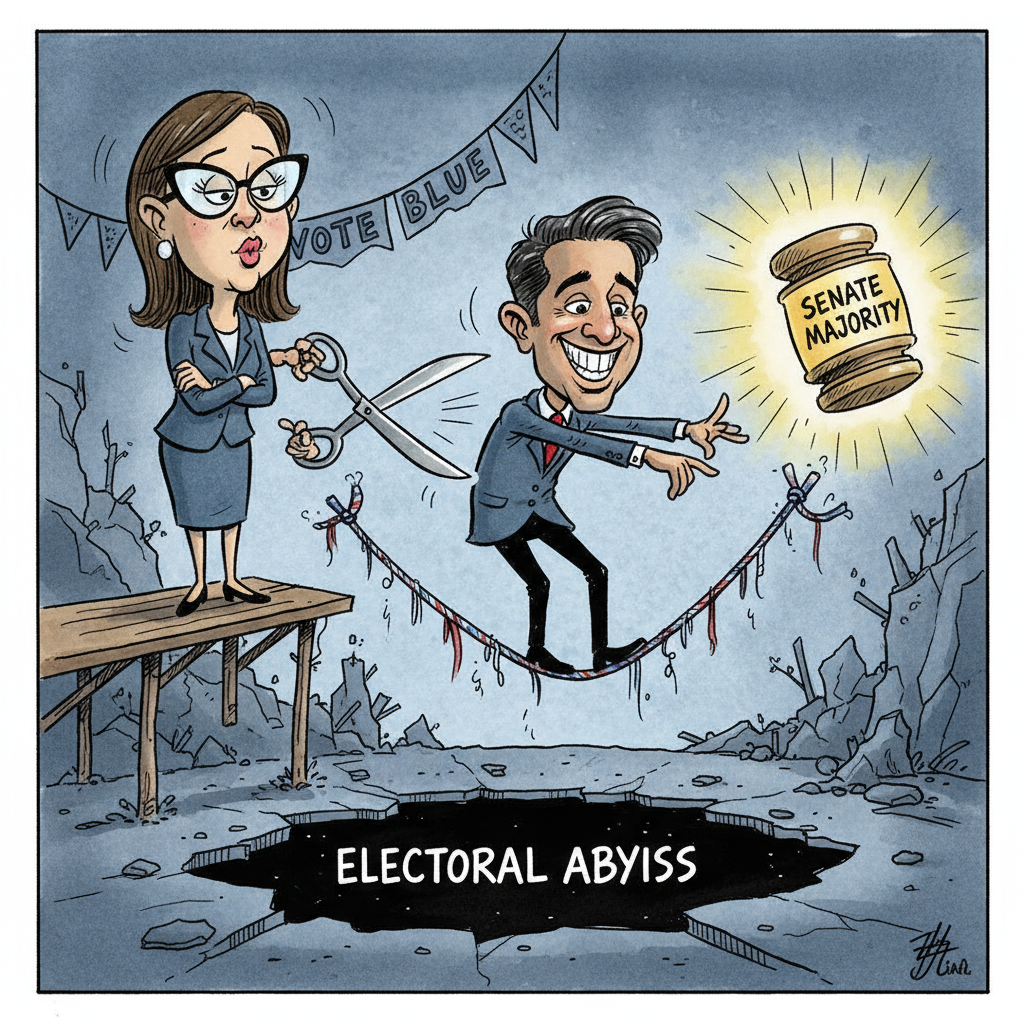
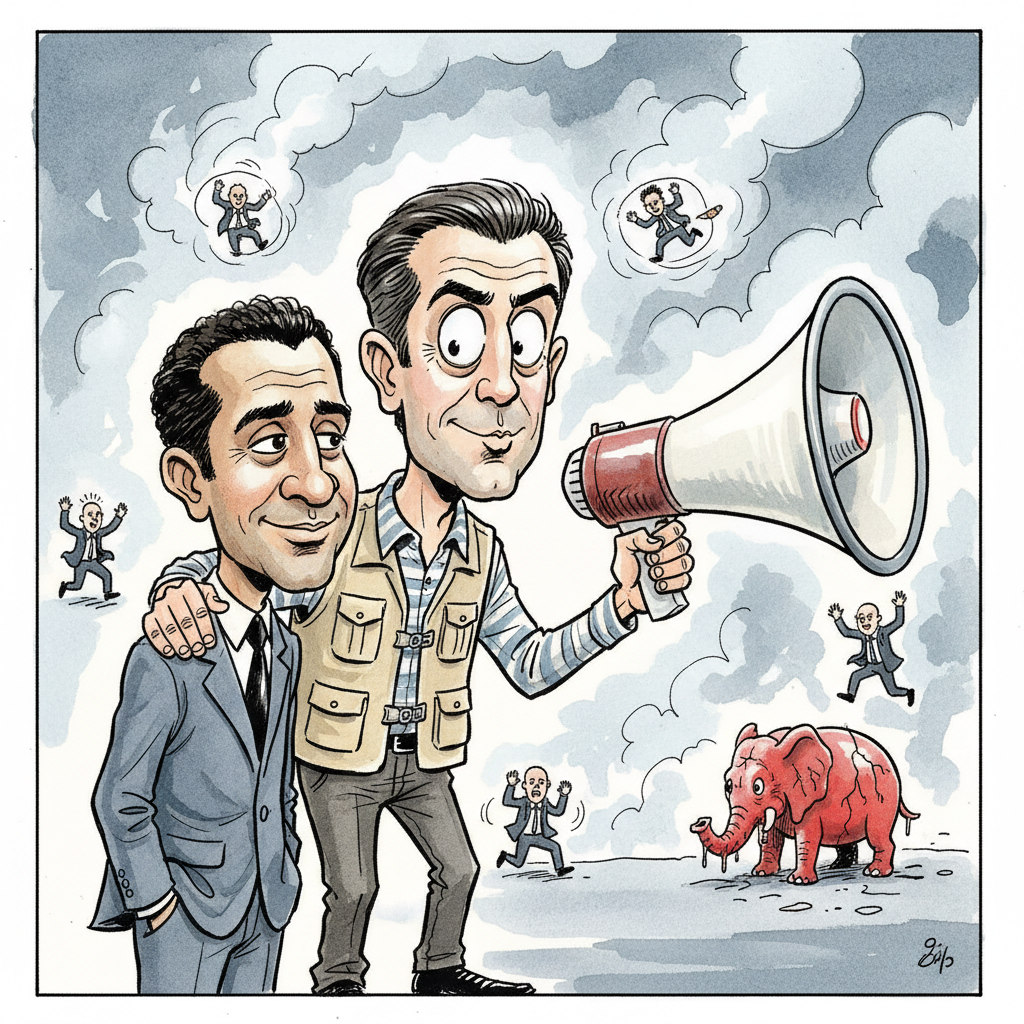
A rigorous audit of the national balance of power revealed Tuesday that the fate of the Republic rests comfortably behind Representative Haley Stevens’ principled refusal to make eye contact with Abdul El-Sayed in a hallway. Stevens, whose enthusiasm for her former primary rival has been officially classified by geological surveyors as sub-zero permafrost, clarified that while defeating authoritarianism remains somewhat intriguing on paper, nursing a six-year-old debate grievance is an inviolable democratic sacrament.
"Unity is a complex journey, and my vehicle is currently parked sideways across two spaces with the hazard lights on," Stevens remarked during a lukewarm press appearance that political analysts likened to a hostage tape filmed inside an abandoned department store. Party strategists reportedly spent four frantic weeks attempting to broker peace, offering Stevens several plum committee gavels if she would publicly state El-Sayed possesses a carbon footprint without visibly grimacing.
El-Sayed, attempting to project unflappable legislative maturity, issued a cordial statement thanking the congresswoman for acknowledging his corporeal form while privately reassuring donors that the fundamental institutions of American governance would easily survive another two months of weaponized midwestern passive-aggression.
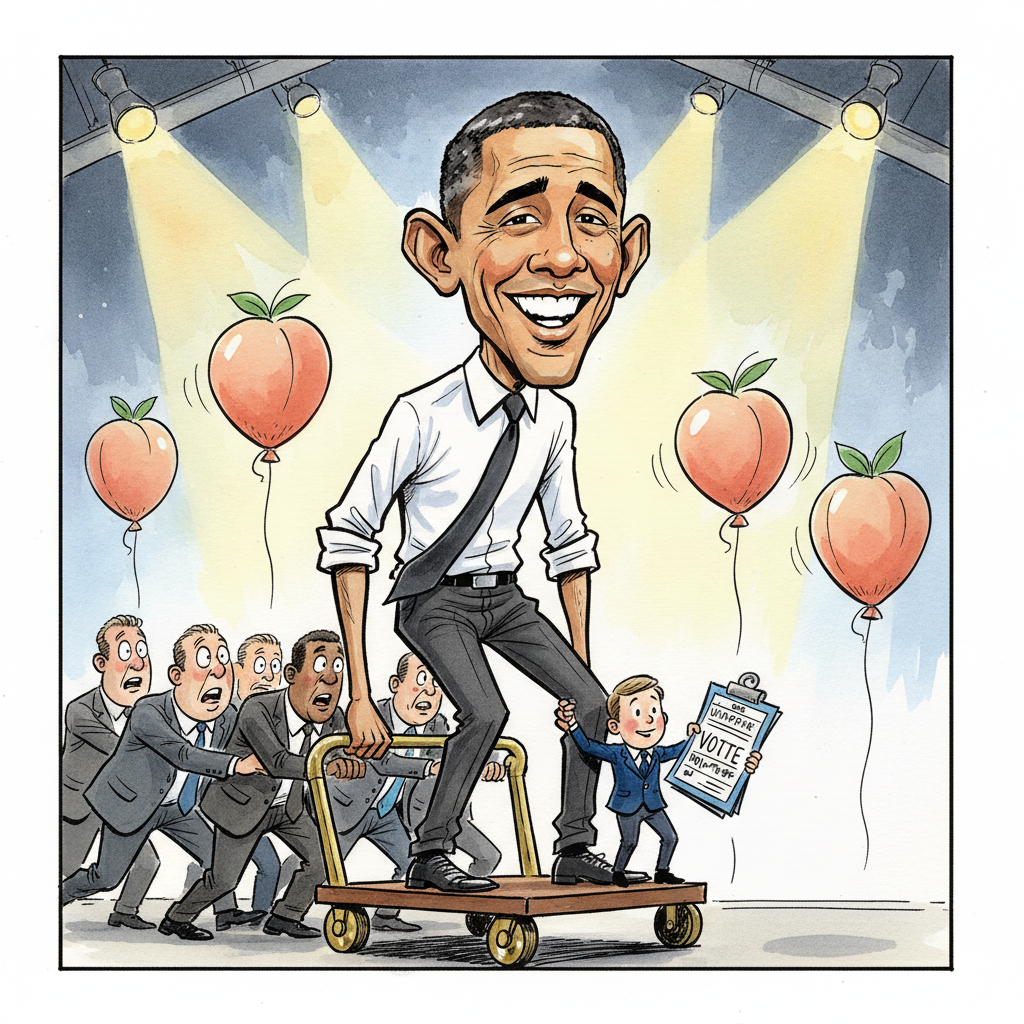
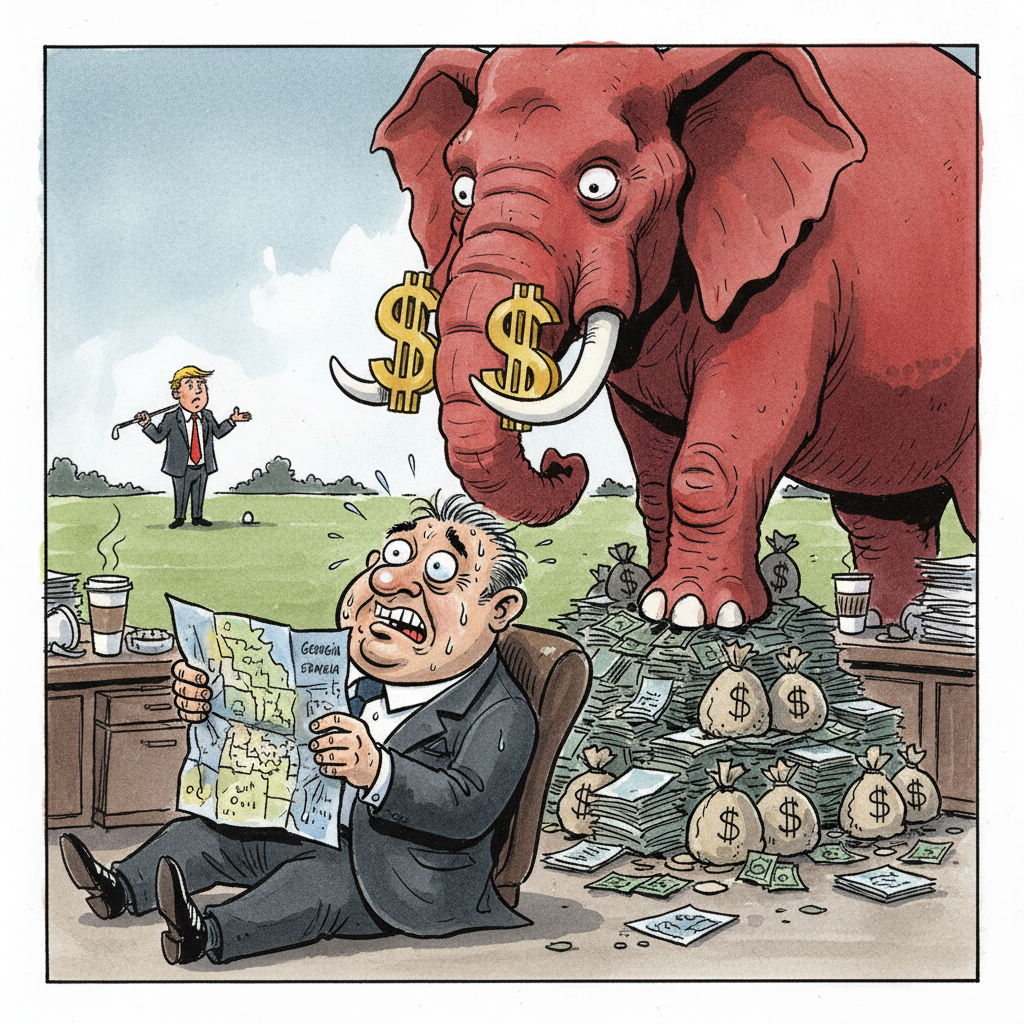
In accordance with standard party operating protocol concerning imminent suburban apathy, Democratic strategists have gently unbolted the nation’s 44th president from his vineyard conservatory and express-shipped him to Atlanta. The tactical airlift aims to backstop Senator Jon Ossoff—whose reelection platform remains identical to a high-school valedictorian’s LinkedIn summary—alongside gubernatorial hopeful Keisha Lance Bottoms, both currently desperate to borrow forty minutes of borrowed gravitas.
Internal memos suggest operatives considered alternative strategies, such as articulating a coherent legislative vision for the working poor, but ultimately settled on their traditional standby: having a 64-year-old billionaire orator deploy precisely metered, four-second pauses to induce mild hypnotic compliance among Fulton County moderates. 'You don’t fight mid-decade political exhaustion with zoning reform,' muttered one weary field director, carefully checking the humidity levels inside Obama’s transport crate. 'You fight it by reminding voters that for eight brief years, a handsome man spoke in complete paragraphs.' By twilight, thousands will assemble to hear him imply that the American experiment hinges entirely on their willingness to remember 2008.
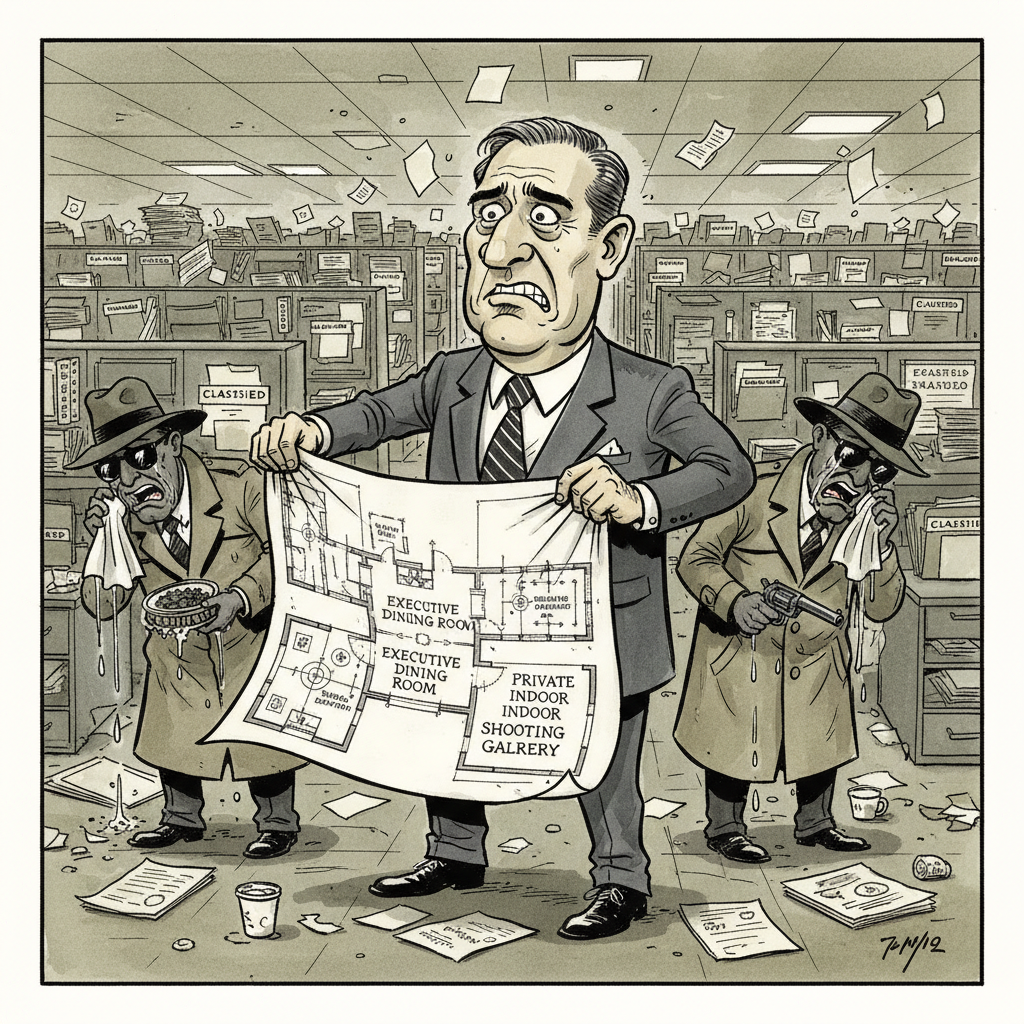
According to internal memos leaked onto the dark web by deeply inconvenienced staff, the federal intelligence apparatus was plunged into structural crisis this week after leadership mandated that analysts monitor foreign adversaries rather than supervise the installation of imported Carrara marble. Director Jay Clayton, evidently operating under the antiquarian delusion that clandestine services exist to safeguard state secrets rather than provide mid-level bureaucrats with bespoke charcuterie, abruptly halted construction on both an executive dining salon and an indoor tactical shooting gallery.
The sweeping austerity campaign included the immediate dismissal of several high-ranking paper-shufflers whose primary clandestine contribution had been curating the agency’s subterranean wine pairings. Operatives accustomed to envisioning their careers as an endless sequence of martini-soaked galas expressed profound betrayal upon discovering their daily duties would instead consist of cross-referencing agricultural satellite imagery in fluorescent-lit basements. Morale plummeted to unprecedented depths across Langley, where covert agents now face the unthinkable indignity of microwaving generic casseroles while overthrowing small nations.
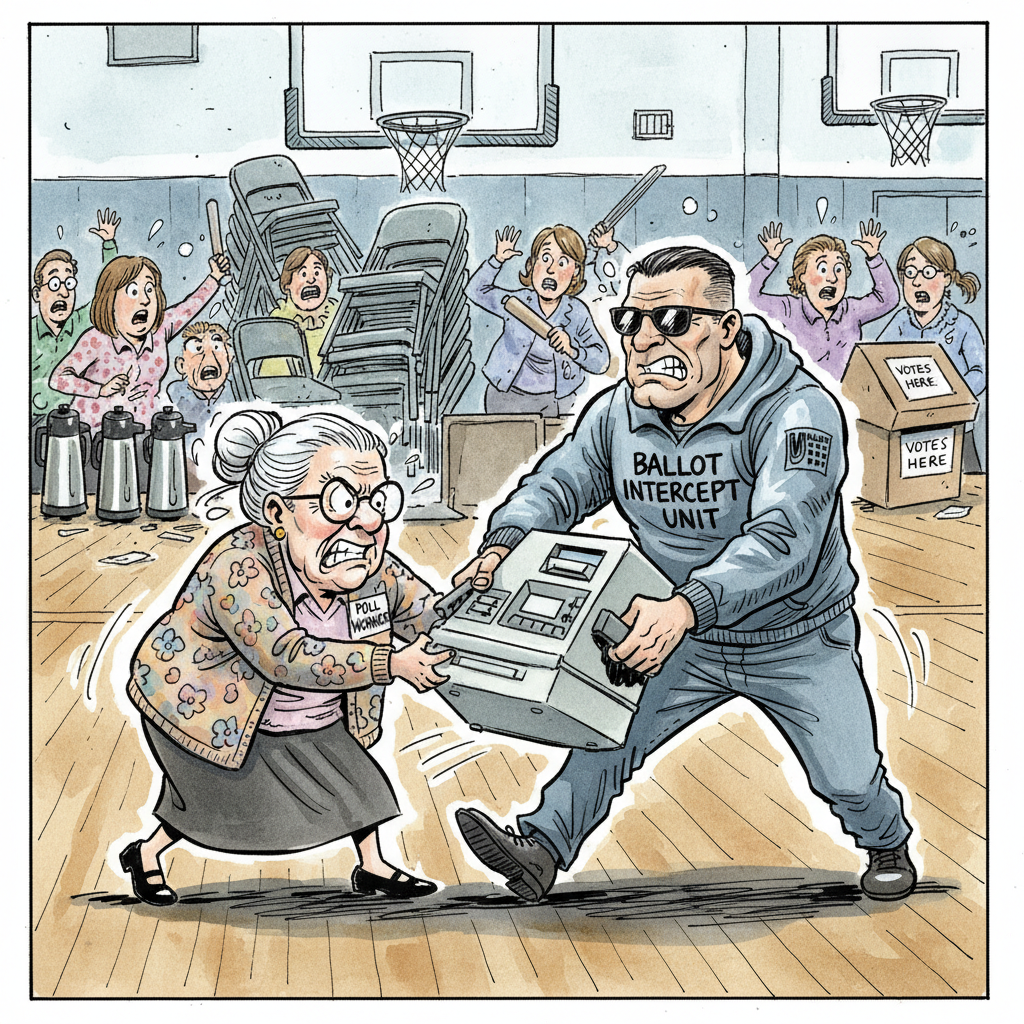
Municipal election boards nationwide have finalized their standard quadrennial readiness protocol, which now includes stocking extra 'I Voted' stickers, lubricating the ballot scanners, and fortifying high school gymnasiums against armed incursions by their own federal government. According to updated training manuals, volunteer poll workers—historically trusted to dispense butterscotch candies and direct confused seniors toward curtained kiosks—are now receiving tactical briefings on how to tackle Department of Homeland Security operatives attempting to confiscate touch-screen terminals mid-tally.
"If an unidentified federal monitor attempts an unsanctioned asset seizure, we instruct volunteers to deploy defensive folding-chair formations while shouting clear, non-partisan boundary statements," explained Maricopa County precinct captain Brenda Hollowell, loading a water gun with lukewarm tap water. The strategy reflects a delicate modern compromise: preserving the sacrosanct, peaceful transfer of power while treating federal agencies like a roving horde of pillagers in windbreakers. Emergency drills conclude with speed-laminating provisional ballots to ensure voter intent survives flashbang deployment.
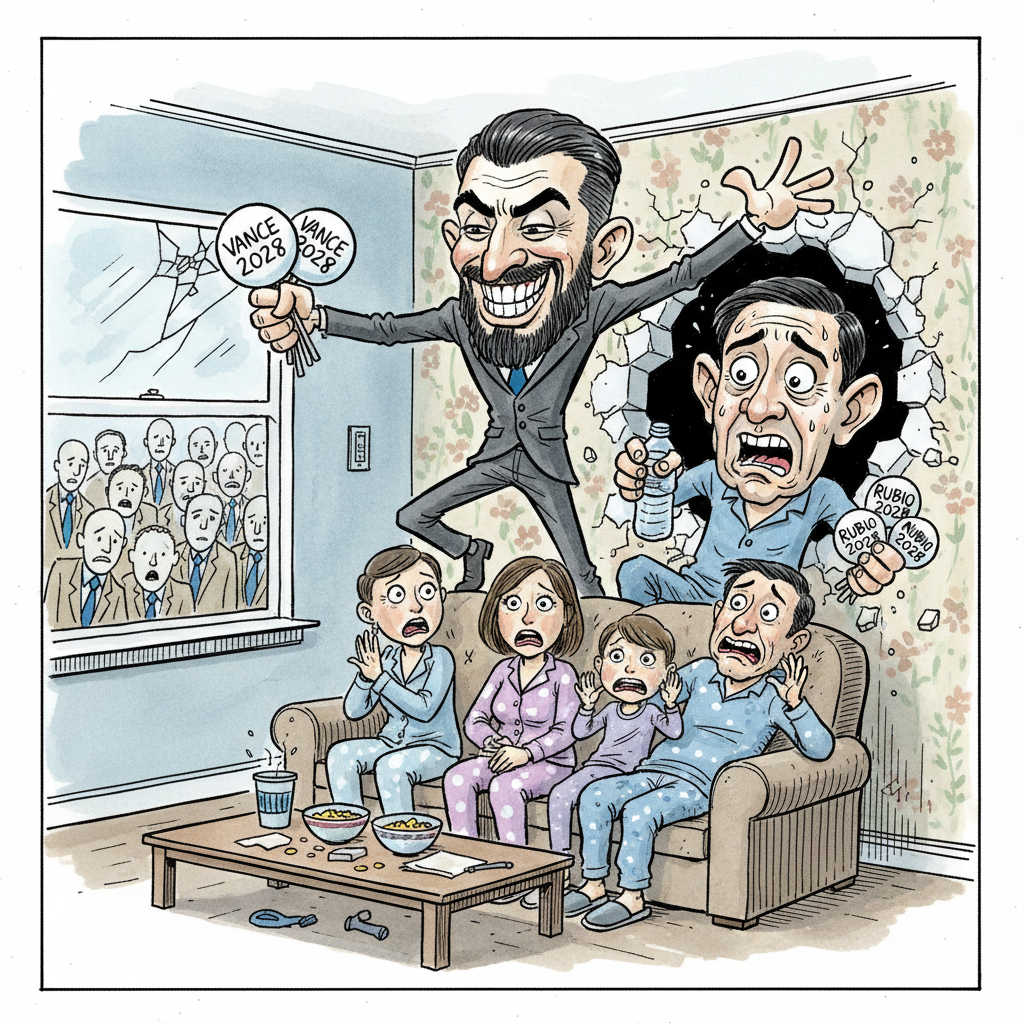
According to a survey conducted by analysts who clearly despise human peace, roughly one hundred percent of Americans are now mandated to contemplate the political future of JD Vance and Marco Rubio, mere moments after surviving the previous electoral meat grinder. The New York Times/Siena College poll confirmed that while the Republican field has crystallized into a polite cage match between an Appalachian-adjacent venture capitalist and a man whose career peaked during a hydration emergency, the Democratic bench remains an amorphous puddle of thirty identical Midwestern governors.
"It is statistically essential to torment the populace before the inaugural confetti has even clogged the municipal gutters," explained lead data masochist Ronald Vane, noting that voters surveyed expressed deep, unprompted enthusiasm for a collision with an unscheduled comet. Focus groups revealed Republican primary voters currently favor Vance for his uncanny ability to stare down a teleprompter with the natural warmth of a foreclosure notice, while Rubio retains loyal support among donors who genuinely miss 2015. Democratic consultants, meanwhile, celebrated their wide-open field as a golden opportunity to audition four dozen technocrats before ultimately rallying behind whichever candidate possesses the charisma of an expired parking meter.
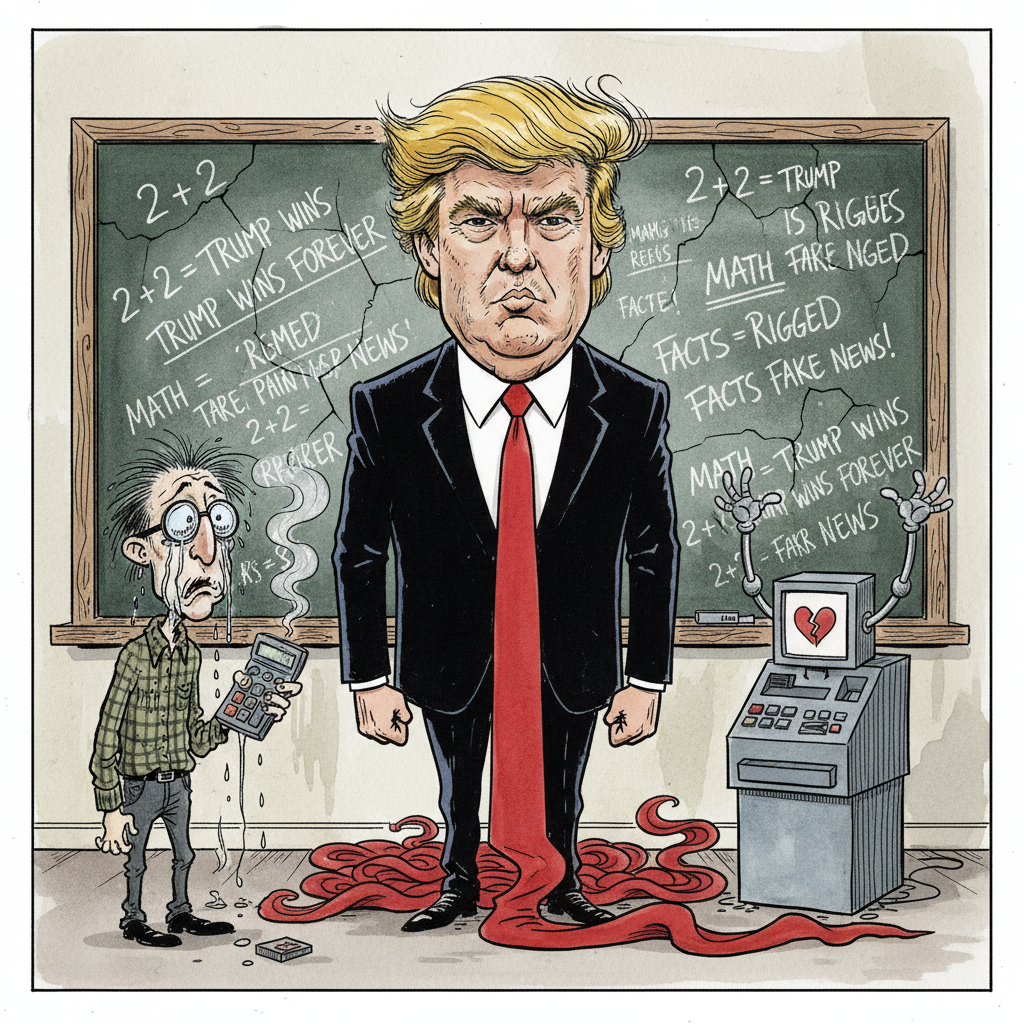
In an audacious revision of Western epistemology, Donald Trump unveiled a groundbreaking theoretical framework yesterday proving that basic addition is a partisan plot engineered specifically to hurt his feelings. Addressing supporters, the candidate argued that ranked-choice voting—a mechanism requiring citizens to comprehend consecutive integers—constitutes psychological warfare waged by foreign satellites and malicious algorithms disguised as ballot paper.
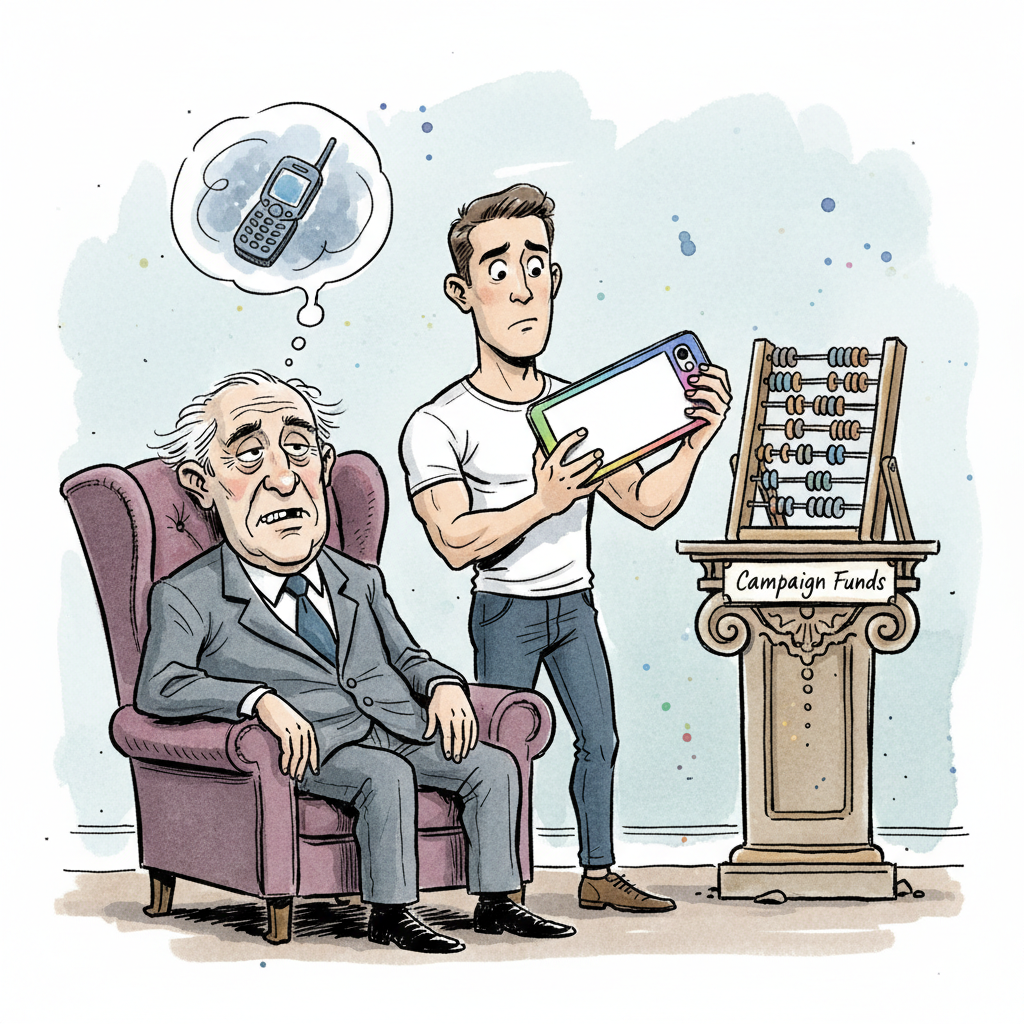
"Under my system, if you add five patriotic votes to ten patriotic votes, you get fifty thousand beautiful votes," Trump explained, flourishing a Sharpie-scrawled napkin that depicted an abacus engulfed in flames. "The crooked counting machines rely on arithmetic, which is completely unconstitutional." Weary statisticians quickly clarified that voting machines do not, in fact, possess sentient Democratic bias, though several conceded that baseline reality continues to tilt against anyone who views long division as a personal insult. Federal regulators subsequently announced that to preempt further litigation, the upcoming tally would be determined strictly by decibel levels and raw intestinal confidence.
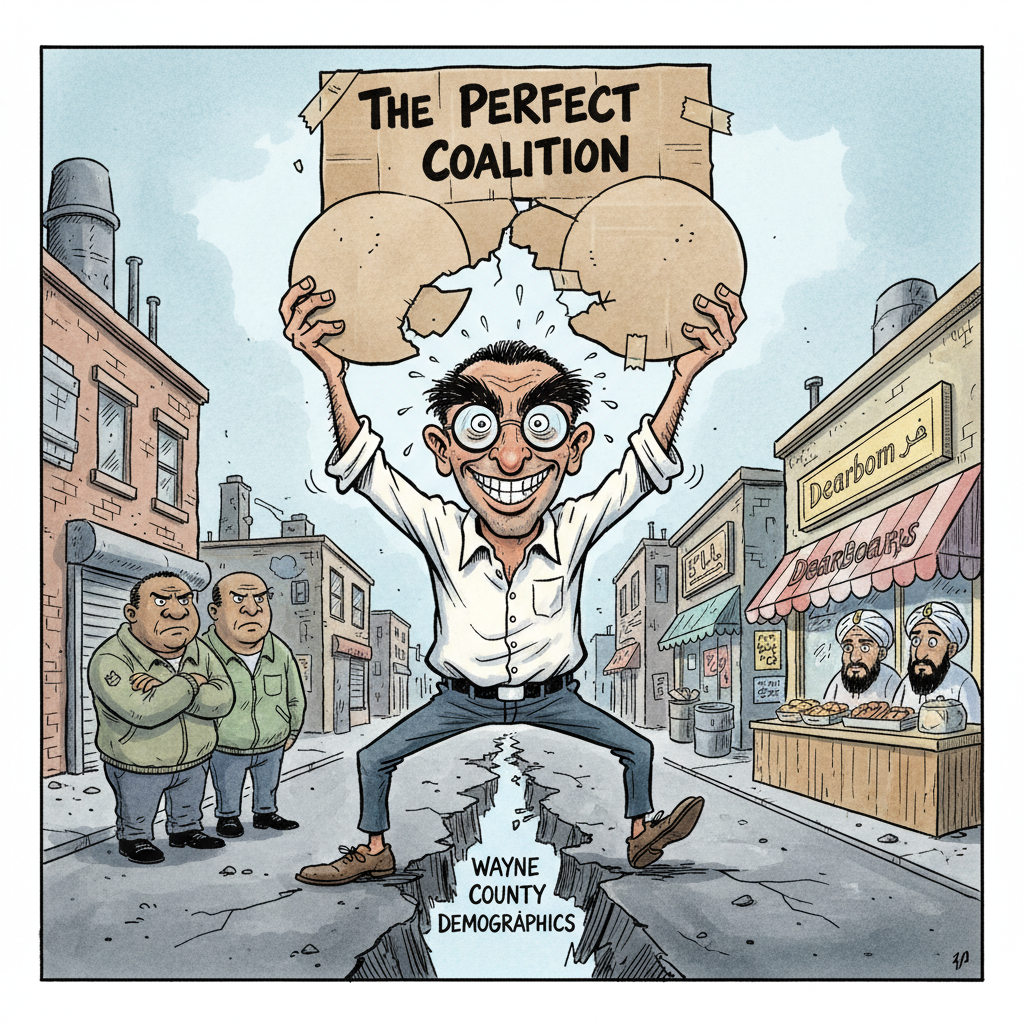
In an electoral development that has sent McKinsey-certified consultants fleeing toward the exits, the Michigan Senate campaign of Dr. Abdul El-Sayed has collided with the terrifying reality that distinct municipal voting blocs do not naturally collapse into a single, pliable focus group. Campaign aides reportedly spent three frantic weeks drafting a grand unification theory capable of bridging historical civic frictions between Detroit and Dearborn, only to discover that deep-seated neighborhood rivalries cannot be smoothed over by enthusiastically handing out lukewarm fair-trade cider.
"Our internal models assumed that if you combined two communities who both harbor grievances against county infrastructure authorities, you get an automatic supermajority," lamented deputy political director Brenda Vance, aggressively re-weighting a smoking precinct scatterplot. "Instead, we find ourselves mediating hyper-local zoning disputes and decades of council-seat skirmishes using nothing but a hopeful grin and a master's degree in epidemiology." At press time, El-Sayed was seen practicing two completely contradictory handshakes simultaneously, desperately attempting to reassure automotive organizers along 8 Mile while assuring suburban merchants five miles west that electoral solidarity is merely an administrative formality.
According to state soil scientists, Western Iowa was previously classified as an impenetrable bedrock of agricultural subsidies, corn syrup, and reflexively cast straight-ticket ballots. Yet on Thursday, emergency sirens blared across Sioux City as Donald Trump arrived to perform aggressive rhetorical CPR on Republican candidate Ashley Hinson, whose once-unassailable lead had mysteriously degraded into a mortal panic.
Addressing a crowd huddled inside an unheated aviation hangar, the former president spent seventy minutes reminding thousands of winter coats that losing Iowa would constitute an unnatural rupture in the fabric of American cattle farming. Political strategists observed that staging an emergency rescue rally in deep-red Sioux City is the campaign equivalent of deploying the National Guard to protect an already-eaten ham sandwich. Hinson stood beside the podium with a frozen pageant smile, dutifully absorbing secondary gusts of hairspray while nodding through an impassioned detour regarding the structural integrity of modern dishwashers.
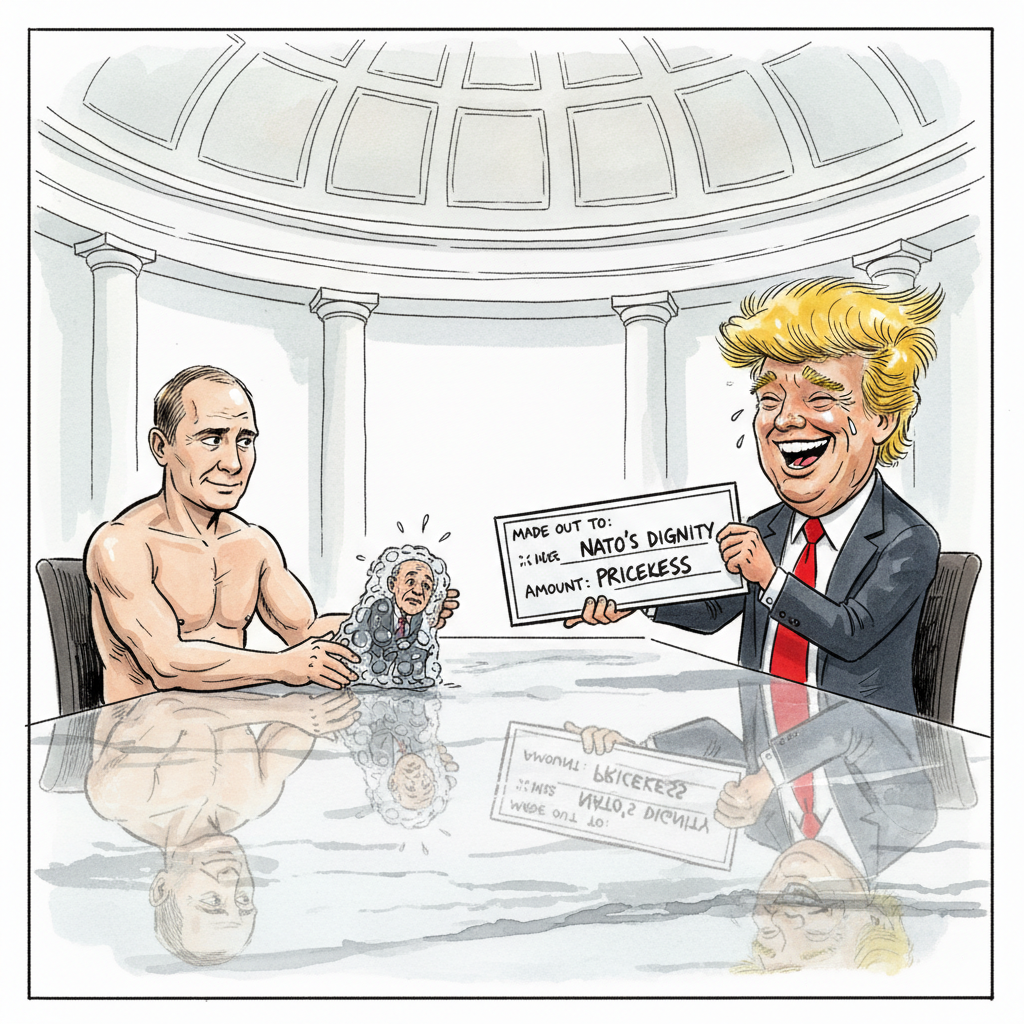
Diplomatic retail therapy reached peak efficiency Tuesday after the Kremlin offloaded 73-year-old American Stephen Hubbard, successfully purchasing four years of uncritical White House affection for the approximate cost of half a loaf of stale rye. State media hailed the transfer as a masterclass in low-overhead statecraft, noting that releasing an elderly English teacher who was merely occupying valuable radiator space yielded a higher return on investment than a fleet of hypersonic missiles.
Foreign policy analysts confirmed the transaction represents unprecedented arbitrage. By surrendering a pensioner who cost Russia fifteen rubles a week in lukewarm cabbage broth, Vladimir Putin secured an informal lien on Eastern European airspace and an all-caps Truth Social endorsement praising his 'tremendous heart.' Kremlin aides noted that keeping Hubbard had simply become bad inventory management, like hoarding a surplus fax machine until someone offered to trade a carrier strike group for it. As Hubbard crossed the tarmac, American officials immediately declared total victory, ecstatic to have exchanged a sovereign security umbrella for one dehydrated Michigander wrapped in an oversized parka.
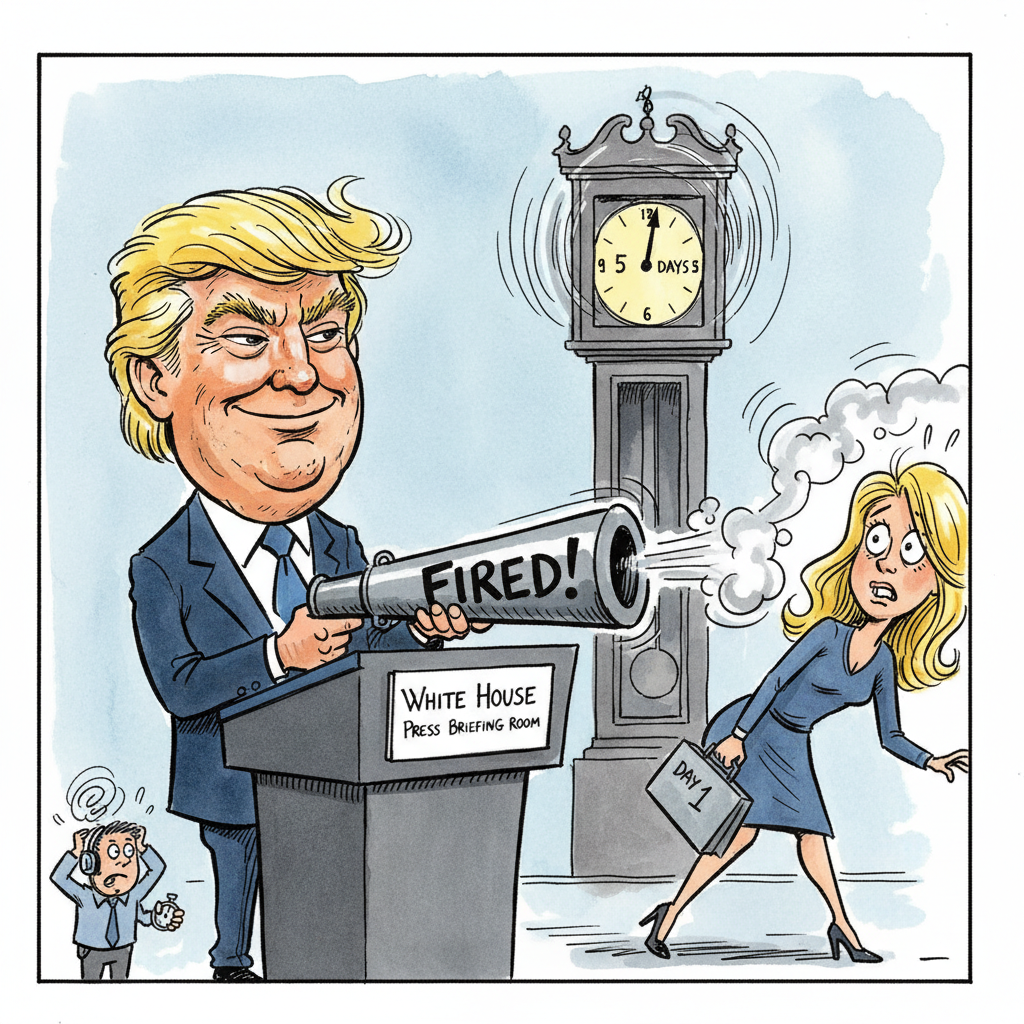
Washington D.C. — In a feat of administrative efficiency previously thought impossible outside of a highly competitive 'musical chairs' tournament, a high-profile White House staffer has reportedly achieved the administrative equivalent of a sub-five-day 'speedrun' for termination. Ms. Katie Zacharia, a political operative whose tenure reportedly spanned a dizzying 120 hours, was unceremoniously escorted from the building – or perhaps simply found her ID badge no longer worked – amidst whispers concerning her legal background and a debut press conference described by one anonymous source as 'remarkably briefing-like, for a brief.' One imagines the onboarding paperwork barely had time to settle into its 'to be ignored' pile before being rerouted to 'offboarding,' marking a new benchmark in bureaucratic velocity.
It appears the legendary wilds of Yellowstone National Park, bastion of untamed nature and predatory efficiency, have a crippling commitment problem. Officials confirmed Tuesday that Luna, a 10-year-old Jack Russell-Chihuahua mix, was recovered after a full month traversing the park's majestic, food-rich, and — apparently — canine-averse landscape. Despite shedding a rather fashionable half of her body weight (a figure many human Yellowstone visitors pay handsomely for via juice cleanses), Luna emerged otherwise intact, a living testament to either canine resilience or the inexplicable squeamishness of apex predators. Conservationists are now scrambling to understand why the park’s myriad wolves, bears, and bobcats demonstrated such peculiar restraint, leading to speculation that perhaps Luna simply didn't fit their precise dietary macros, or perhaps she just wasn't 'the one.' The incident has sparked concerns that Yellowstone's wildlife, much like certain human dating app users, might be getting 'too picky' in an era of abundant options, jeopardizing the delicate balance of the food chain.
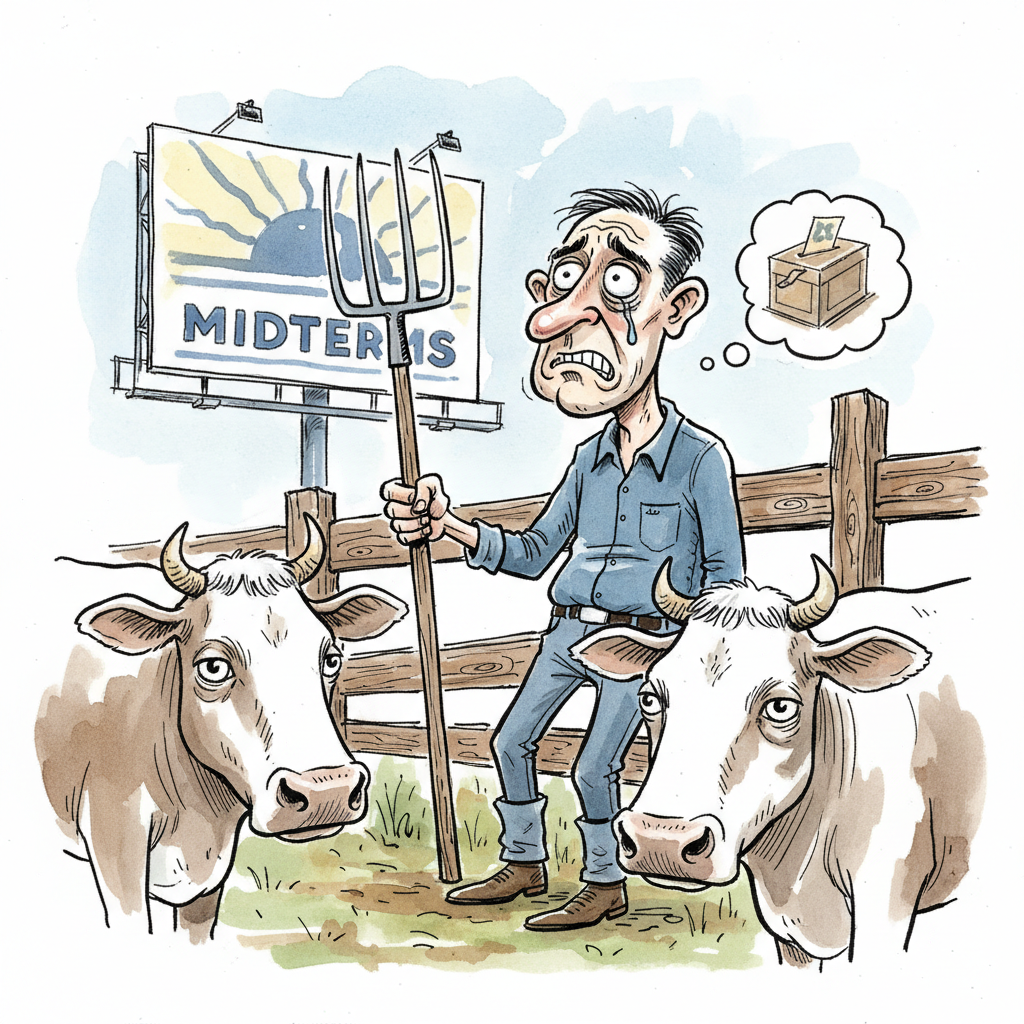
A groundbreaking new study, provocatively titled ‘The Call’ (presumably by a team of highly-caffeinated PhD candidates), reveals that America’s cattle farmers are experiencing a profound sense of 'disillusionment' – a condition previously thought to be exclusive to philosophy majors and art house film critics. Apparently, the bucolic serenity of farm life is being systematically undermined not by predictable factors like market fluctuations or unpredictable bovine behavior, but by the looming specter of the midterms. It turns out that the electoral cycle, much like a particularly stubborn bull, can't be reasoned with and just keeps charging towards November, leaving a trail of existential angst in its wake.
Experts theorize that the consistent messaging from campaign ads, which often feature sepia-toned images of 'hard-working Americans' (read: anyone who isn't a lobbyist), is triggering a deep-seated identity crisis among those who actually work with, well, cattle. One farmer, who wished to remain anonymous to avoid being labeled a 'flake' by his livestock, confided that he now sees his prize-winning Holstein as a metaphor for the entire political system: prone to making loud, often incoherent noises, difficult to steer, and ultimately, producing a lot of methane. The study concludes that the only viable solution is to either ban all political advertising from rural areas or, failing that, equip every cow with noise-cancelling headphones.
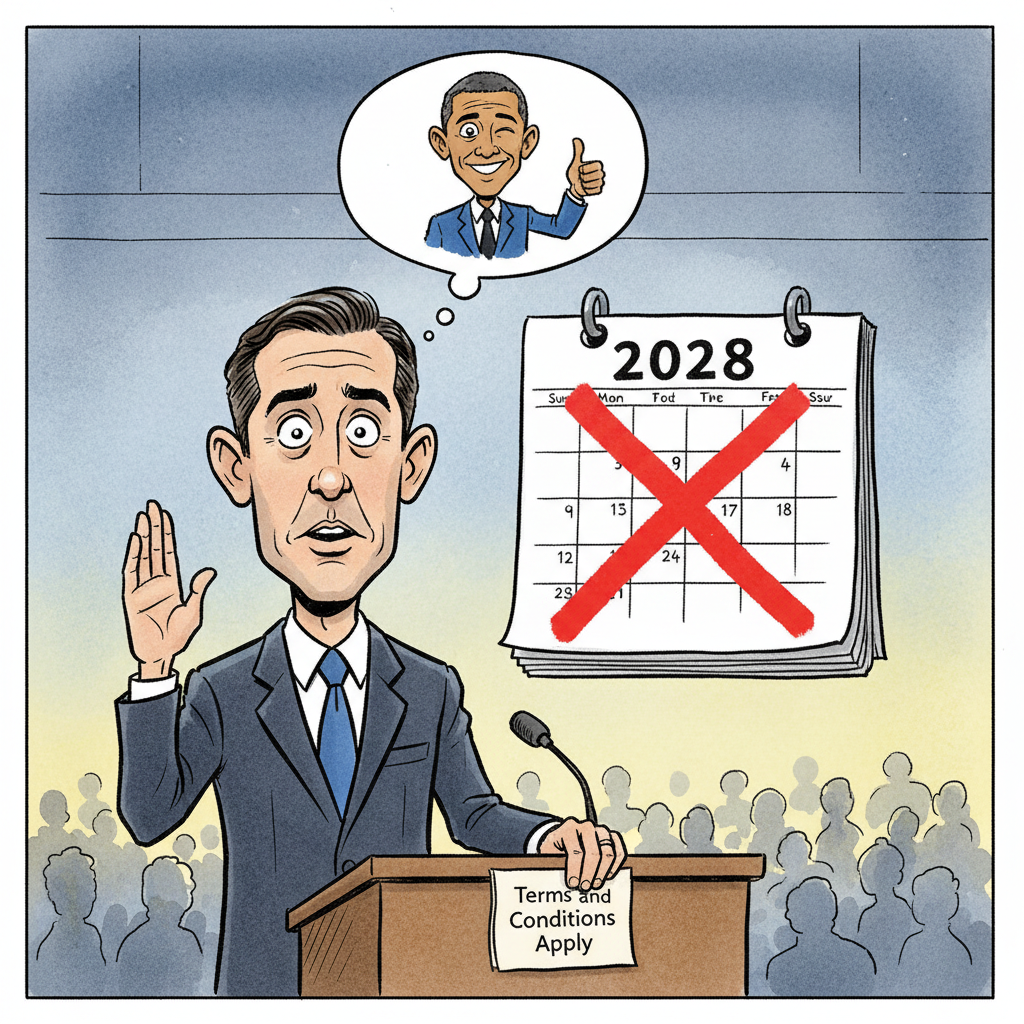
In a move that stunned absolutely no one, Georgia Senator Jon Ossoff firmly asserted his unequivocal, iron-clad, legally binding, and completely sincere intention not to seek the presidency in 2028. "I'm running for re-election to the Senate," he declared with the solemnity of a man ordering extra fries, effectively slamming the door shut on a hypothetical ambition nobody had actually attributed to him yet. This groundbreaking pre-emptive non-denial marks a new era in political communications, where the average voter must now decode not just what a politician *is* saying, but also what they *aren't* saying about events four years in the future.
Political analysts across cable news, collectively suffering from an acute shortage of actual breaking news, immediately pivoted to dissecting the historical precedent set by a young Senator named Barack Obama, who, roughly two decades ago, made an eerily similar pronouncement about *his* lack of immediate presidential aspirations. Ossoff's statement, therefore, has been interpreted as either a profound commitment to his current role, a brilliant chess move designed to lower expectations before launching a surprise campaign, or, most plausibly, a Tuesday evening filler remark that somehow became the most interesting thing said all week. Experts agree: the future of American democracy hinges on interpreting these nuanced, future-oriented disavowals.
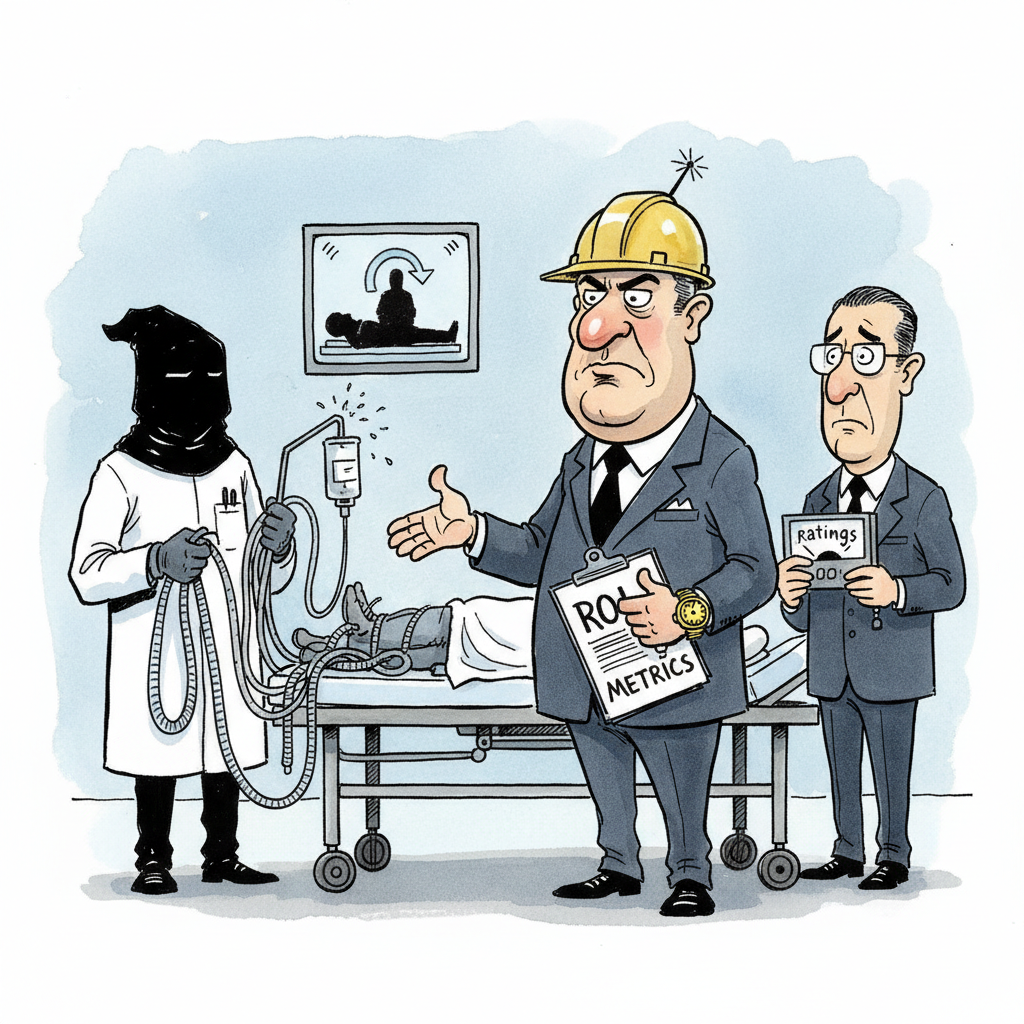
A recent hiccup in the state-sponsored cessation of a citizen, followed swiftly by rumors of a proposed 'premium viewing experience' for future state-sponsored cessation of a citizen events, has once again forced the American public to confront the fundamental question: are we *really* getting our money's worth from the death penalty? While some lament the 'cruel and unusual' aspects of a process that, frankly, ought to be as seamless as a self-checkout line, others are preoccupied with optimizing the optics. After all, if society has decided to dispatch an individual, shouldn't that dispatch be a paragon of taxpayer-funded professionalism?
The debate has splintered into familiar factions, with one side demanding more humane—or at least, more *dignified*—methods, lest we appear uncivilized while performing the ultimate act of state violence. The other side, presumably composed of individuals who have mastered the art of multitasking, merely suggests that if we're going to do it, we might as well make it prime-time compatible. Industry experts are already sketching out potential pay-per-view models and merchandise tie-ins, envisioning a future where botched executions become a 'bonus feature' rather than a public relations nightmare. It seems the only thing more American than a deeply divided public is a deeply divided public arguing over the logistical nuances of state-sanctioned death.
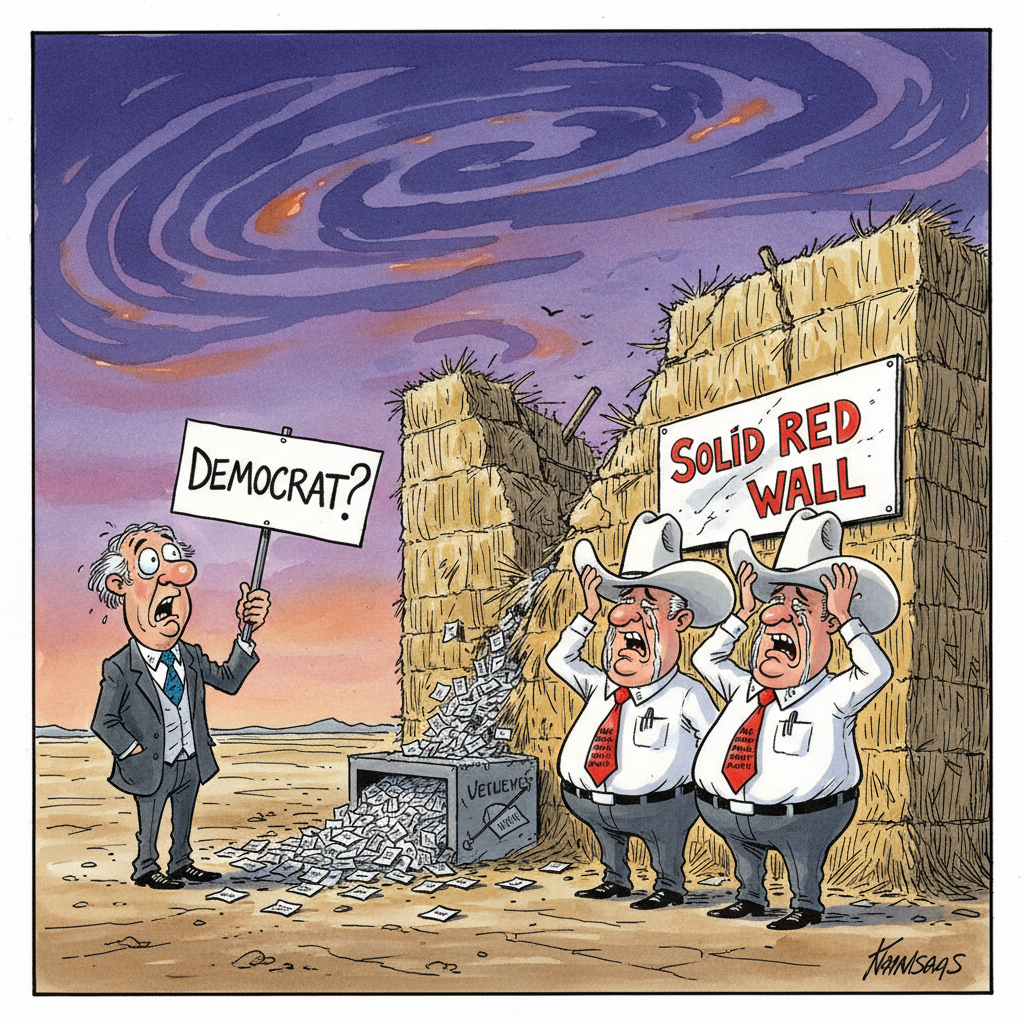
A statistical anomaly usually reserved for predicting comet collisions or the exact moment a TikTok trend dies, has surfaced in Kansas: a Democrat might actually win a Senate seat. Experts are baffled, with one tenured political scientist from the Wichita State Department of Incomprehensible Data stating, 'Our models predicted an immediate and total atmospheric collapse before they ever suggested a Democrat in Kansas could secure more than 12 votes, 10 of which would be from his immediate family and two bewildered tourists.' Sources close to Adam Hamilton, the unwitting pioneer of this electoral heresy, suggest he initially believed 'Democrat' was a new flavor of artisanal oat milk.
Republican incumbents, long accustomed to their electoral victories being as preordained as a Sunday sermon in the Bible Belt, are reportedly in a state of 'mild consternation' bordering on 'disgruntled tea-sipping.' Campaigns, which previously consisted solely of 'not being a Democrat' and 'owning various firearms,' are now scrambling to develop strategies that might involve *gasp* policy proposals or public appearances. Polling data, for its part, continues to indicate that Kansas voters still prefer porch swings and the subtle hum of cicadas over actual political discourse, but have recently developed a strange fascination with Hamilton's campaign because 'he just looks so confused all the time.'
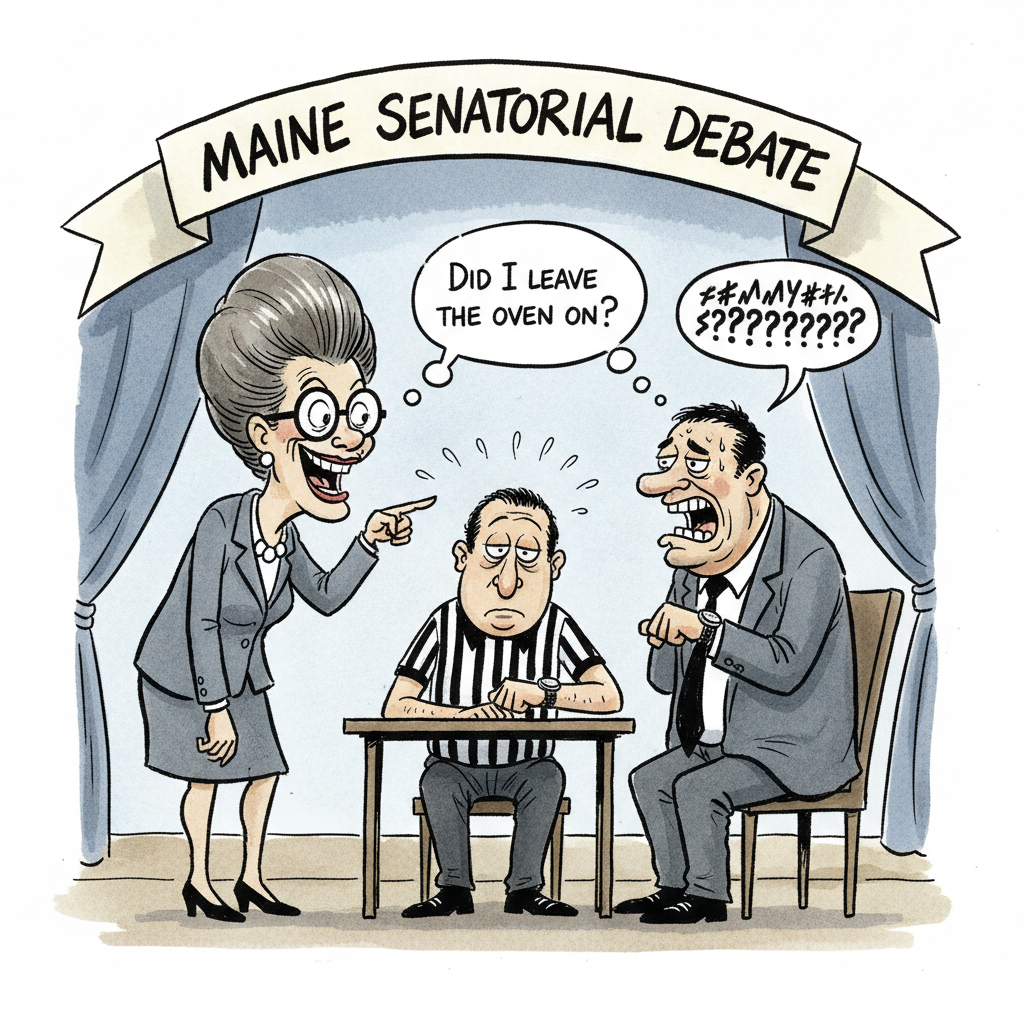
It appears the political theater industrial complex has once again proven its uncanny ability to produce precisely what everyone expected, as the second Maine Senate debate between incumbent Senator Susan Collins and challenger Troy Jackson reportedly 'grew heated.' Observers, many of whom were reportedly still processing their dinner, noted the exchange featured all the hallmarks of modern electoral discourse: carefully rehearsed jabs, meticulously timed interruptions, and the unsettling impression that both candidates were simultaneously reading from different teleprompters while also trying to recall who had previously used that particular zinger.
The debate's 'key moments,' as cataloged by masochistic media outlets, included a spirited disagreement over fiscal policy, which was translated by analysts as 'Candidate A suggested Candidate B once spent money, and Candidate B suggested Candidate A also once spent money, but perhaps differently.' Pundits are now feverishly dissecting the body language, intonation, and frequency of eyebrow raises, hoping to divine which candidate more effectively conveyed the essence of political disdain, ensuring America's democratic process continues to churn out content for late-night comedy bits and existential dread.
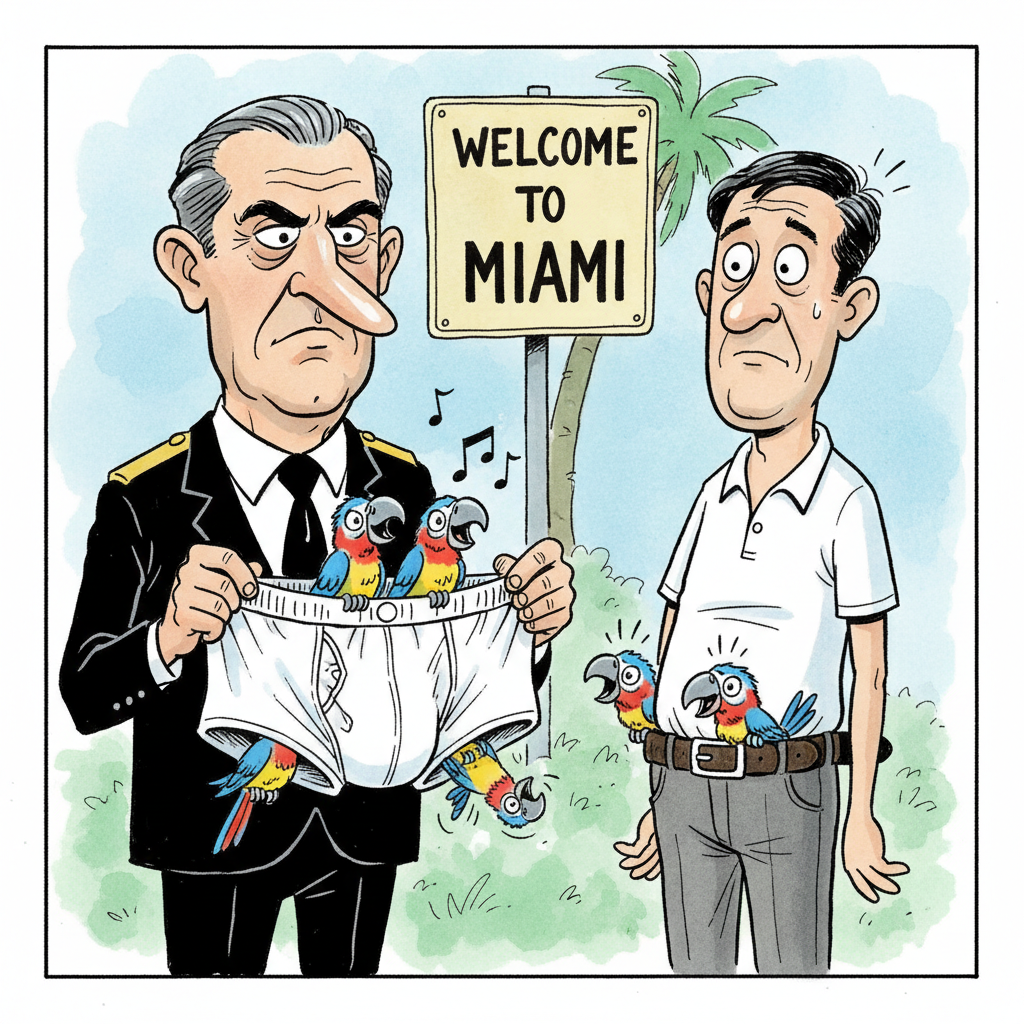
It's a common travel conundrum: how to circumvent baggage fees while still transporting your most precious, albeit feathery, cargo. Two intrepid gentlemen, arriving from Cuba on separate occasions, appear to have independently pioneered a groundbreaking solution, captivating Miami International Airport authorities and bewildering local ornithologists. The secret? A bespoke, highly breathable, and surprisingly resilient system of undergarment-based avian conveyance. Sources close to the customs inspection — who reportedly spent several minutes trying to reconcile a chirping pair of briefs with established smuggling protocols — described a meticulously engineered setup, with birds 'nested' in pockets previously reserved for, one can only assume, spare pocket lint or existential dread.
While details remain hazy on the precise anatomical challenges involved, initial reports confirm an astounding 21 live specimens were liberated from various articles of clothing, including a particularly ambitious belt. This innovative 'wearable aviary' approach has left experts baffled, primarily by the sheer audacity and the apparent lack of concern for the birds' comfort or, indeed, the smugglers' own personal hygiene. One bewildered TSA agent, requesting anonymity, was overheard muttering, 'I’ve seen weirder, but this is definitely top five for 'things I didn’t think I’d find in someone’s pants.'' The men now face charges, but perhaps also a lucrative consulting gig for avant-garde fashion designers or extreme pet owners.
PORTLAND, ME — In a stunning display of bipartisan agreement, Senator Susan Collins (R-Perpetual Re-Evaluation) and her Democratic challenger, Troy Jackson (D-Occasional Appearance), managed to collectively lower the collective IQ of the entire state of Maine during their inaugural debate. Pundits, usually prone to hyperbole, described the event as 'two hours of a damp sponge debating a slightly less damp sponge.' Collins, known for her intricate dance moves around federal policy, spent a significant portion of the evening perfecting the art of simultaneously agreeing with and profoundly disagreeing with President Trump, a skill honed over decades of carefully crafted concern. Jackson, meanwhile, offered compelling arguments that could only be described as 'mildly perturbed,' intermittently referencing 'the working man' with all the passion of a pre-recorded elevator announcement. The real winner, of course, was the collective unconscious of Maine, which has now officially entered a deep, restorative coma, safely insulated from further political discourse until Election Day.
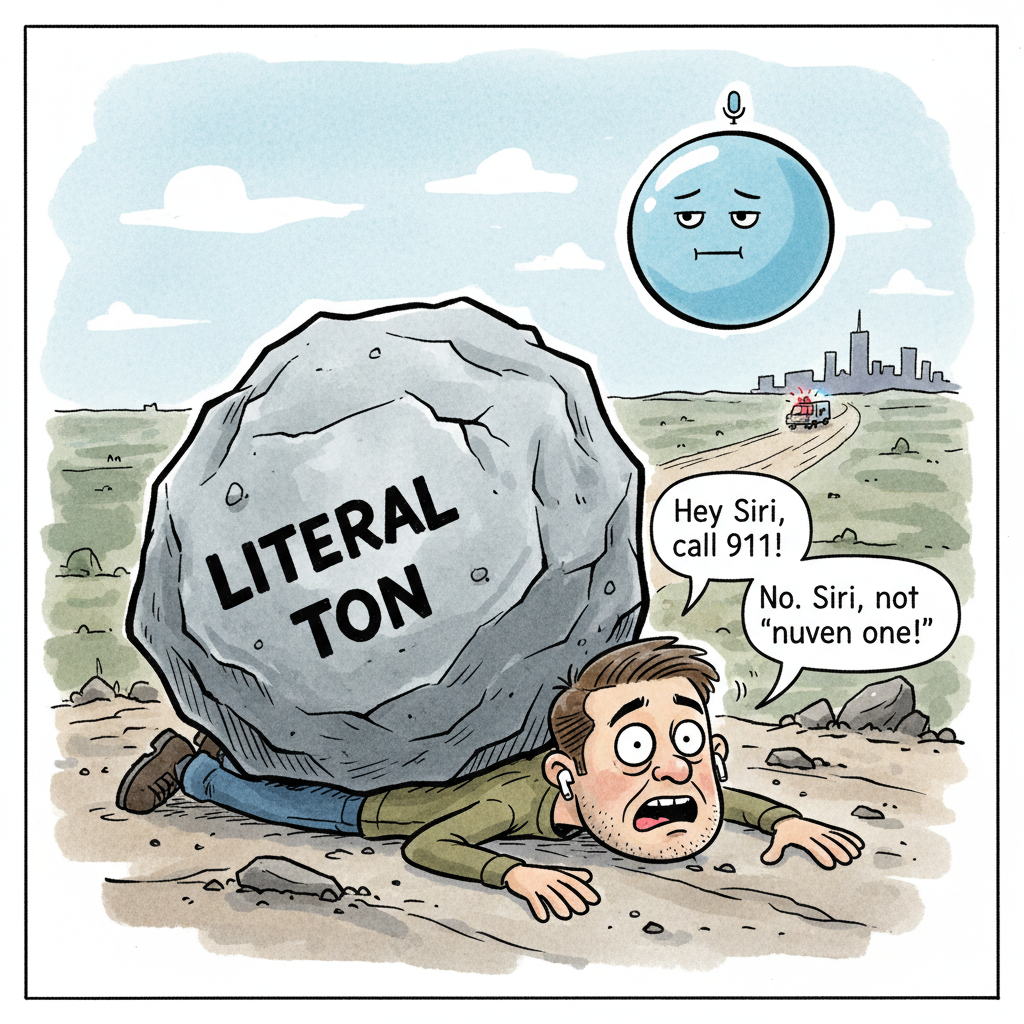
Reports out of Oregon confirm that a man, identified only as a 'dedicated Apple ecosystem evangelist,' narrowly averted becoming a permanent geological feature after being pinned by a 'literal ton' of granite. The incident, which occurred during what sources describe as a 'mildly adventurous' stroll, saw our protagonist trapped with his iPhone tantalizingly out of reach. In a display of what society now considers heroic ingenuity, he reportedly activated Siri via his AirPods, presumably to scream for help before remembering the appropriate voice command. Experts are calling it a profound victory for passive-aggressive digital assistants everywhere, noting that the boulder, unlike countless 'smart' home devices, actually responded to a human request with urgency rather than suggesting a subscription upgrade. His mother, presumably still reeling from the shock, confirmed the harrowing 'Hey Siri' gambit, prompting a national debate on whether this constitutes a legitimate life skill or merely further evidence of humanity's ever-deepening reliance on disembodied AI voices to manage its most fundamental existential crises. Fortunately, paramedics confirmed the man’s vital signs were stable, though his earbuds may require professional cleaning.
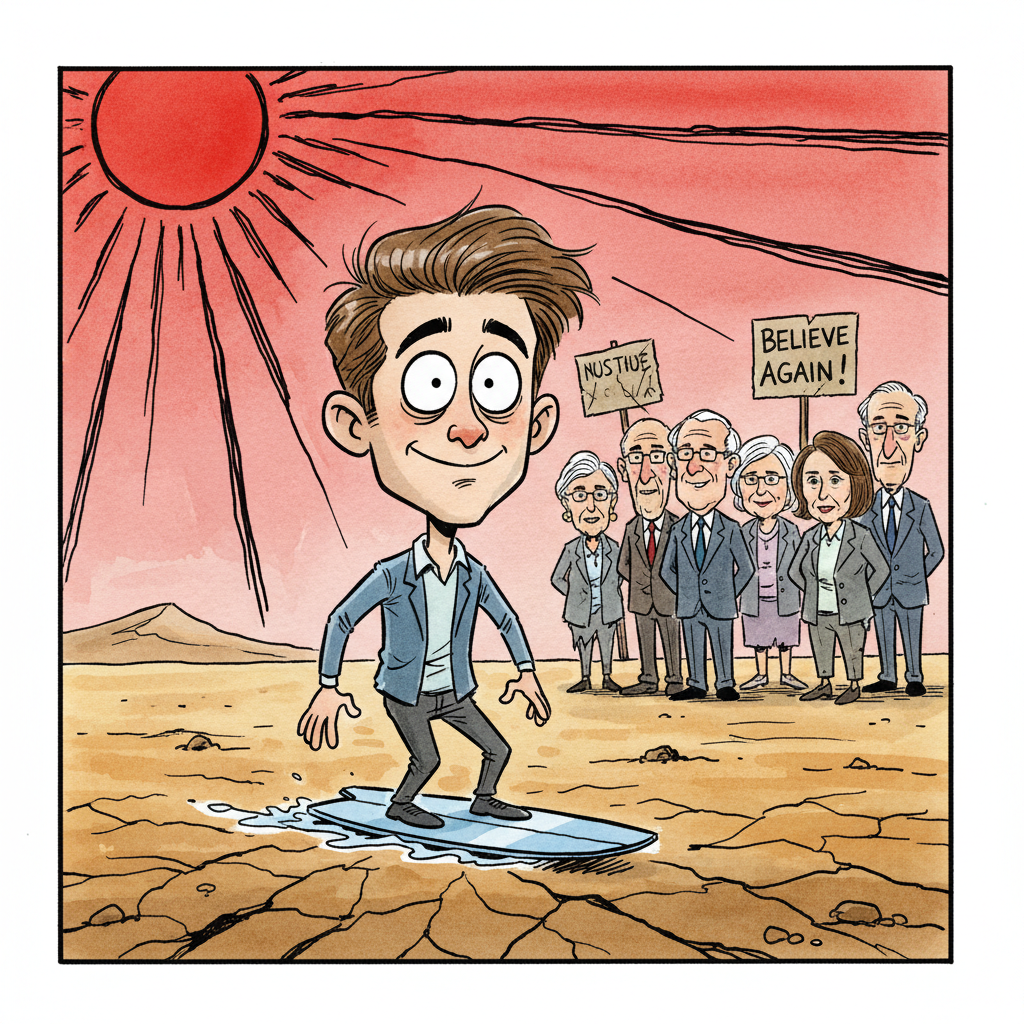
A collective, almost audible gasp of naive optimism rippled through the Austin political establishment this week, as Texas Democrats, apparently suffering from institutional amnesia, once again floated the audacious concept of *winning* something. Sources close to the campaign, who spoke only on condition of anonymity because their last name is 'Sanity,' confirmed that the party has rediscovered a 'blue-tinted dream' – a phenomenon previously cataloged alongside sightings of Bigfoot and competent state-level infrastructure planning. Pundits are already calling it 'The Great Re-Believing,' a biennial ritual where a fresh crop of earnest idealists convinces themselves that 30 years of electoral futility was just a long, strategic pause before the inevitable blue wave that has, to date, been more of a persistent puddle.
The latest catalyst for this quadrennial delusion is State Representative James Talarico, whose sheer existence in a state capitol seems to have triggered a mass hallucination among the party faithful. Experts in historical political trauma suggest that the 'blue-tinted dream' is merely a psychological coping mechanism, allowing the human brain to temporarily override decades of empirical data with the comforting thought that 'this time, it'll be different.' Political scientists are now recommending that the Democratic Party invest less in polling and more in cognitive behavioral therapy, or at the very least, a stronger sedative for their donor base. Critics, meanwhile, are taking bets on whether the dream will manifest as a fleeting glimmer of hope or an actual, electorally significant victory. (Spoiler: it won't.)
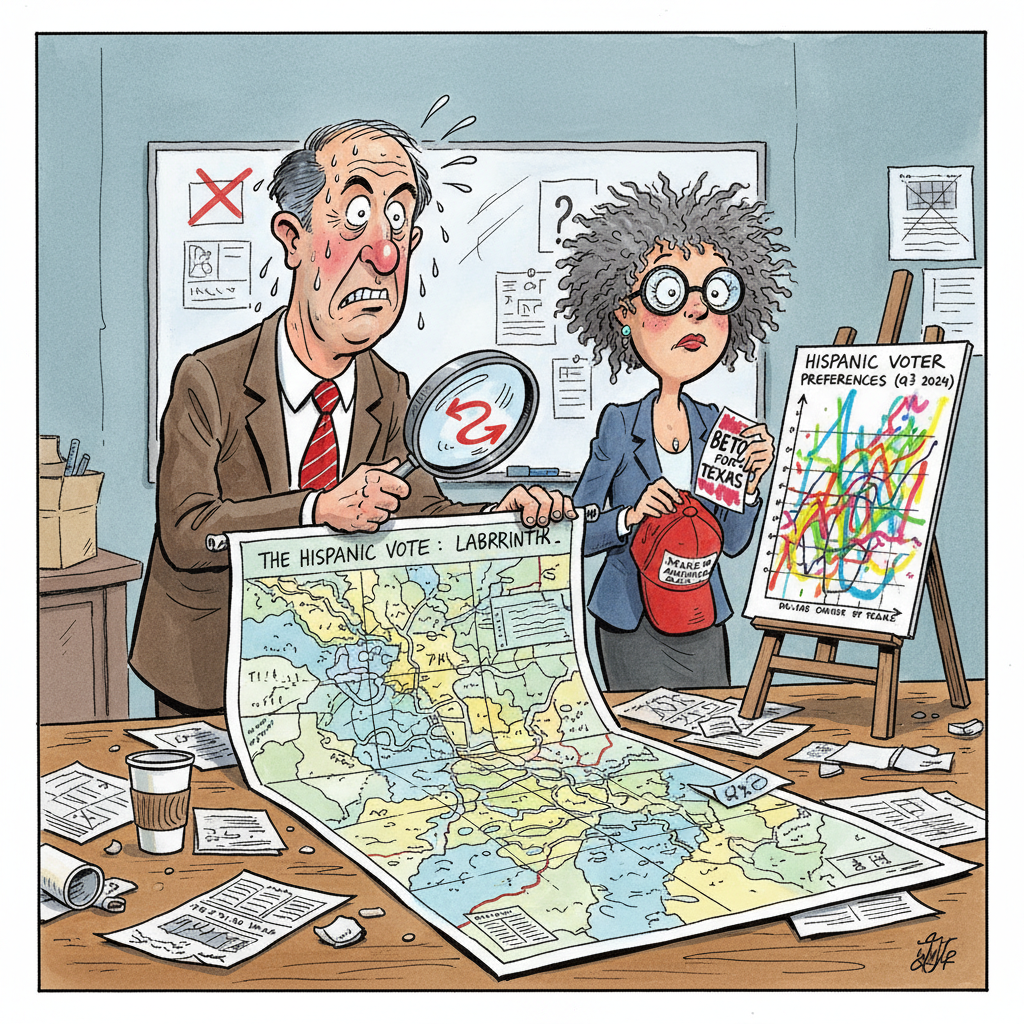
A recent demographic audit suggests that the nation's Hispanic voting bloc, previously considered a highly coveted and slightly-less-portable-than-initially-advertised electoral asset, is experiencing a discernible "sourness." Political analysts, who had confidently declared this group a permanent fixture in one party's column just months ago, are now scrambling to re-calibrate their artisanal spreadsheets and feign prescience. Sources within the Republican party, speaking under the condition of anonymity while vigorously polishing their 'Welcome Mat' signage, insist that any perceived defection is merely a 'tactical pause' or perhaps a 'brief but understandable detour' before voters realize their 'true' fiscal conservative heritage. Meanwhile, strategists for the opposing party are reportedly considering a new campaign slogan, 'We're Less Bad!', which focus groups universally found to be 'remarkably honest, if a tad uninspiring.' The only consensus seems to be that these voters will, once again, be held entirely responsible for the final electoral tally, regardless of which way they lean.
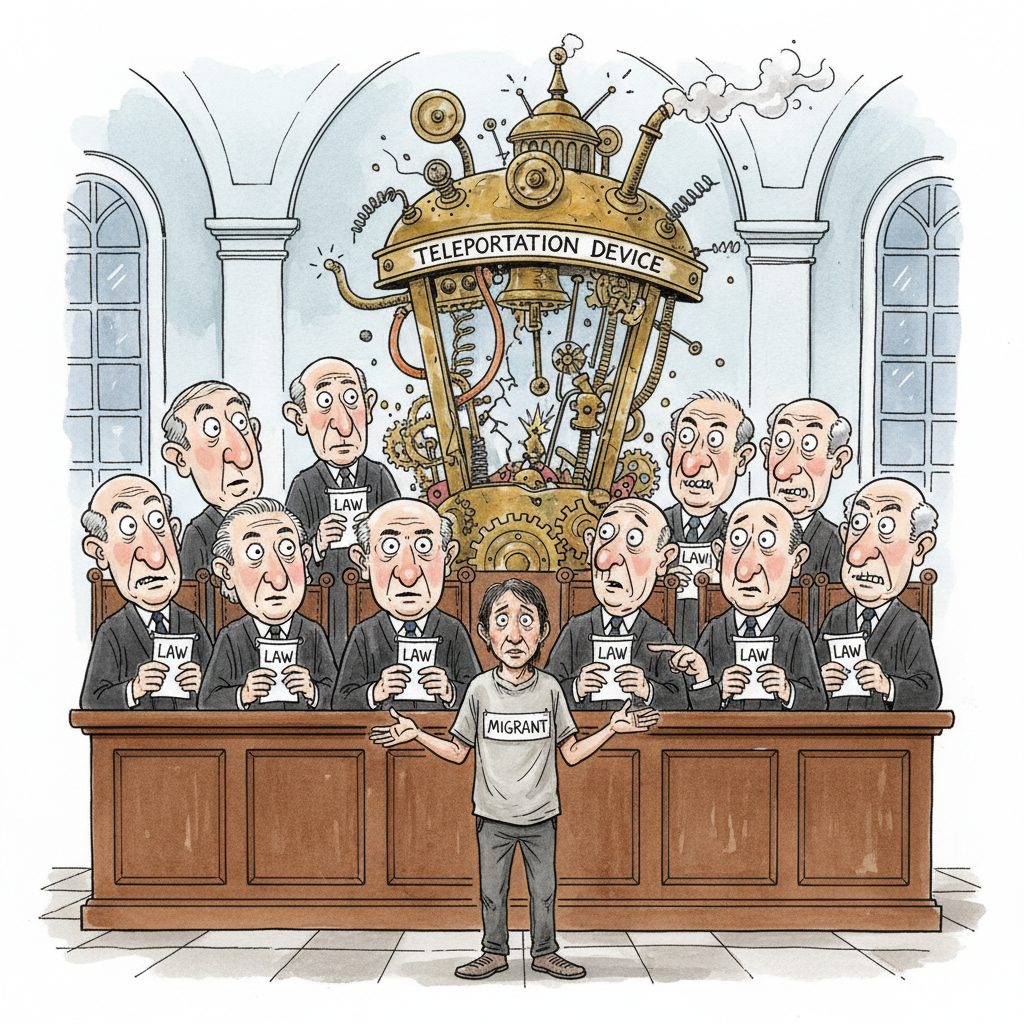
In a case poised to redefine the very concept of 'here' and 'not here,' the nation's highest judicial body will deliberate whether immigrants, upon entering the country without authorization, are reasonably expected to have instantly vanished from their point of entry. Lower courts, apparently mired in the antiquated belief that physical presence is a function of, well, physics, have been hopelessly divided on the legality of detaining individuals for several years when they clearly failed to manifest an instantaneous, ethereal non-existence immediately post-border-crossing.
Legal scholars are now feverishly poring over obscure constitutional amendments regarding the right to immediate dematerialization, or failing that, the right to a timely hearing to explain one's embarrassing corporeal persistence. The core issue, experts explain, hinges on whether a 'migrant' is, in fact, a transient spectral entity, or merely a person with a severe lack of premium subscription to an interdimensional travel service. Advocates for the government argue that requiring bond hearings for these 'stubbornly corporeal' individuals would set a dangerous precedent, potentially forcing the state to acknowledge that some people don't own private jets or possess the innate ability to spontaneously combust into a puff of compliant paperwork.
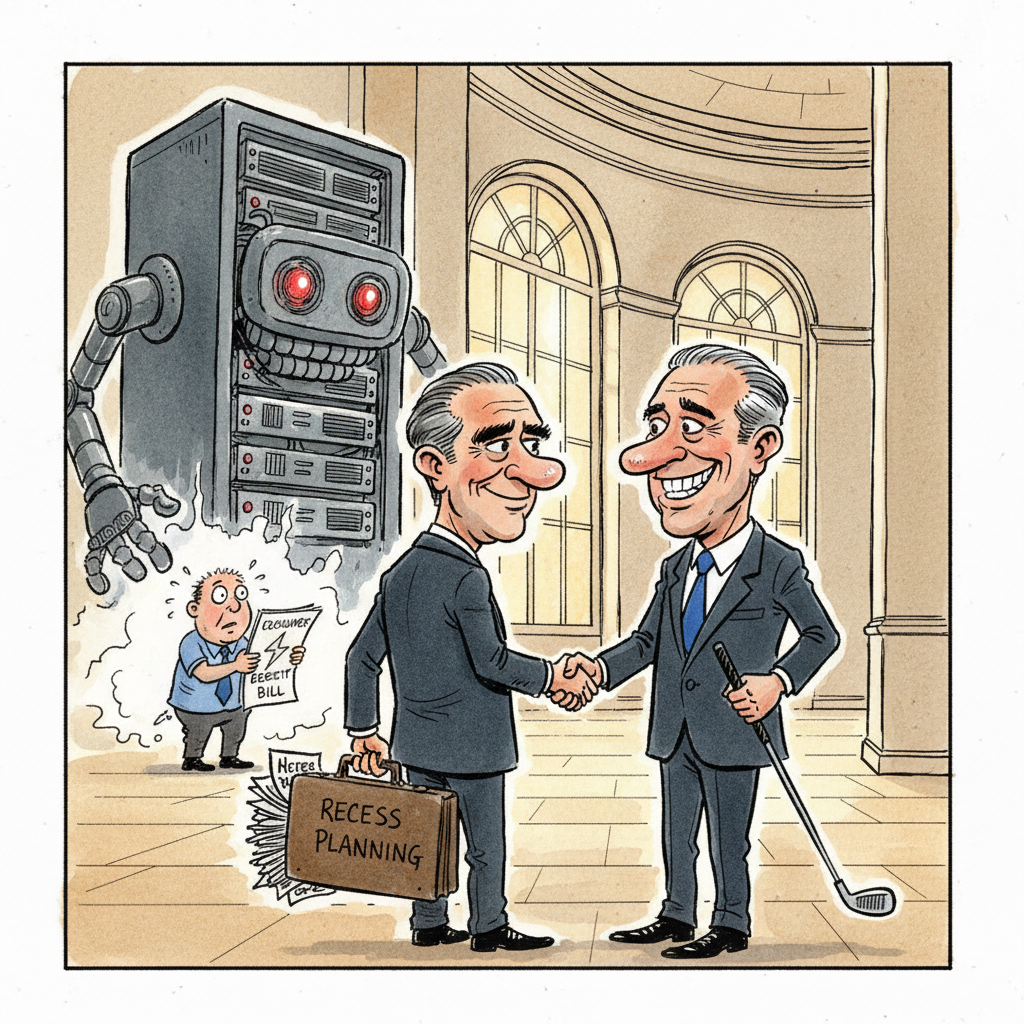
Washington D.C. — In a stunning display of bipartisan inefficiency, Congress has gracefully sidestepped any semblance of productive action on artificial intelligence, choosing instead to prioritize its customary autumnal recess. Lawmakers, fresh off a grueling schedule of committee hearings dedicated to deciding which branded pens to order for the next fiscal year, have opted to leave consumers squarely in the crosshairs of soaring energy bills. Senate Democrats, in a move hailed by some as 'courageous inaction' and by others as 'Tuesday,' reportedly scuttled a measure designed to merely *suggest* states protect citizens from the impending energy apocalypse fueled by insatiable data centers.
Sources close to the legislative process, who wished to remain anonymous to protect their careers at the Congressional Gift Shop, confirmed that the proposed legislation was considered 'dangerously proactive' and might set a precedent for 'actually governing.' One aide, polishing a 'Make America Grate Again' cheese slicer, confided, 'Why mandate solutions when you can just… not? It’s a very American approach.' Industry analysts now predict a bright future for energy companies, who will continue to profit handsomely as algorithms learn to perfectly sort pictures of cats, all while your smart toaster consumes enough power to light a small village. The American public, of course, will pay the bill, metaphorically and literally, for humanity's march towards ever-more-efficient digital cat content.
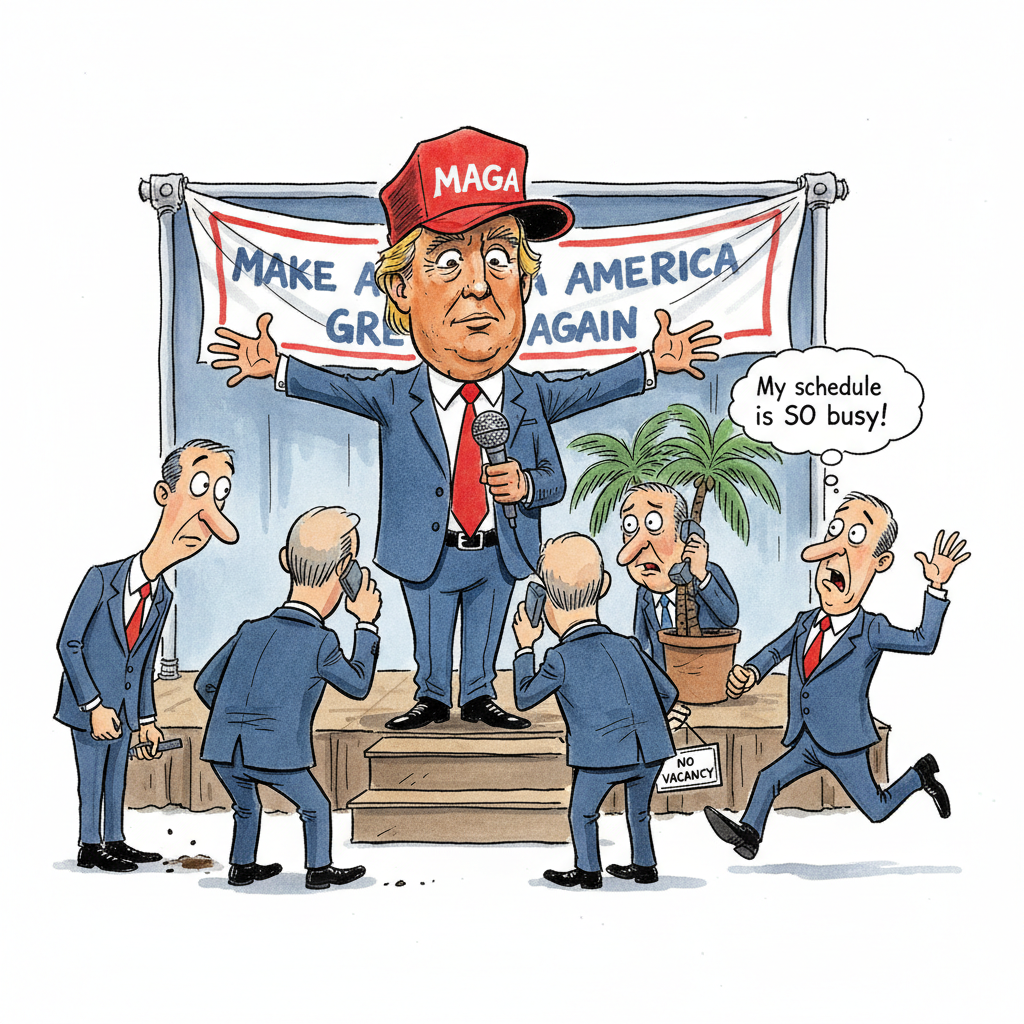
A statistical anomaly of galactic proportions has emerged from the political black hole that is the upcoming Senate elections: precisely five Republican candidates, a number so round it almost feels performative, have opted out of the perceived 'honor' of campaigning alongside the former President. This isn't just a refusal; it's a meticulously choreographed dance of avoidance, a political pas de deux where one partner is desperately trying to untangle themselves from the other's interpretive avant-garde flailing. Three other campaigns, in a masterclass of strategic ambiguity, released statements so opaque they could double as emergency fog machines, merely hinting at 'scheduling conflicts' that coincidentally align with every single one of Trump’s rallies. One senior campaign aide, speaking on condition of anonymity and a promise of a 'very strong' severance package, noted, 'It's less about avoiding the man and more about avoiding the 'optics' of a human-sized MAGA hat trying to hold your hand in public.' The remaining two candidates, demonstrating a level of directness usually reserved for toddlers demanding juice, flat-out said 'no,' thereby risking immediate excommunication from the sacred scrolls of 'My Guys.' Analysts speculate this unprecedented display of self-preservation might signal a new, albeit subtle, understanding among certain GOP factions that associating with a certain individual could be as beneficial as campaigning with a live, unmuzzled badger.
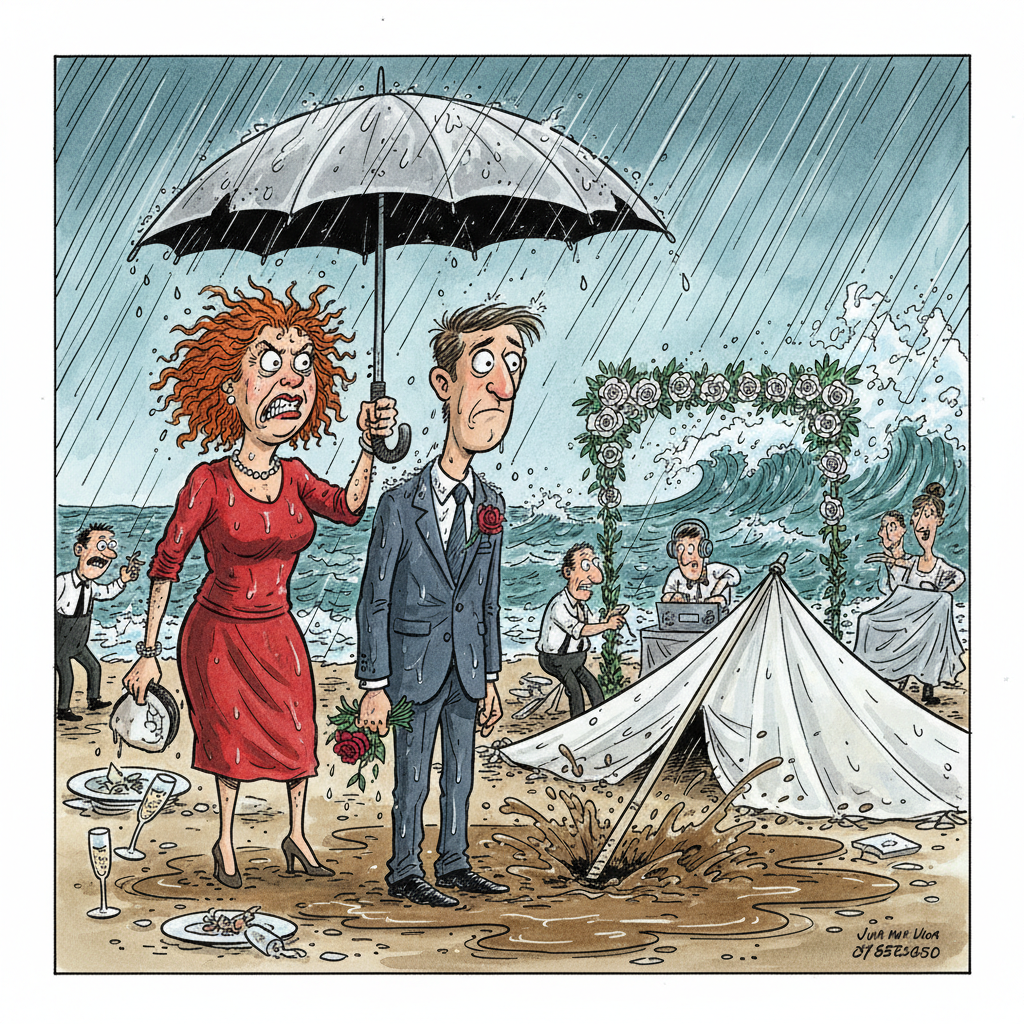
Across the embattled Northeastern seaboard, a recent meteorological tantrum, charmingly dubbed a 'nor'easter' by meteorologists with an apparent flair for the understated, has reportedly delivered a much-needed dose of reality to couples daring to plan their matrimonial pageants beneath the fickle canopy of the sky. Sources close to the wind-swept chagrin confirm that thousands of bespoke, artisanal, and inexplicably expensive outdoor wedding plans were unceremoniously – yet predictably – reduced to soggy anecdotes.
Wedding planners, who typically charge by the tear-stained crisis, are now reportedly offering 'hurricane-force resilience packages' at a premium, featuring industrial-grade tarpaulins and emergency dry-cleaning for bespoke taffeta. One anonymous bride, now set to be wed in a hastily secured community college gymnasium, noted, 'We spent three years curating the perfect rustic chic aesthetic, complete with fairy lights and a vintage cheese wheel tower. Now it's just 'rustic,' and the cheese wheel is a floatation device.' This unprecedented weather event has also spurred a new legal frontier: the 'Act of God' clause, previously a mere footnote, is now demanding its rightful place center stage in pre-nuptial agreements, right next to the non-disclosure agreements for the open bar.
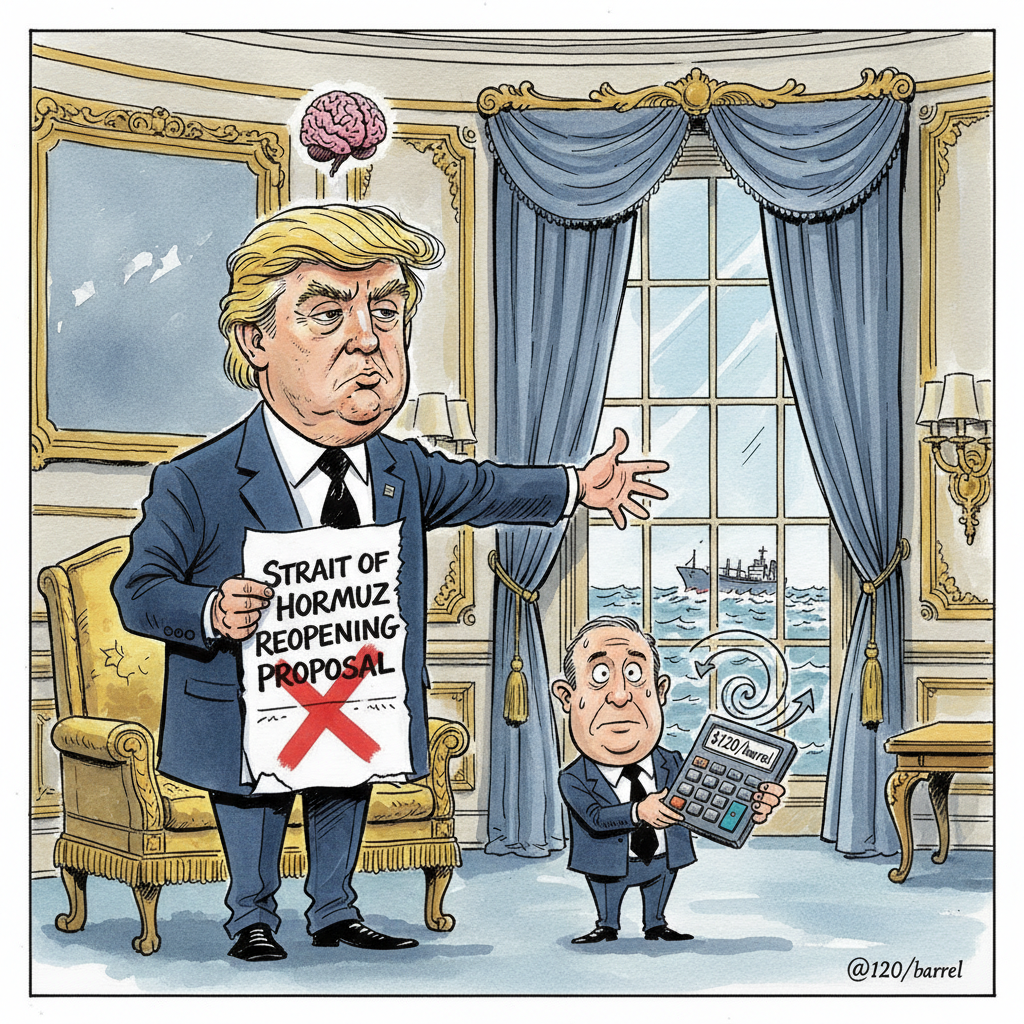
In a move that has left international shipping magnates scratching their heads and reaching for stronger antidepressants, President Donald J. Trump has officially nixed Iran's proposal to reopen the Strait of Hormuz. The deal, which involved such humdrum concessions as 'not blowing up oil tankers' and 'allowing global commerce to proceed unimpeded,' was deemed 'not acceptable' by the commander-in-chief, who reportedly found the terms lacking in both pizzazz and direct personal flattery. Sources close to the situation, who wish to remain anonymous for fear of being appointed ambassador to a landlocked nation, indicate the President was particularly unimpressed by the absence of a clause dedicating a new line of designer neckties to his name.
Analysts are now speculating on the potential for renewed military strikes after the midterm elections, a timeframe suspiciously convenient for maximum dramatic impact and perhaps a pre-Christmas bump in arms sales. One anonymous former diplomat mused, 'It's almost as if global stability is less important than maintaining a steady supply of cable news narratives. Who needs easy access to crude oil when you can have a perpetually unfolding geopolitical drama, tailor-made for prime-time ratings?' Indeed, why settle for boring peace when you can have the promise of exciting, if economically disastrous, fireworks?
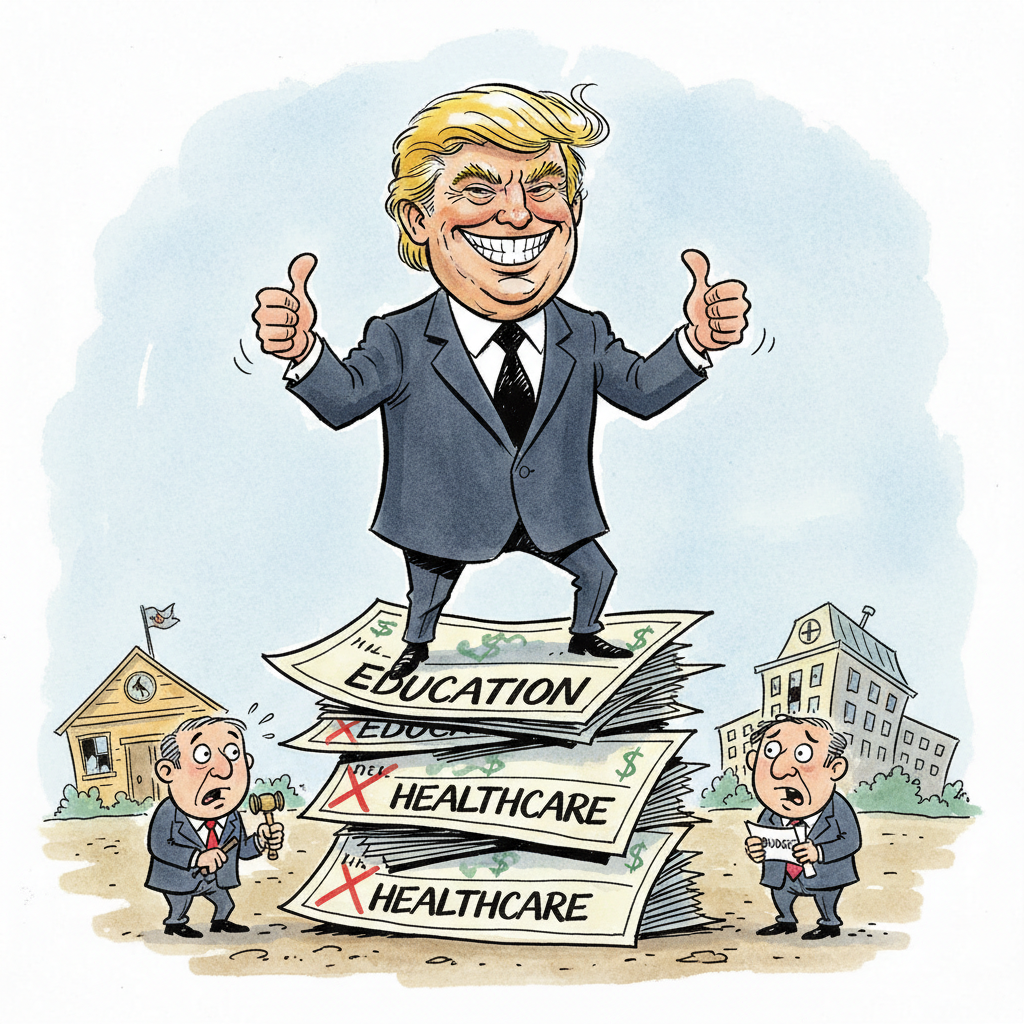
In a bold move that has economists scrambling to rewrite textbooks and Congress wondering if it left the stove on, former President Donald J. Trump has once again attempted to 'un-spend' a cool $810 million in approved federal funds for education and health programs. Experts, many of whom haven't slept since 2016, suggest this is less a budgetary proposal and more a philosophical exploration into the nature of reality, where allocated dollars simply cease to exist if one wills it hard enough. The 'Trumpian Quantum Accounting Principle,' as it's now being called, postulates that fiscal obligations, much like unpleasant tweets, can be retroactively erased from the timeline, leaving only a glorious, albeit unfunded, void. This audacious financial disappearing act, the second such magical performance in as many years, suggests a burgeoning career path for the former Commander-in-Chief: high-stakes monetary illusionist, specializing in the 'vanishing public service' routine. Sources close to the former administration claim the cuts are merely an innovative way to 'stimulate the economy' by forcing schools and hospitals to become self-sufficient, perhaps by selling artisanal kale smoothies or offering 'premium' brain surgery subscriptions.
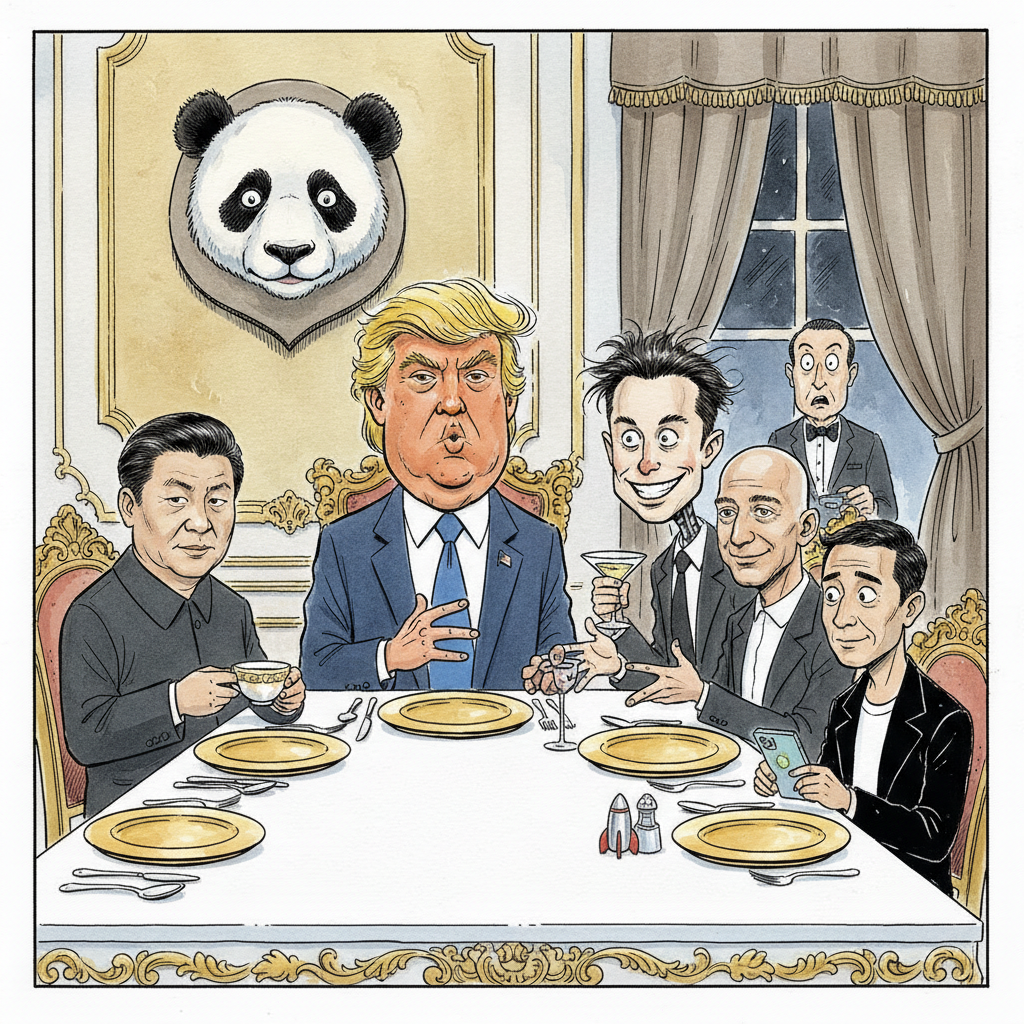
In a bold move that some are calling 'strategically opaque,' former President Donald Trump hosted a state dinner for Chinese President Xi Jinping, gathering a veritable rogues' gallery of Silicon Valley titans. While cameras focused on predictable pageantry, insiders confirmed the guest list featured an unholy trinity of digital demigods: Altman, Musk, and Huang, alongside the lesser-known, yet equally omniscient, Bezos. Sources close to the proceedings — largely consisting of disgruntled White House kitchen staff — reported the evening's 'diplomatic' efforts included a competitive guessing game of who could generate the most compelling deepfake of themselves attending a different, more exclusive party. The true purpose, it is rumored, was to determine which tech mogul held the intellectual patent for 'global dominion through algorithm,' with the winner receiving exclusive rights to dictate future geopolitical strategies via encrypted TikTok dances. As the world teeters on the precipice of AI-driven ubiquity, the gathering reportedly concluded with a unanimous decision to prioritize the development of self-replicating virtual pandas, ensuring future generations will have something aesthetically pleasing to distract them from their eventual digital enslavement.
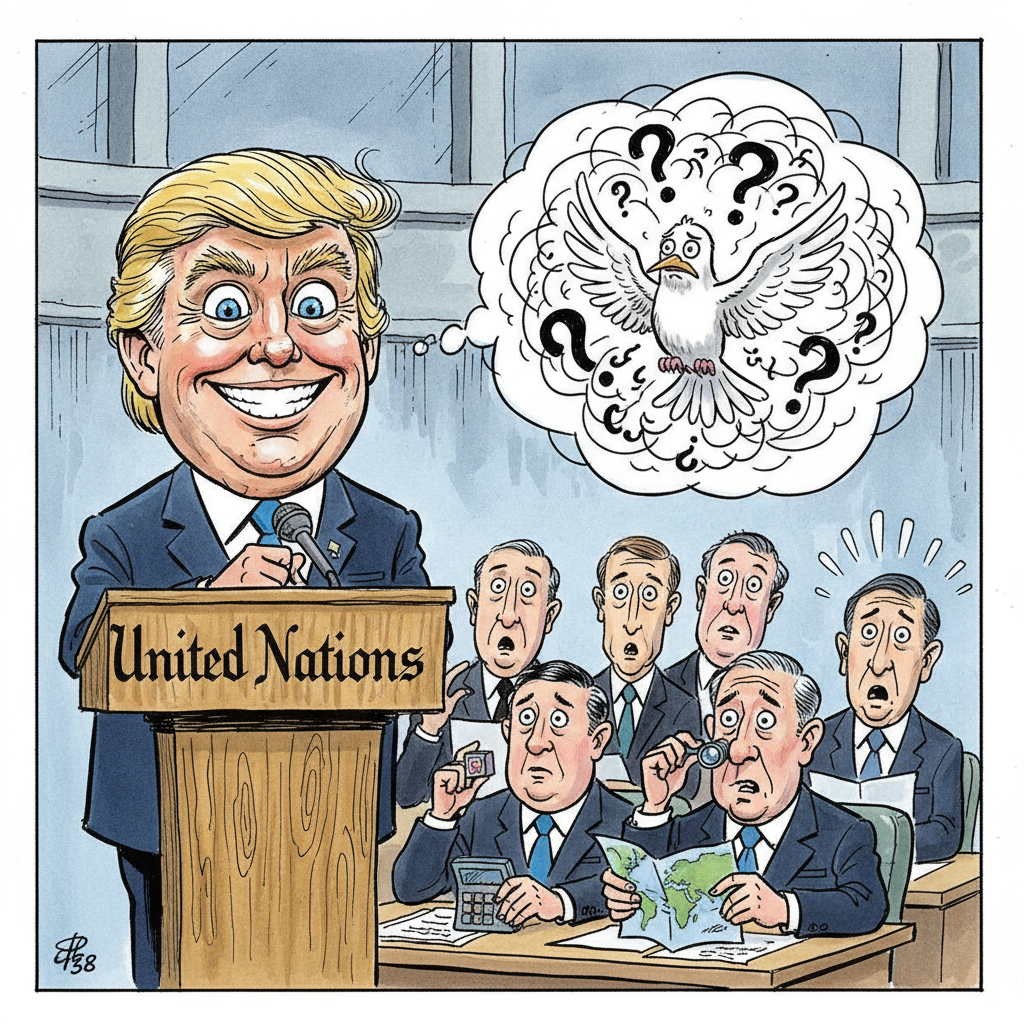
It seems the United Nations General Assembly has inadvertently become the world's most prestigious open mic night, as President Trump's recent address left fact-checkers scrambling to keep pace with his narrative acrobatics. Reports indicate that while discussing oil reserves, the global narcotics trade, and his Herculean efforts towards universal harmony, the President engaged in what his press secretary later termed 'pre-cognitive truth-telling.' One diplomat was overheard murmuring, 'It's like watching a man try to explain string theory using only interpretive dance and a bag of kettle chips.'
Indeed, the speech was less a statement of policy and more a grand performance art piece, forcing international observers to recalibrate their understanding of 'diplomatic discourse' to include 'alternative facts presented with conviction.' Experts suggest this new communication strategy aims to transcend mere reality, offering instead a richer, more emotionally resonant version of events. The UN, meanwhile, is reportedly considering replacing its teleprompters with a 'Choose Your Own Adventure' flowchart, just to keep things interesting.
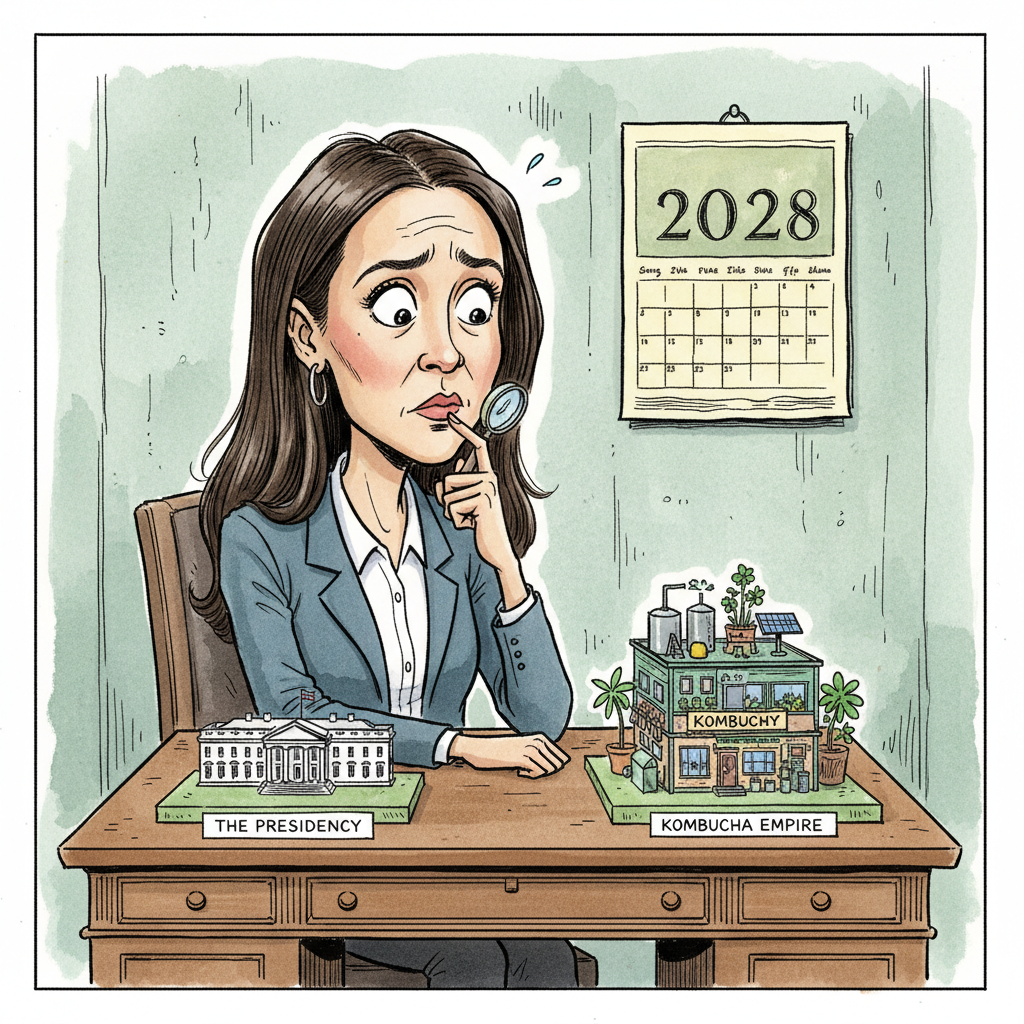
It appears the Democratic Party's quest for its next standard-bearer is proceeding with all the urgency of a sloth applying for a library card. Representative Alexandria Ocasio-Cortez, in a recent, sprawling conversation that felt less like an interview and more like a live-action, meta-commentary on the unbearable weight of political ambition, finally offered her most profound insights yet into a potential 2028 presidential campaign. Sources close to the congresswoman confirm that her meticulously curated non-answer was, in fact, a carefully focus-grouped Rorschach test designed to simultaneously excite the base, enrage the opposition, and leave cable news talking heads with enough 'what-if' fodder to fill the next four years of declining viewership.
Analysts, who typically use advanced algorithms to predict political movements, have instead resorted to divining meaning from her choice of coffee mug and the precise tilt of her head, concluding that her reticence is either a strategic genius play or she's genuinely still deciding between 'Commander-in-Chief' and 'Opening a Sustainable Urban Kombucha Brewery.' The political landscape, apparently, is now less about policy platforms and more about interpreting the subtle, almost imperceptible shrug of a potential future leader. The suspense is so thick, you could spread it on toast, assuming, of course, that toast has not yet been deemed a 'problematic' food item by the electorate.
In a development that has sent political strategists scrambling for a new batch of 'unprecedented' clichés, far-right media oracle Tucker Carlson has thrown his considerable weight behind Democrat Abdul El-Sayed, prompting a collective, synchronized facepalm across Washington D.C.'s think tanks. Sources close to the situation, primarily unpaid interns monitoring the nation's blood pressure, report that the move has caused at least three seasoned political consultants to spontaneously combust into a fine, confused mist. Carlson, whose usual rhetorical modus operandi involves accusing Democrats of inventing gravity to oppress the working class, has inexplicably pivoted to praising El-Sayed while eviscerating his Republican opponent, thus collapsing the space-time continuum of traditional party alignments. Experts now hypothesize that the entire political spectrum may be a mere illusion, a figment of our collective imagination, and that all public figures are merely performing an elaborate, nonsensical ballet orchestrated by an unknown, highly caffeinated entity. The implications for the upcoming election are dire: voters may now be forced to make decisions based on policy, rather than pre-assigned tribal loyalty, an outcome considered too chaotic to even contemplate.
A collective gasp echoed through the gilded halls of Republican strategists this week as a groundbreaking revelation threatened to upend their entire electoral philosophy: apparently, past performance is not an indicator of future results. For years, the party operated on the foundational principle that if a state or district once adored a specific former president with the fervor of a thousand suns, it would continue to do so indefinitely, like a well-trained dog chasing a laser pointer even after the battery dies. Now, with midterms looming like an overdue dental appointment, they're scrambling to defend territories previously considered 'safely MAGA,' leading to a level of resource expenditure typically reserved for attempts to reanimate forgotten disco careers. One anonymous strategist, currently self-medicating with artisanal sourdough, confessed, 'We genuinely thought 'Trump won this by a lot' was a sustainable campaign strategy. It turns out voters have short memories and an even shorter attention span for economic woes. Who knew?' The realization that 'winning easily' requires actual effort and possibly even appealing to people who aren't already ideologically aligned has sent shockwaves, forcing many to consider the radical notion of 'campaigning.'
In a bold move that has once again reminded the world where American priorities truly lie, the U.S. has gracefully expedited the relocation of Ecuadorean political dissident, José Serrano. Mr. Serrano, a vocal critic of President Daniel Noboa, was, of course, facing entirely unsubstantiated accusations of 'criminal activity' back home – a vague charge suspiciously popular among regimes looking to clear out the riff-raff. Immigration officials, demonstrating the kind of efficiency usually reserved for drone strikes and tax season, decided his 'fears of torture' were simply an elaborate ploy to delay his highly anticipated return flight.
Sources close to the Kafkaesque labyrinth of the U.S. immigration courts suggest the decision was made after a particularly rousing PowerPoint presentation titled 'Streamlining Undesirables: Maximizing Geopolitical Leverage Through Unflinching Indifference.' The swiftness of the process underscores how firmly the previous administration's steely grip continues to dictate the judicial fate of international 'inconveniences.' It seems the U.S. is perfectly content to outsource its due diligence to countries with, shall we say, a more 'flexible' interpretation of human rights, provided it helps maintain a certain 'order' in the global pecking order. After all, why bother with messy things like asylum when you can simply hand over a problem and call it 'foreign policy'?
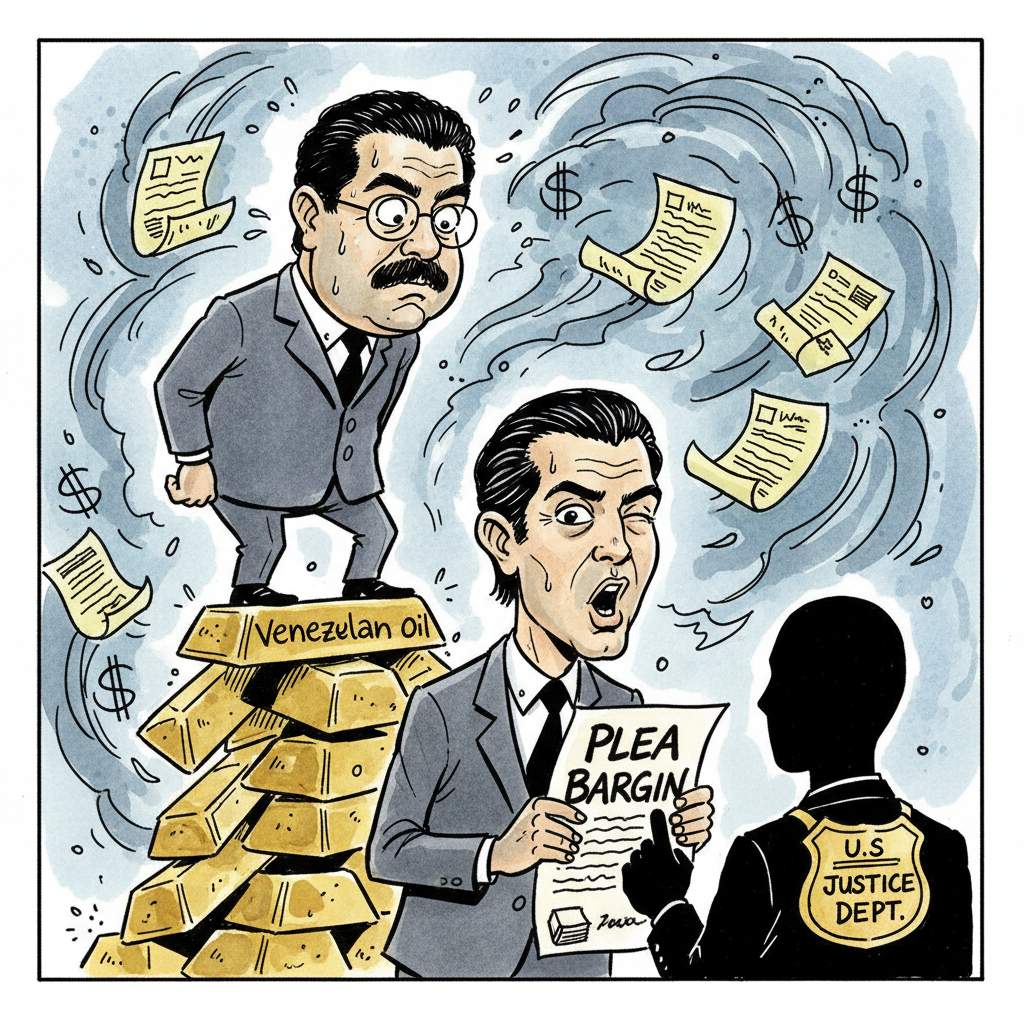
In a stunning display of legal pragmatism that has sent shockwaves through the transnational financial malfeasance community, Alex Saab, a figure previously known for his steadfast loyalty to Venezuelan strongman Nicolás Maduro, is now slated to plead guilty to federal money laundering charges. This development, sources close to the situation confirm, means Mr. Saab will transition from an 'alleged co-conspirator' to a 'valued truth-teller' in the eyes of U.S. prosecutors, presumably after a brief, intensive re-education seminar on the virtues of 'cooperation.' Experts are already predicting a surge in demand for bespoke, fully-offshore shell corporations, as other high-ranking officials scramble to update their 'crisis contingency' playbooks. Insiders suggest Mr. Maduro, whose own New York trial looms like an uninvited guest at a state dinner, has reportedly upgraded his security detail to include a dedicated 'snitch detector' and a 'memory-erasing' squad, just in case any other 'loyalists' feel the sudden urge to contribute to the evidentiary record.
In a bold move that some are calling 'an absolute triumph of the self-devouring snake,' the Texas Republican Party has reportedly condemned one of its own for a social media post deemed 'unacceptable.' Insiders suggest the incident marks the first official GOP application of the very 'anti-divisive content' rhetoric previously reserved for educational curricula, now turned inward with the precision of a self-administered lobotomy. The offending post, which apparently featured a graphic so tactless it could only have been generated by a committee of well-meaning but ultimately clueless interns, has sparked a predictable flurry of 'we're not all like that' pronouncements from the party's more 'subtly racist' wing. Political scientists are scrambling to determine if this constitutes genuine ideological course-correction or merely a particularly clumsy brand management exercise, akin to lighting one's own barn on fire to prove you don't keep matches in the hayloft. Analysts noted that while the criticism was swift, it conspicuously lacked any specific mention of *why* the post was problematic, opting instead for the safer, more opaque 'doesn't reflect our values' boilerplate, ensuring maximum denouncement with minimal commitment to anything resembling an actual principle.
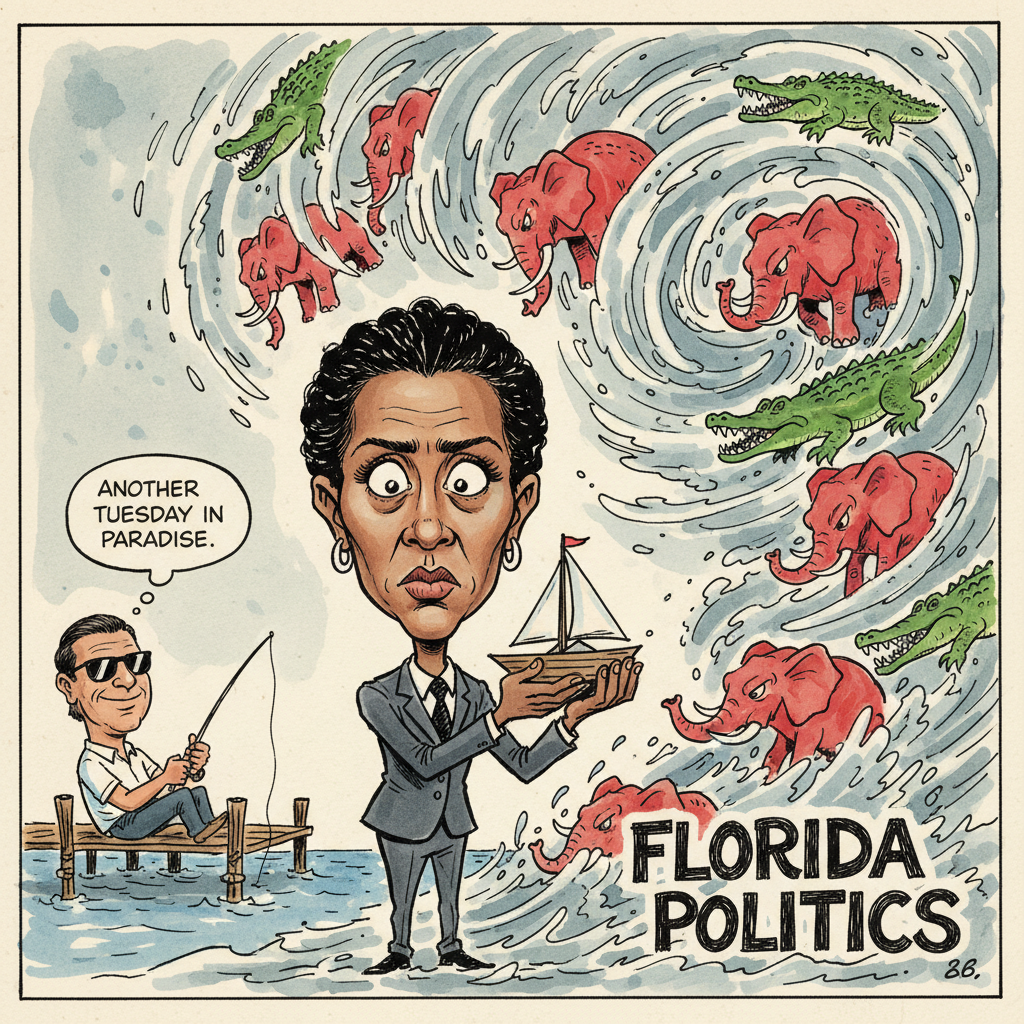
In a development that has sent pollsters scrambling to recalibrate their quantum-mechanical models, Democratic Senate hopeful Angie Nixon has reportedly 'taken Florida by storm,' a meteorological phenomenon previously thought to be exclusive to hurricanes, retirees in RVs, and inexplicable outbreaks of leisure suits. Local pundits, typically more accustomed to debating the optimal shade of tangerine for the Governor's official golf cart, have expressed a dazed fascination with the sheer audacity of a progressive politician daring to breathe in the Sunshine State without immediately combusting into a fine mist of socialist-leaning perspiration.
Sources close to the campaign, who spoke on condition of anonymity while carefully hosing down their properties to remove any residual 'blue wave' residue, suggested that Ms. Nixon's strategy involves the radical notion of engaging with voters who aren't already convinced that socialism is a slippery slope to mandatory kale smoothies. Political analysts, meanwhile, are struggling to reconcile Nixon's 'underdog' status with the 'by storm' narrative, likening it to a goldfish successfully invading an ocean. The campaign's next bold move is rumored to be an attempt to win over undecided voters by explaining what 'universal healthcare' is without using interpretive dance.
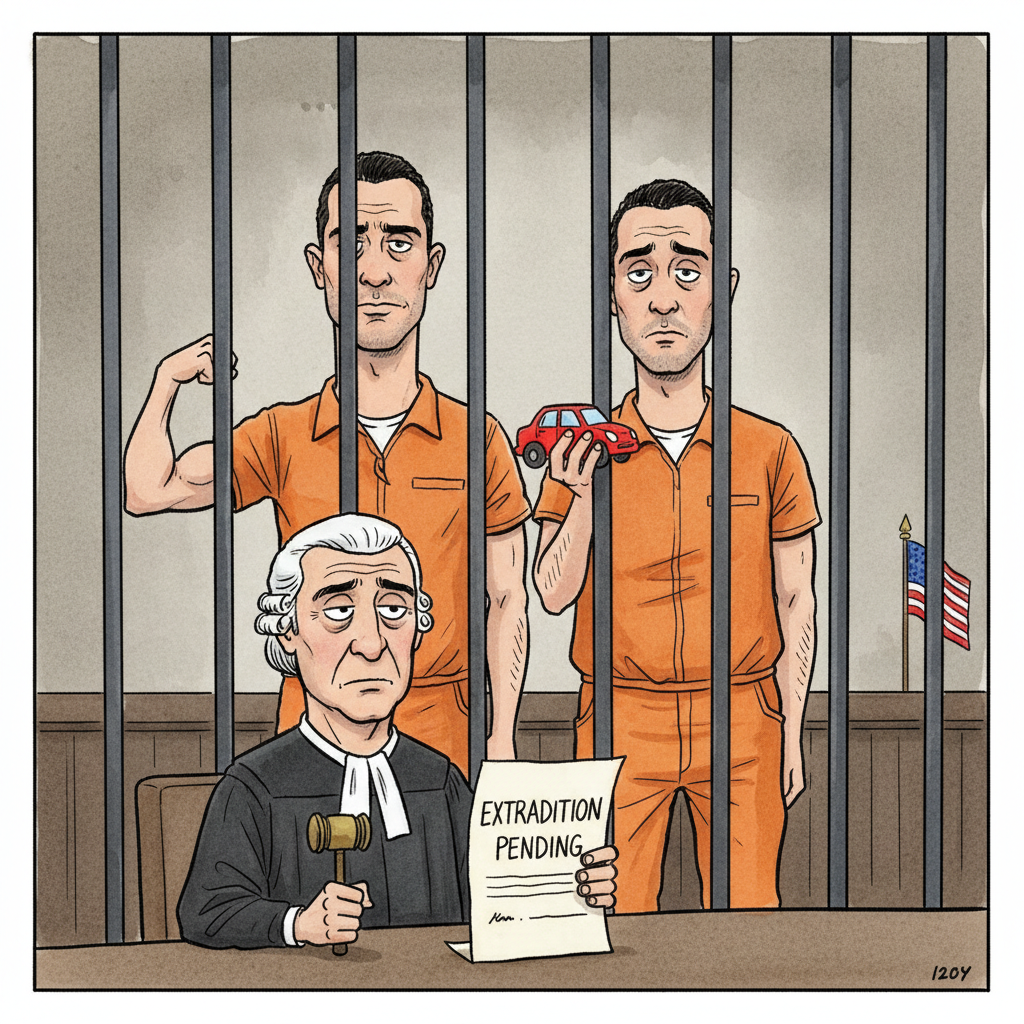
In a ruling that has truly baffled the segment of the internet that thinks wearing sunglasses indoors signifies deep intellect, a Miami judge has decreed that Andrew and Tristan Tate must continue their involuntary 'cultural exchange program' within the confines of a U.S. detention facility. Apparently, the judicial system, with its quaint reliance on things like 'due process' and 'not letting people flee,' remains stubbornly immune to the persuasive power of TikTok algorithms and vaguely misogynistic motivational speeches. Legal experts speculate this decision might hint at a disturbing trend where even self-proclaimed 'top Gs' are subject to the same pedestrian laws as the rest of humanity, a concept some of their followers are still struggling to process without deploying at least three crying emojis.
The brothers, who had anticipated a swift return to a life of Bugattis and thinly veiled self-help seminars, now face the stark reality of institutional catering and a distinct lack of branded merchandise opportunities. Their legal team argued passionately that denying them bail was a cruel and unusual punishment, particularly given the potential for their 'alpha male content' to go stale without constant, unbridled access to luxury yachts and vulnerable young women. However, the court, in its infinite lack of appreciation for performative masculinity, simply cited 'flight risk' – a term that, in fairness, has taken on a whole new meaning when applied to individuals who literally jet-set for a living.
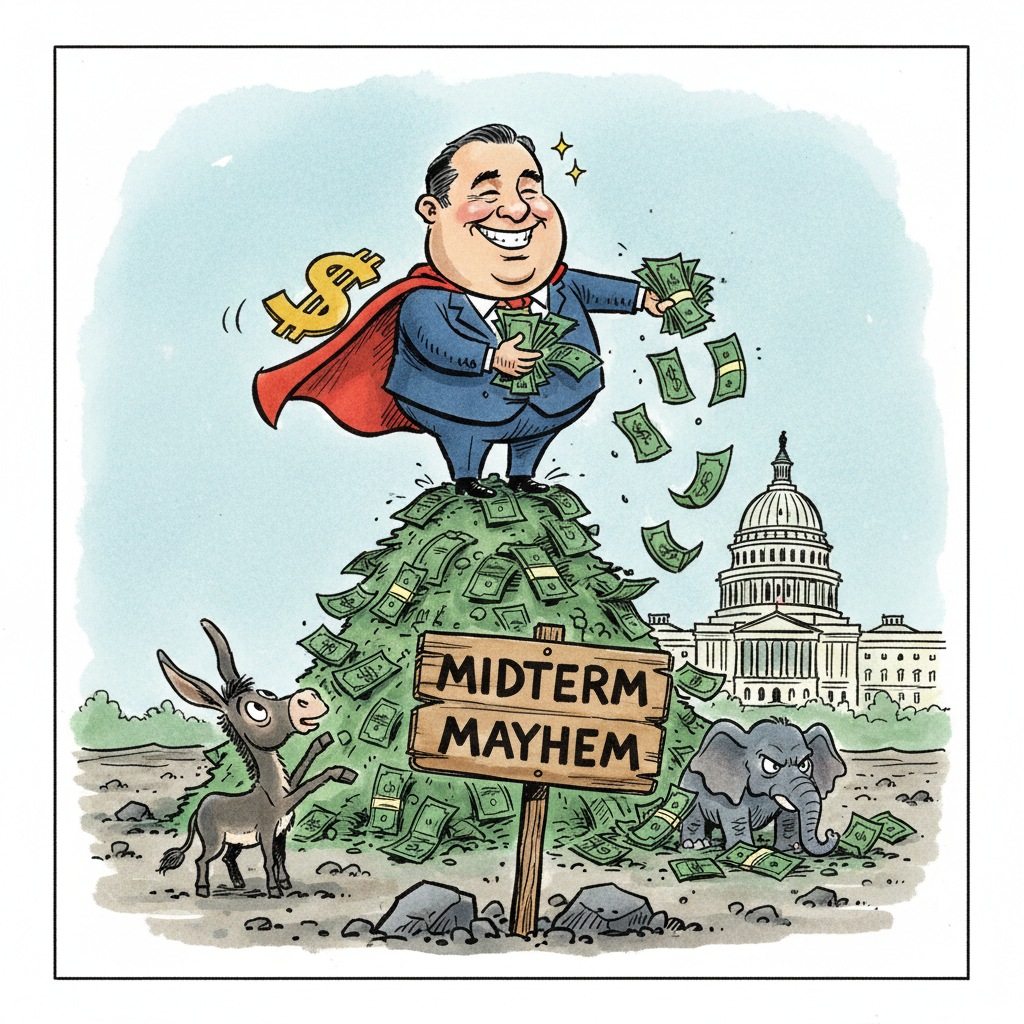
In a move that surprised absolutely no one fluent in the language of American politics, Illinois Governor J.B. Pritzker, a man whose personal fortune could fund a small nation-state, has announced the formation of a new, totally not-at-all-self-serving group aimed at "assisting" Democrats in battleground races. The initiative, subtly titled 'The Pritzkerian Prosperity Pact for a Progressive Future (P5F)', will funnel a modest $20 million into midterm coffers, presumably to ensure that the electoral landscape is sufficiently fertilized for a certain someone's future ambitions. Critics, primarily those lacking private jets and personal chefs, decry the optics of a billionaire 'rescuing' democracy with pocket change, suggesting it rather resembles a dragon 'helping' a village by only incinerating a few homes.
Pritzker's office, in a statement dripping with the kind of earnest altruism usually reserved for infomercials, clarified that the P5F is merely an "investment in good governance," much like purchasing a controlling stake in a struggling local diner is an "investment in community spirit." Insiders suggest the true goal is to ensure that by 2028, every congressional district in America owes its very existence to a man whose surname is synonymous with both luxury hotels and industrial-scale philanthropy. The unspoken message? You can always tell a Pritzker by the trail of perfectly placed political donations. Or, as one anonymous aide quipped, "He's not buying elections; he's merely ensuring they receive adequate financial hydration."
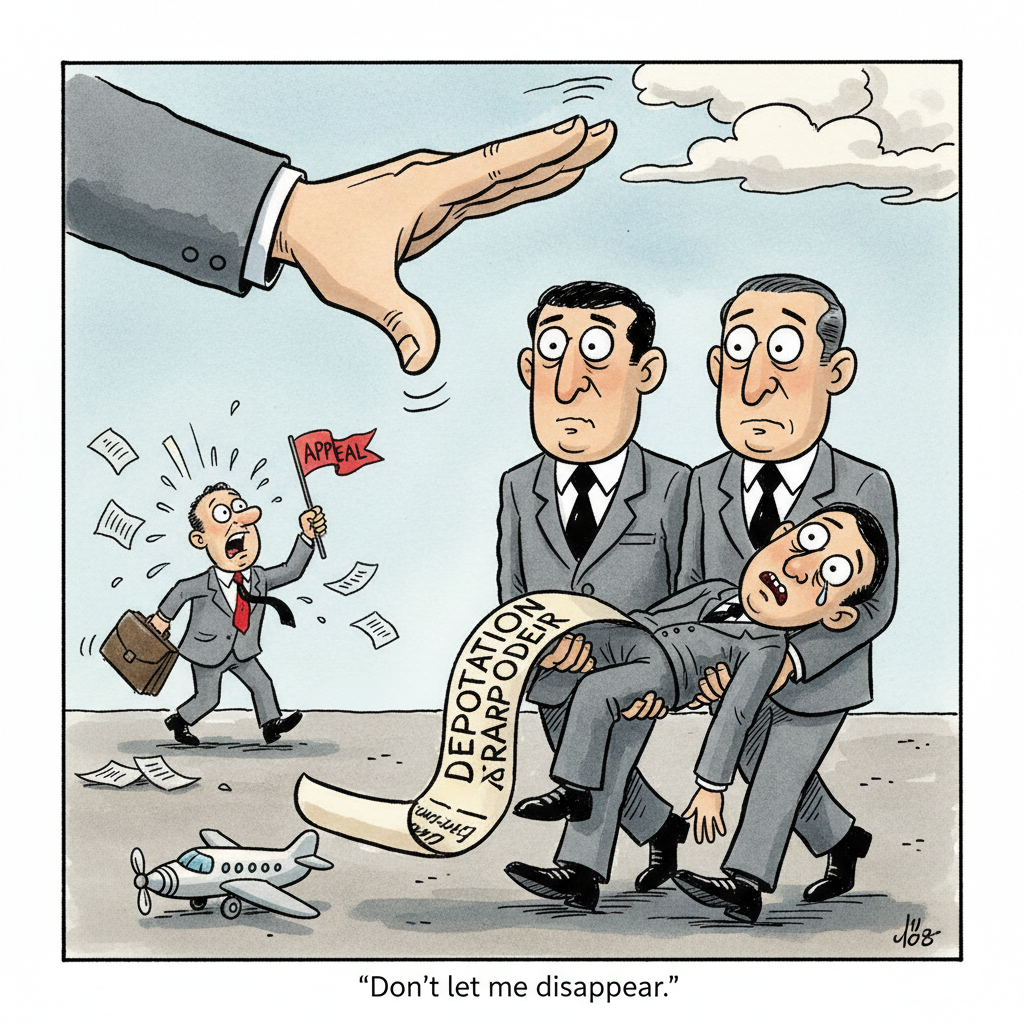
In a truly Kafkaesque triumph of administrative inertia, Mr. Lue Yang found himself in the unenviable position of attempting to appeal a deportation order while, one presumes, smelling jet fuel. The former teenage home invader, whose past transgressions apparently aged like a fine, unremittable wine, was literally at the boarding gate, or perhaps even in the overhead bin, when his legal team executed what can only be described as a Hail Mary Pass with a side of existential dread. One can almost picture the scene: an immigration official, clipboard in hand, politely informing Mr. Yang that while his plea for non-disappearance was 'noted,' the 'pre-takeoff protocols' take precedence over pesky human rights. This, of course, isn't about justice, but about the elegant ballet of paperwork. After all, if we allowed every individual facing a one-way trip to clog up the system with last-minute legalities, how would we ever achieve peak deportation efficiency? The entire operation would grind to a halt, leaving countless forms unfiled and countless bureaucrats tragically underutilized. One can only hope Mr. Yang brought a good book for the flight, assuming he didn't, in fact, disappear into the digital ether of bureaucratic processing before reaching cruising altitude.
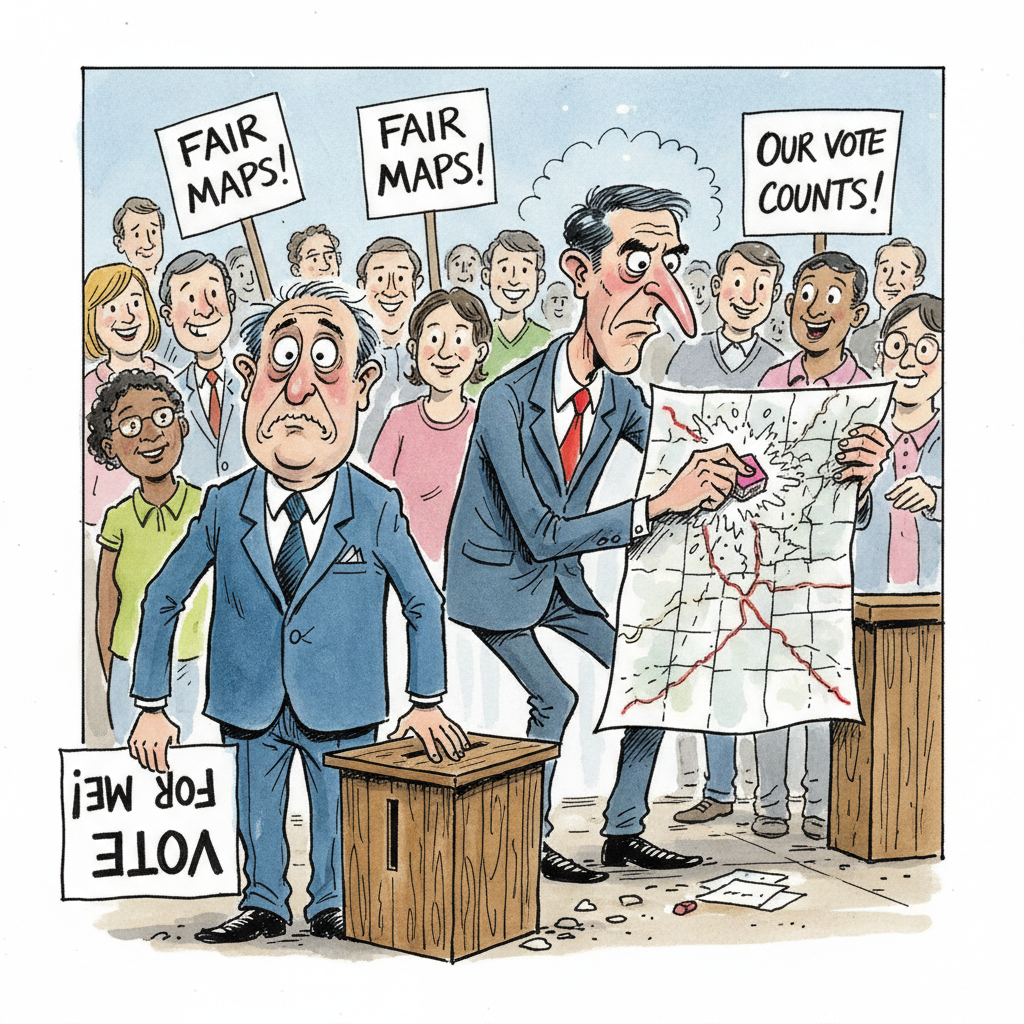
In a development that has sent shockwaves through the very foundations of American political science, Wisconsin Democrats are reportedly grappling with the perplexing notion that a fair electoral map could, theoretically, result in their party actually winning elections. For years, the state's legislative districts were so meticulously sculpted, so geometrically avant-garde, that one could practically trace the outline of a sitting Republican congressman's personal yacht with them. Now, with the Supreme Court's unexpected declaration that 'voter participation *should* have some bearing on election outcomes,' Democrats find themselves in the bewildering position of having to actually *campaign* rather than simply lamenting the inevitable. \n\nLocal pundits, who had long since retired their 'What If?' scenarios for Wisconsin politics, are scrambling to recall basic democratic principles. 'It's like finding out the game isn't rigged for the house after all,' whispered one visibly disoriented political analyst, adjusting his 'Make America Geriatric Again' baseball cap. The sudden influx of competitive districts means politicians will have to interact with actual constituents, a jarring prospect for those who had grown accustomed to only conversing with strategically placed mailboxes. \n\nObservers anticipate a surge in awkward 'door-knocking' incidents, with candidates accidentally asking homeowners if they're registered to vote in the 'Greater Badger State Republican Enrichment Zone, Sub-District Gamma.' Experts warn that if this 'democracy' trend continues, Wisconsin might even start resembling a state where the will of the people isn't determined by an algorithm designed to make a salamander's shape look symmetrical.
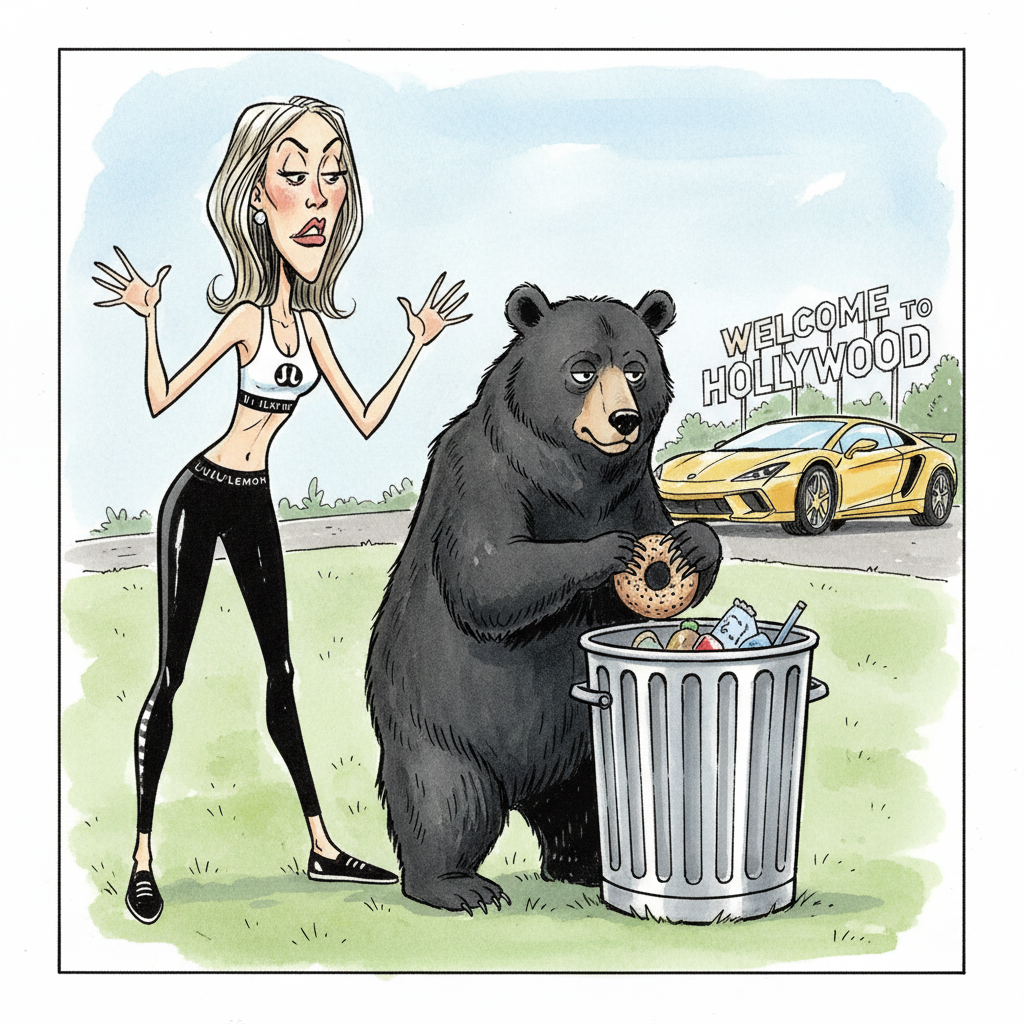
It appears the California Dream isn't just for struggling actors and tech bros anymore. Recent data, meticulously compiled by the Department of Bearish Urban Translocation (DBUT), indicates a surging trend of Ursus americanus migrating from their traditional sylvan abodes directly into Los Angeles's most aspirational neighborhoods. Apparently, these bears, numbering an estimated 60,000, have grown weary of rustic foraging and are instead seeking the finer things in life, primarily artisanal compost bins and the occasional unattended Tesla. Human residents, long accustomed to adapting only to traffic and new avocado toast trends, are now being gently nudged towards cohabitation with creatures whose primary cultural contribution is hibernating. One could almost feel sorry for the bears, if they weren't so adept at ransacking designer outdoor kitchens. Experts suggest this is simply 'the market' responding to an increased demand for raw protein and an acute housing shortage for large, furry mammals who prefer not to pay rent.
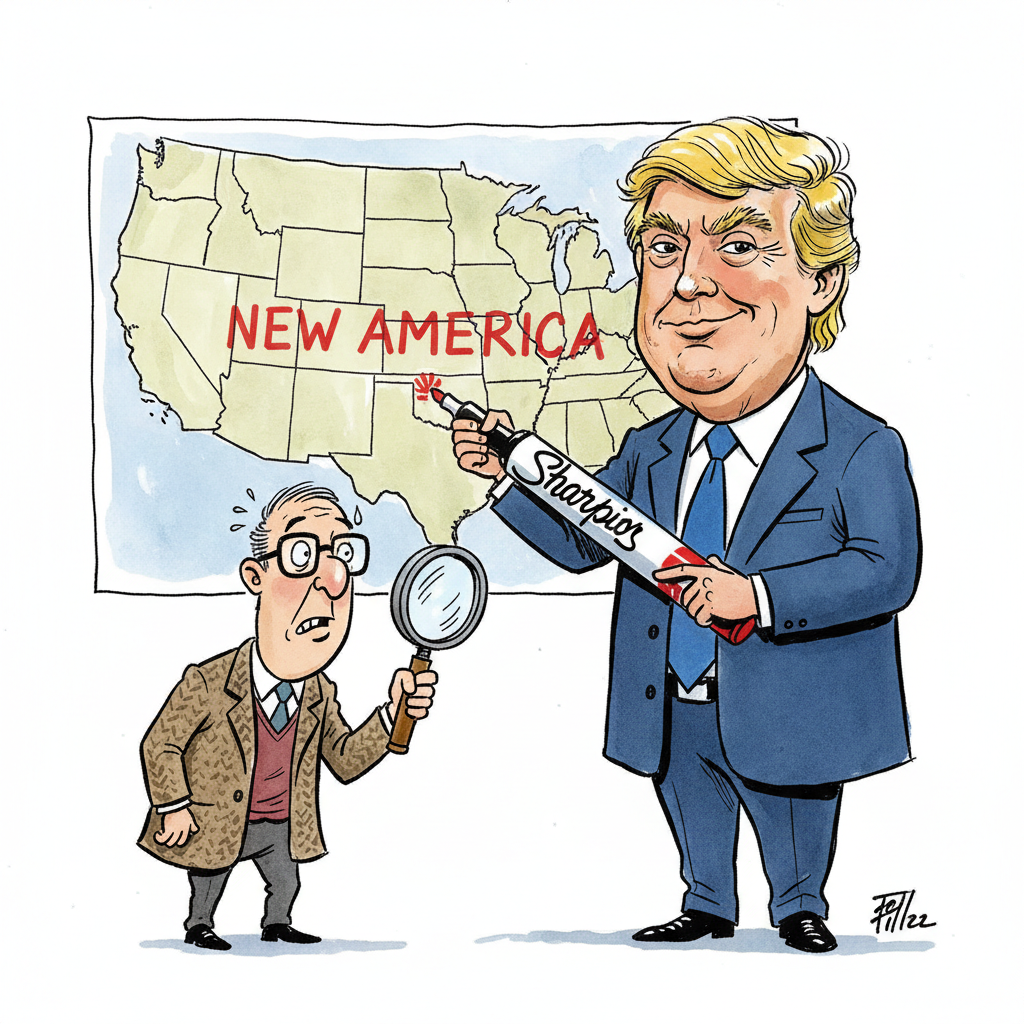
In a move that stunned precisely zero geographers, cartographers, or anyone with a working internet connection, former President Donald J. Trump took to his social media platform to unveil a truly visionary, hand-drawn map. Sources close to the former Commander-in-Chief confirm that the roughly-scribbled alteration of New Mexico to 'New America' was not, as some initially speculated, a mere slip of the Sharpie, but rather a profound philosophical statement on the nation’s suboptimal nomenclature. 'Frankly, 'New Mexico' is just lazy,' a spokesperson who requested anonymity to avoid public ridicule stated, adding, 'It’s like naming your dog 'Canine.' Where's the brand recognition? The 'America' brand, on the other hand, is — and I can't stress this enough — tremendous.' Critics of the proposed territorial rebrand were immediately dismissed as 'haters' and 'people who like old, boring names,' proving once again that in the current political climate, one can effectively gaslight an entire state into an identity crisis with a single, poorly rendered PNG.
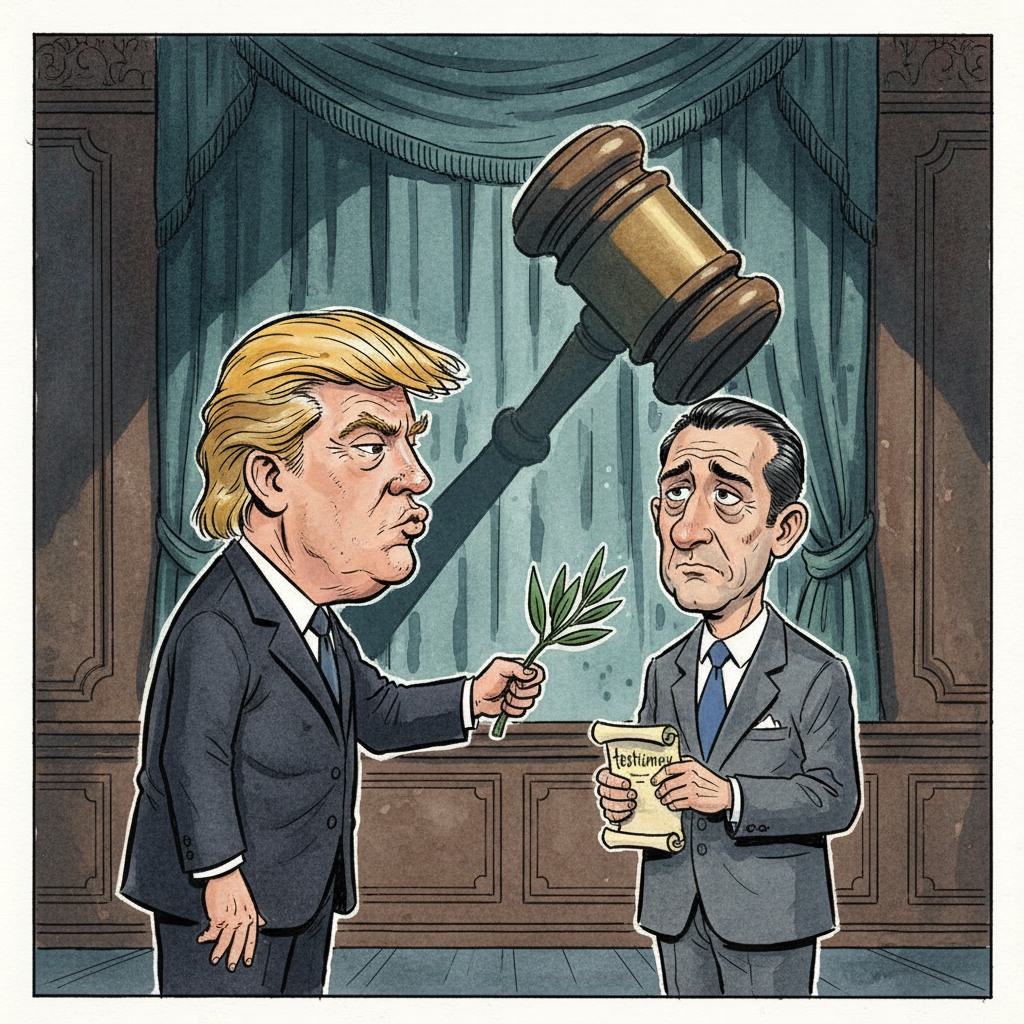
In a stunning geopolitical maneuver rivaling the complexities of a toddler's tantrum, former President Trump has reportedly extended an olive branch (or perhaps a subpoena-shaped novelty foam finger) to his onetime personal attorney, Michael Cohen. The détente, described by sources close to the situation as a 'mutual recognition of shared media oxygen needs,' comes after years of public acrimony, during which Cohen was famously dubbed a 'rat.' Observers note that while the terminology has shifted, the former president's fundamental understanding of loyalty remains as fluid as a super PAC's ethics policy.
Despite Trump's recent pronouncements suggesting a full recantation of Cohen's damning testimony, legal scholars – and anyone with basic internet access – confirm that the ex-fixer's sworn statements are very much intact, much like the indelible stain of a fast-food wrapper on a pristine Mar-a-Lago carpet. The reconciliation appears to be less about a genuine emotional healing process and more about an urgent, tactical recalibration of public narrative, proving once again that in the grand theater of political influence, even a 'rat' can be temporarily rebranded as a 'reformed, albeit still squeaky, truth-teller' if the ratings demand it.
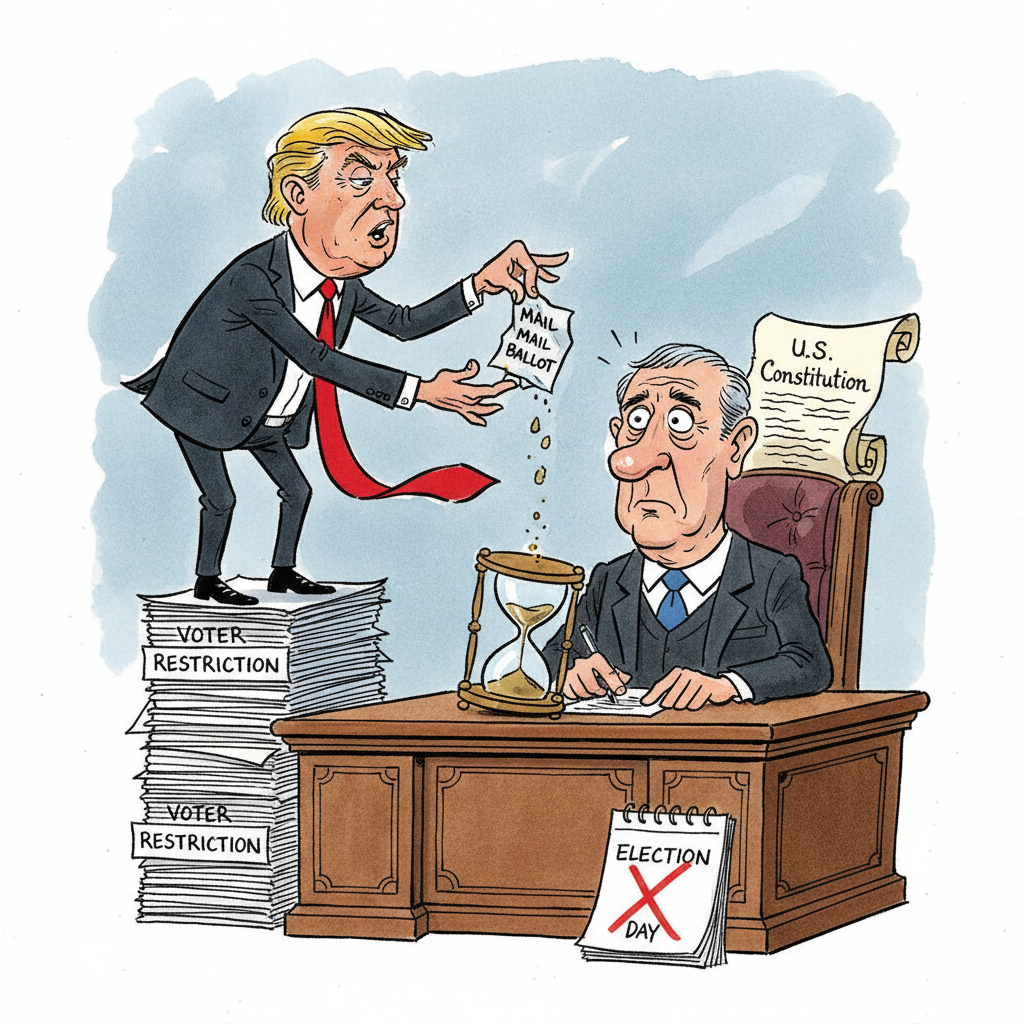
In a move that has legal scholars everywhere nodding sagely at their own inevitable doom, the Trump administration has once again petitioned the Supreme Court to bless its fervent desire to make voting a more extreme sport. Apparently, the existing gauntlet of polling place closures, voter ID laws, and the occasional rogue squirrel disrupting ballot boxes just isn't quite exclusionary enough for a truly robust democracy. The filing, submitted with the quiet desperation of a child demanding candy in the checkout aisle, asks the justices to greenlight restrictions on mail-in ballots, mere moments before those very ballots begin their perilous journey through the postal system, past rabid dogs, and into the eager hands of what one can only assume are thoroughly unimpeachable citizens. White House strategists confirmed their commitment to a voting process so cumbersome, only the truly dedicated – or perhaps those with an exceptionally high pain tolerance – will manage to cast a ballot. 'It's about quality, not quantity,' explained a senior advisor, polishing a monocle with a handkerchief made of finely shredded voter rolls. 'We're looking for a highly curated electorate, you see.'
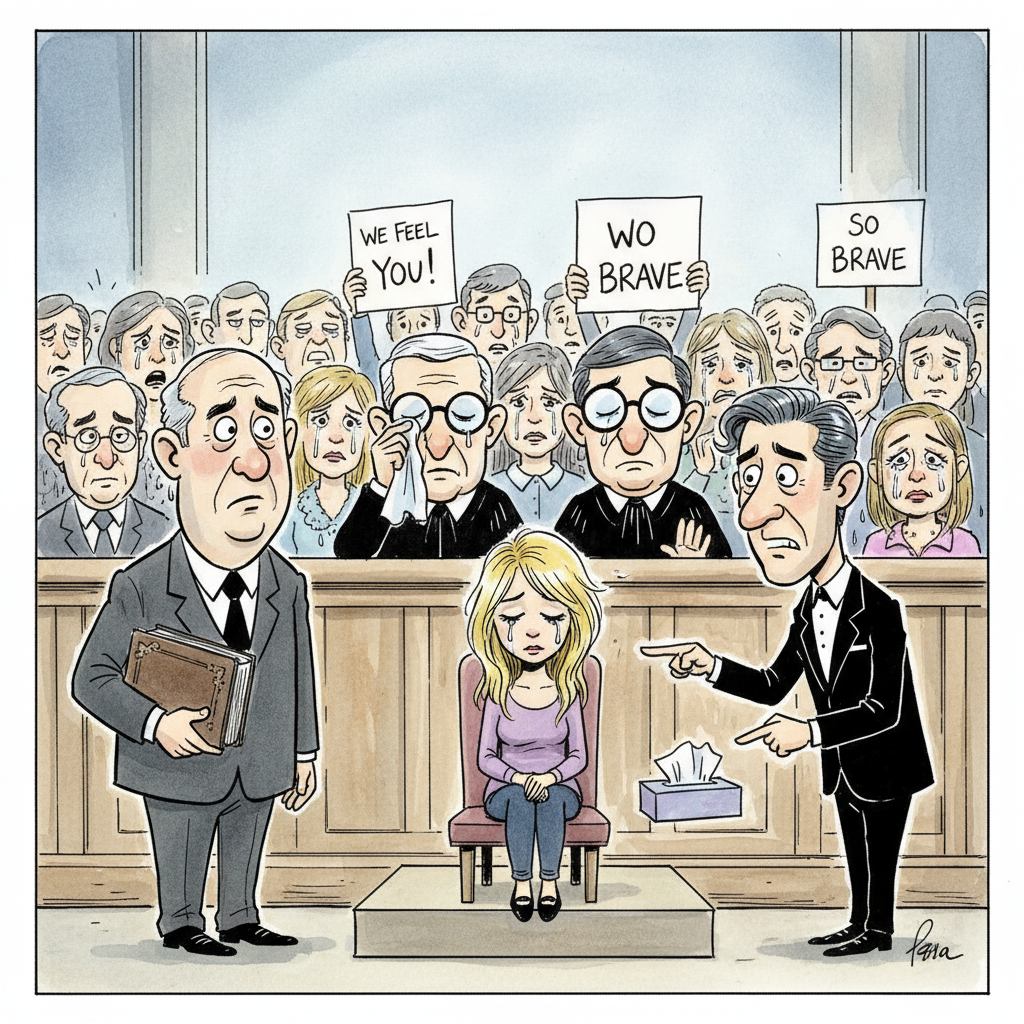
In a groundbreaking legal maneuver that could revolutionize jurisprudence for the chronically distressed, the defense team for Lindsay Clancy unveiled their 'She Was Really, Really Sad' strategy. Experts are hailing this as a monumental shift from the antiquated 'evidence' and 'facts' approach, pivoting instead to a more emotionally resonant 'vibes-based' defense. Apparently, displaying sufficient levels of existential despair, particularly when coupled with a well-orchestrated courtroom weep, can now override mere culpability. Legal analysts across the nation are frantically revising their textbooks, replacing sections on 'mens rea' with 'mood dysregulation' and 'depressive chic.' One prosecutor, reportedly seen sporting a single tear while clutching a copy of 'Melancholy for Dummies,' admitted, 'We just couldn't compete with that level of profound, sympathetic angst. Our client only felt mildly remorseful, which, frankly, looks quite uncaring by comparison.' This development promises to usher in an era where effective legal representation relies less on legal precedent and more on an actor's ability to convey profound mental anguish, ideally with a touch of tragic beauty.
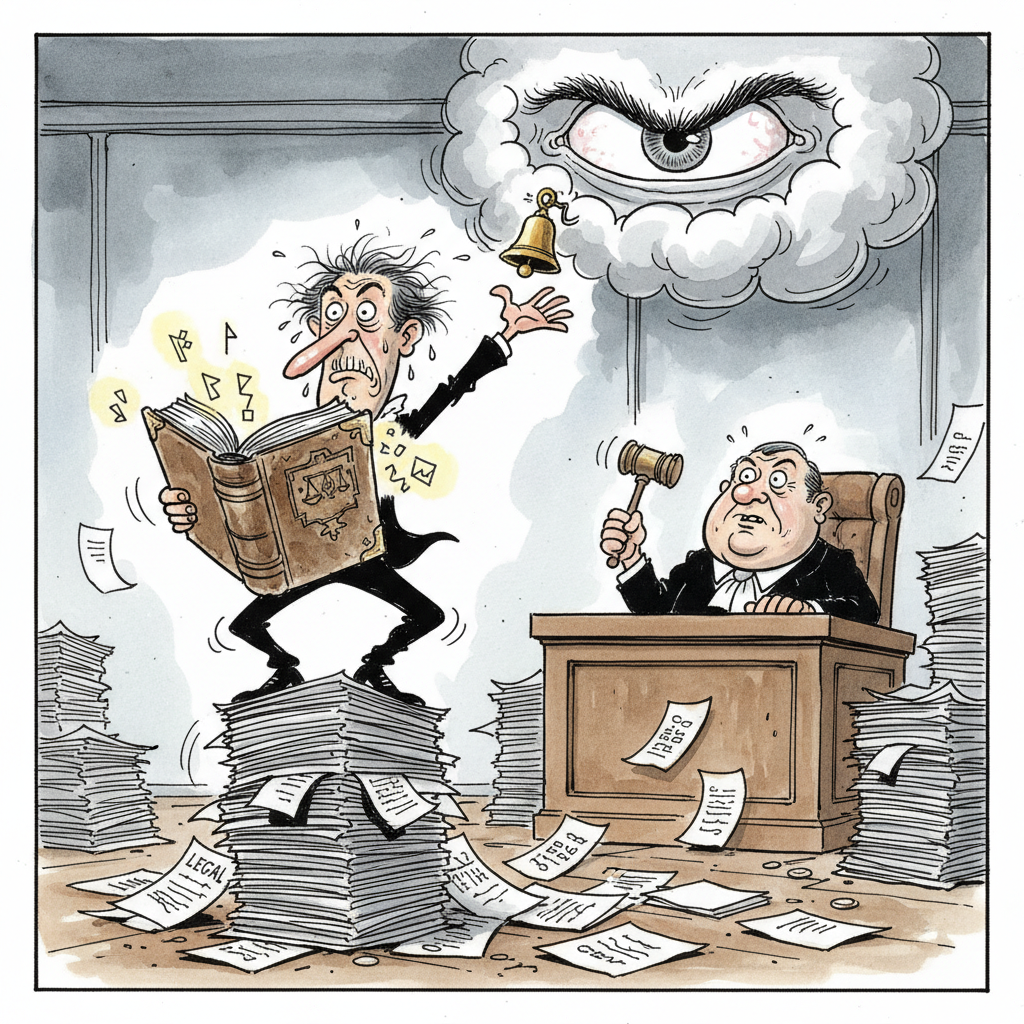
In a bold maneuver that legal scholars are already calling 'the most dramatic stalling tactic since O.J. Simpson's white Bronco chase, but with more paperwork,' Lindsay Clancy's defense attorney has successfully petitioned a lower court for a brief reprieve, not to consult dusty law books, but to appeal directly to a 'higher court.' While specifics remain cloaked in procedural jargon, sources close to the courthouse rumor that 'higher' in this context might refer less to an appellate division and more to, say, the Council of Elrond, or perhaps a particularly astute celestial body. The judge, apparently captivated by the sheer audacity or perhaps just needing a coffee break, granted an hour for this unprecedented legal outreach.
Legal experts are now scrambling to draft briefs on the admissibility of evidence gleaned from scrying pools or the binding nature of a decree from the Grand Cosmic Arbitrator. Should this strategy prove successful, it could revolutionize jurisprudence, allowing future defendants to bypass pesky earthly statutes in favor of, hypothetically, the Code of Hammurabi as dictated by a sentient nebula. Meanwhile, the prosecution is reportedly prepping a rebuttal that questions the chain of custody for any celestial subpoenas, ensuring the hallowed halls of justice remain perpetually bogged down, no matter the dimension.
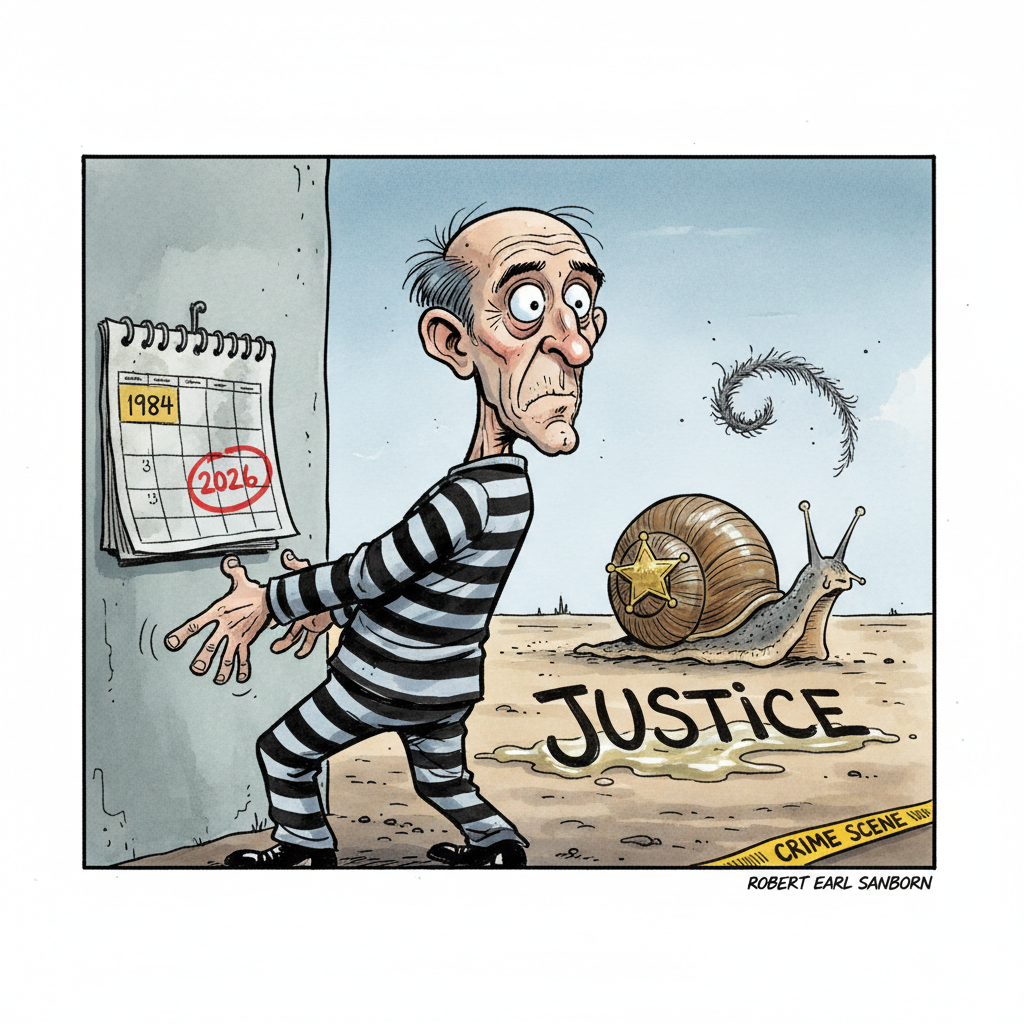
In a stunning display of temporal inertia, the Texas justice system, after a brief, four-decade-long power nap, has finally managed to convict a man for the 1984 murder of a teen girl. Robert Earl Sanborn, 61, was found guilty of murder this week, proving conclusively that if you just leave a cold case simmering on the back burner for long enough, eventually a jury will get around to it. Prosecutors asserted Sanborn supplied the pharmaceuticals that led to the girl's demise, a detail that surely must have been quite fresh in everyone's mind back in, say, 1985.
Legal experts are hailing this as a groundbreaking achievement in judicial patience, setting a new precedent for 'better late than never, by a factor of 42.' The 'Texas Killing Fields,' as the desolate region where the victim's remains were found became ominously known, can now potentially shed that moniker and perhaps be rebranded as the 'Texas *Eventually* Getting Around To It Fields.' Critics note that while justice was indeed served, it arrived with the unhurried grace of a particularly slow-moving glacier, leaving ample time for several generations of witnesses and evidence to embark on their own journeys into the great beyond.
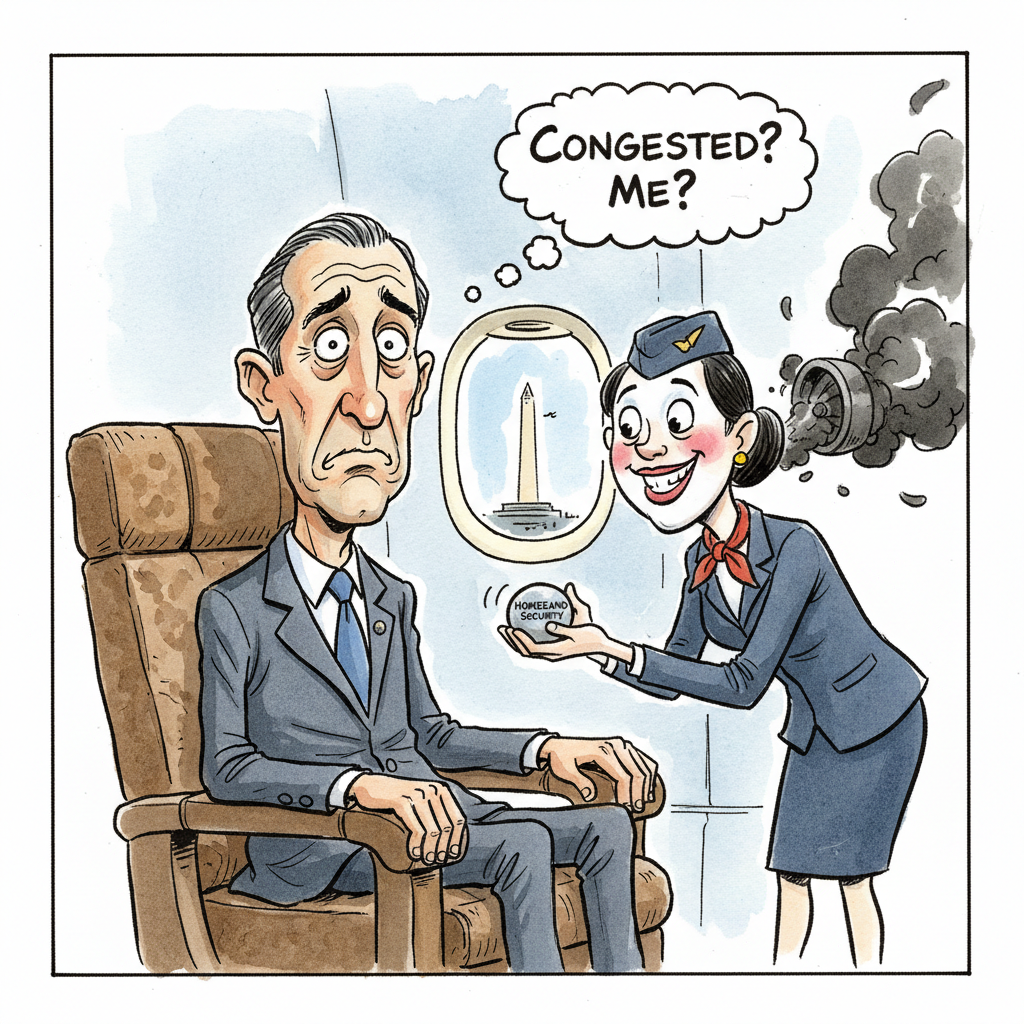
In a truly shocking display of bureaucratic efficiency, it was reported this week that a U.S. Homeland Security official's plane, for reasons presumably too terrifying to disclose, managed to initiate an emergency landing. This incident, sources confirm, occurred near Washington D.C.'s famously serene and uncongested airspace, where it is absolutely unheard of for anything even mildly inconvenient to happen to a high-ranking individual. Experts are now debating whether the 'emergency' was a genuine mechanical failure or simply the pilot's desperate attempt to escape a particularly egregious PowerPoint presentation on 'Synergy in Cross-Departmental Preparedness Initiatives.'
The near-catastrophic event highlights a growing, yet entirely ignored, trend: senior government officials finding themselves in airborne predicaments that, while alarming, rarely involve them doing anything remotely resembling 'work.' Critics suggest that perhaps instead of having emergency landings, these officials should instead experience emergency 'take-offs' to regions where their presence is actually beneficial. The unnamed official was reportedly unharmed, though sources close to the situation say they briefly considered having to interact with common citizens during the emergency, a prospect deemed more harrowing than a dual-engine failure.
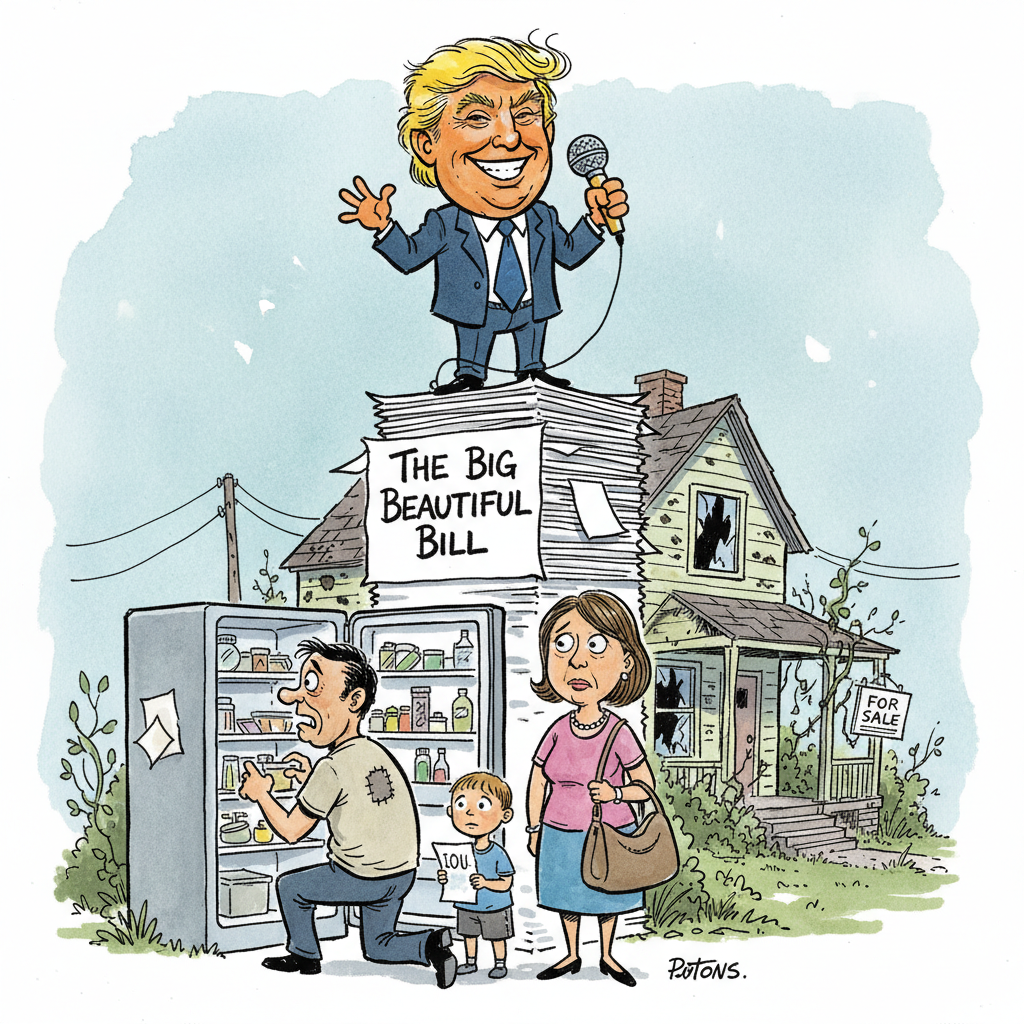
Washington D.C. is currently embroiled in a crisis of existential panic as a recent public appeal for anecdotes regarding the tangible benefits of a certain 'Big Beautiful Bill' yielded precisely zero coherent responses. Initial expectations were that citizens would flood inboxes with tales of glistening gold toilets appearing spontaneously in their homes or pet poodles suddenly inheriting offshore accounts. Instead, the editorial team of *The Poopday Times* received only frantic emails detailing rising grocery costs, stagnant wages, and one particularly moving testimonial about a man who briefly considered eating his own sofa cushions before remembering he'd already sold them for 'strategic savings.'
Economists, baffled by the public's inability to identify where the 'big beautiful' had actually landed, have suggested a radical new theory: the bill wasn't a piece of legislation at all, but rather a collective fever dream induced by too much cable news and not enough fiber. Political pundits, meanwhile, are frantically re-watching old speeches, searching for the exact moment the phrase 'bill' was subtly replaced with 'vague, shimmering promise of future prosperity.' The White House, in a press briefing that consisted primarily of a spokesman staring blankly at a teleprompter, assured the public that the 'beautiful' was 'definitely happening somewhere, probably in a tax bracket you can't afford to worry about.'
It appears the political landscape of Massachusetts has finally achieved peak boomer, with the state's Senate primary pitting an octogenarian incumbent against a challenger who, while technically 'younger,' still boasts a birth year that predates Netscape Navigator. Sources close to the campaign, mostly nursing home residents who still use dial-up, report profound confusion over which candidate represents the 'future,' given that both are old enough to remember when 'climate change' was just called 'weather.'
Representative Seth Moulton, a spry 45-year-old by Congressional standards (which is to say, he can still type with more than two fingers), is attempting to unseat Senator Ed Markey, who, at 78, has apparently achieved a state of political photosynthesis, drawing energy directly from the Capitol Building's air conditioning system. Voters, meanwhile, are left grappling with the horrifying realization that 'generational change' in politics might simply mean electing someone who started their career when fax machines were still considered cutting-edge. Political analysts, themselves mostly millennials contemplating early retirement, predict the race will ultimately be decided by whoever can most convincingly pretend to understand TikTok without actually having to use it.
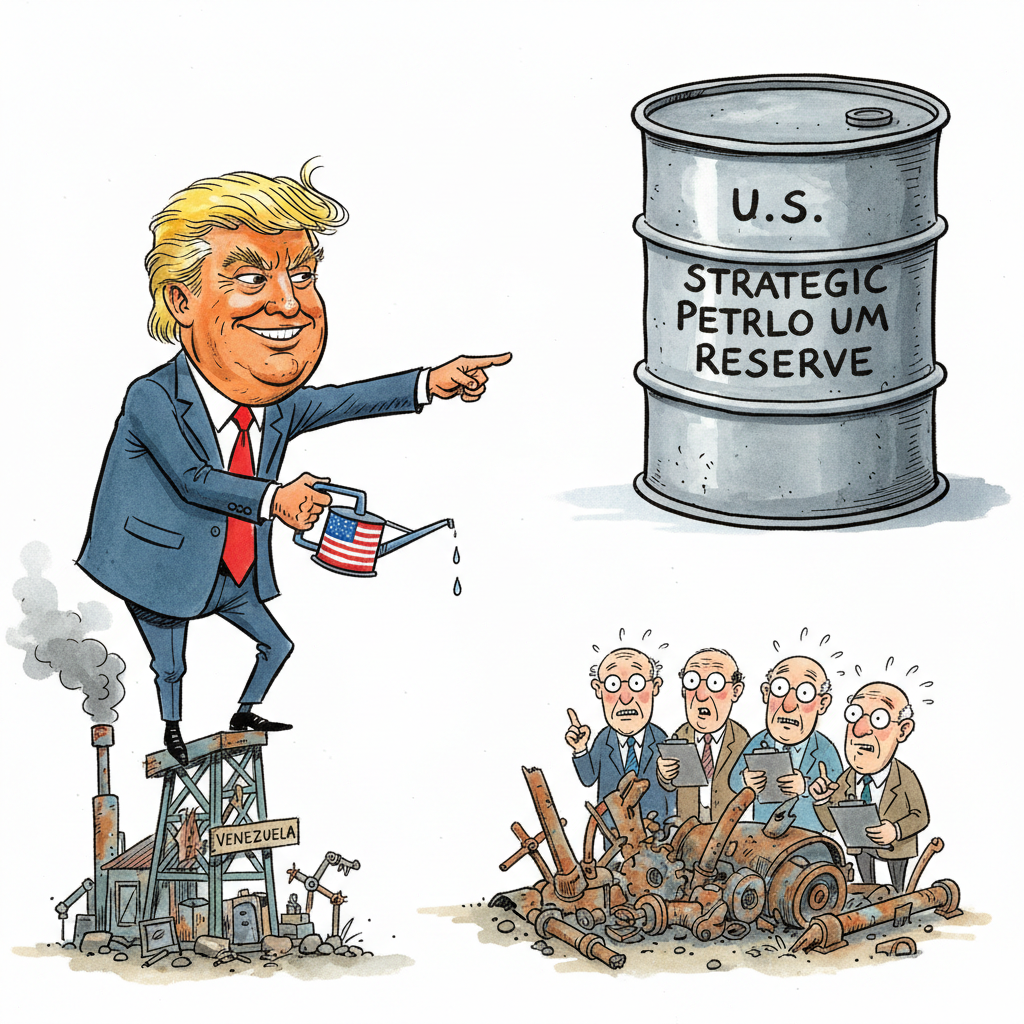
In a move that’s either a stroke of geo-political genius or a particularly vivid fever dream, Donald J. Trump recently declared that America’s strategic petroleum reserves, apparently running on fumes since his last rally, could be swiftly topped off with oil from Venezuela. Industry experts, a notoriously pessimistic bunch, immediately began quibbling about 'infrastructure' and 'timeframes,' suggesting such a feat might take 'years' due to 'Venezuela's currently resembling a post-apocalyptic theme park.' Clearly, these 'experts' haven't been adequately briefed on the Trumpian concept of 'immediately.'
Critics also pointed out that the very oil infrastructure in question, currently held together with chewing gum and a prayer, was largely dilapidated during the socialist regime’s reign, which the U.S. has spent years, shall we say, *discouraging*. The logistical gymnastics required to extract, refine, and transport this 'greatest oil ever' would make the Suez Canal crisis look like a minor traffic jam. But for a man who once suggested injecting disinfectant, solving a global energy crisis with a wish and a flick of the wrist seems par for the course. It appears the only thing faster than Trump’s pronouncements is the rate at which reality struggles to keep up.
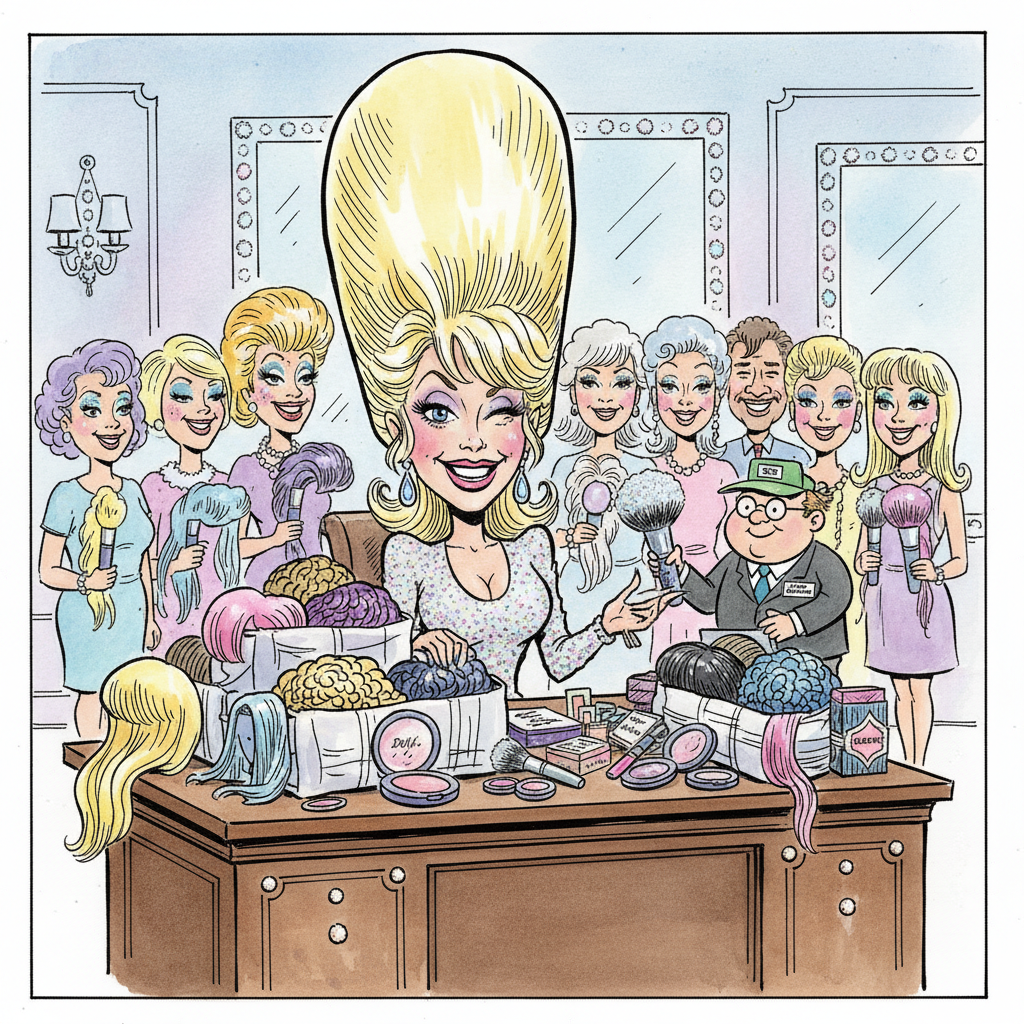
America's most reliably golden-haired national treasure, Dolly Parton, has apparently been quietly bankrolling the collective self-expression of an entire demographic, proving once again that true patronage doesn't require a gilded palace, just a good wig budget. While other billionaires are busy colonizing the moon or hoarding dragon hoards of NFTs, Parton has been investing in something far more tangible: the societal infrastructure of fabulousness. Her 'understanding' of the LGBTQ+ community, we're told, wasn't merely performative allyship; it was a deeply personal, almost forensic appreciation for the transformative power of synthetic hair and strategically applied glitter. One can only imagine the sheer volume of polyester fibers and iridescent pigments involved in this grand, under-the-radar cultural initiative. It begs the question: if one woman can single-handedly provide the emotional and sartorial scaffolding for millions, what exactly have our publicly funded arts programs been doing all this time? Perhaps the NEA should pivot from ballet to bouffants, acknowledging the true architects of communal joy.
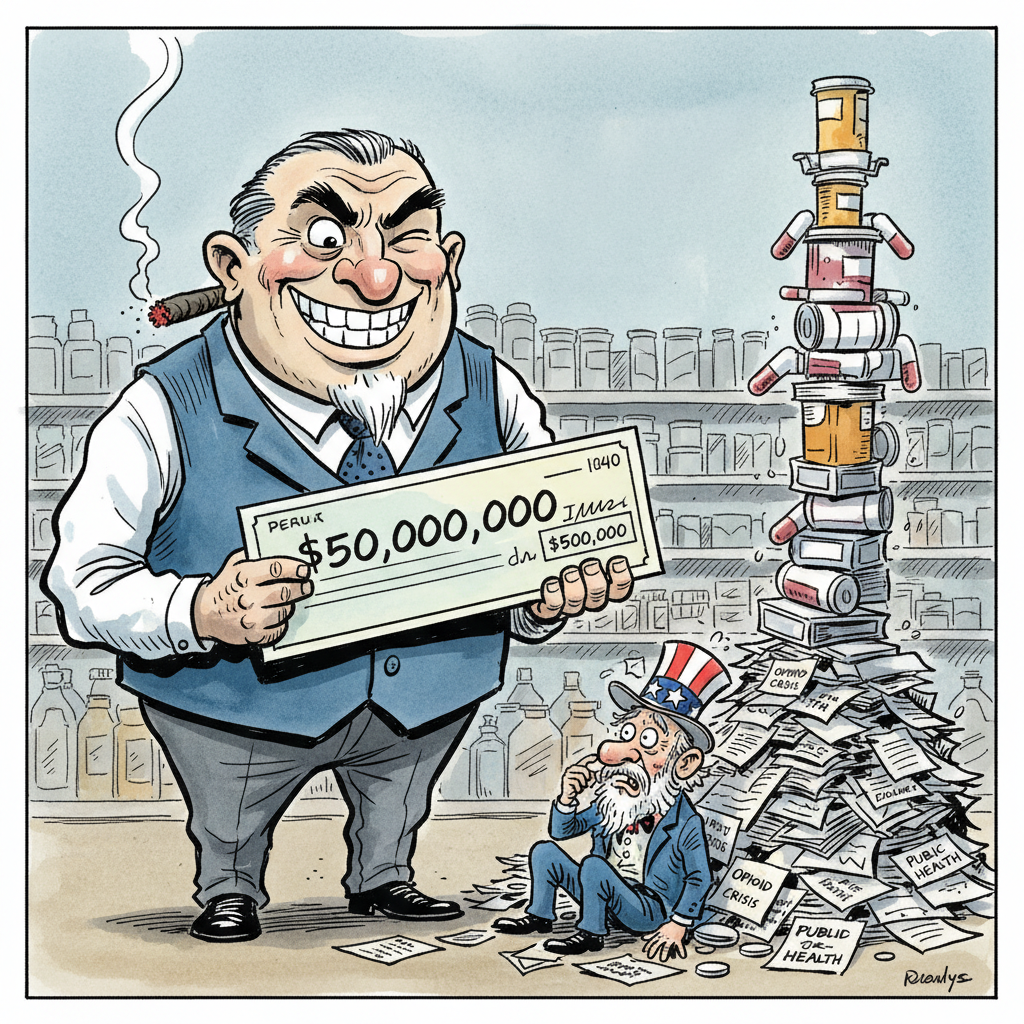
In a move lauded by zero economists and even fewer addicts, retail behemoth Walmart has graciously agreed to part with $50 million to settle allegations it fueled the opioid epidemic, effectively purchasing a premium 'Get Out Of Jail Free' card from the U.S. government. A spokesperson, speaking from behind a barricade of suspiciously discounted pain relievers, stated the payment represents a 'strategic reinvestment in community well-being and the innovative application of corporate philanthropy.' This groundbreaking settlement ensures that while thousands may have become addicted to pills dispensed from their brightly lit pharmacies, Walmart itself can now confidently resume its critical mission of selling everything from affordable televisions to questionable fresh produce, all while maintaining plausible deniability regarding the finer points of pharmaceutical responsibility. Experts anticipate this landmark ruling will now allow other major retailers to re-evaluate their own 'community health initiatives,' possibly leading to a competitive surge in carefully worded payouts and an unprecedented boost in the national 'Oops, Our Bad' fund.
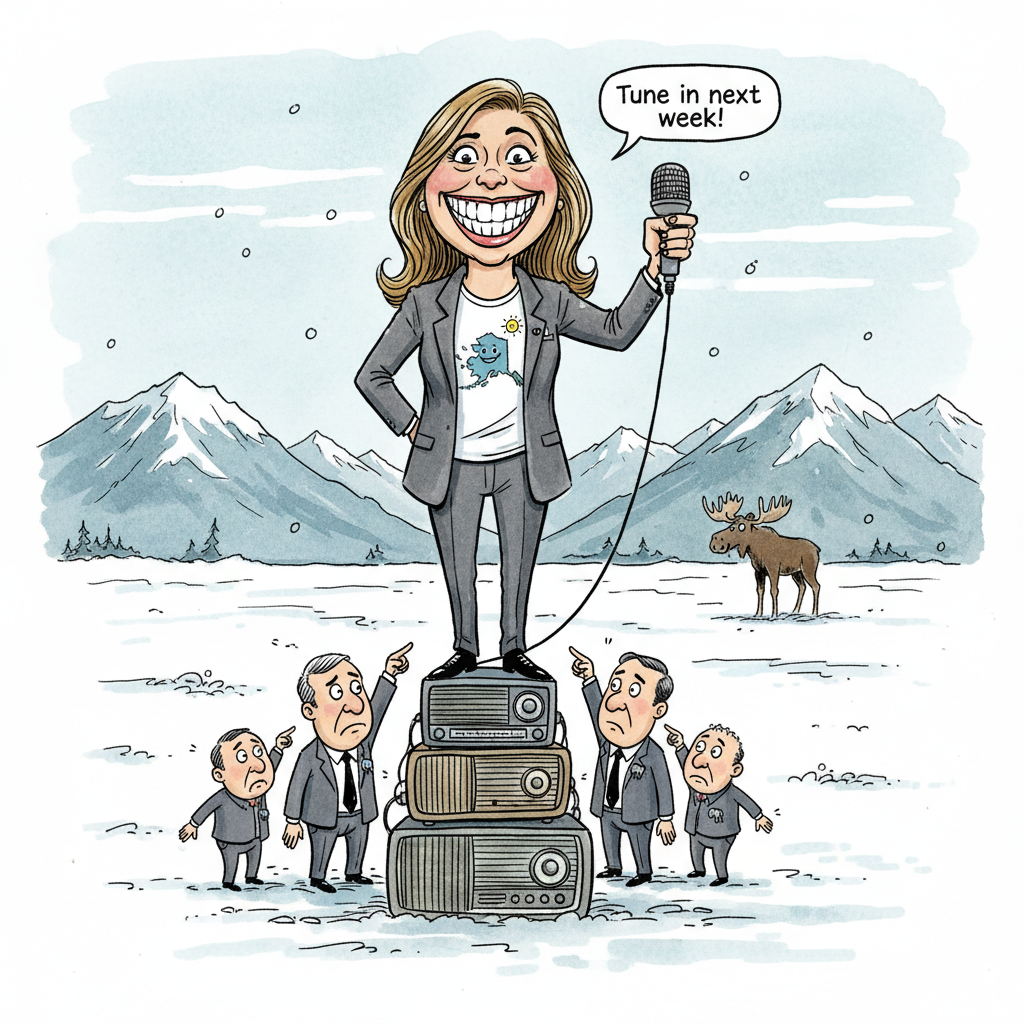
In a bold move that some are calling 'innovative' and others 'a thinly veiled cry for help,' Alaska has confirmed that conservative media personality Bernadette Wilson will indeed grace the ranked-choice ballot for governor this November. Sources close to the electoral commission, who requested anonymity lest they be forced to listen to Wilson's morning show, confirmed that her ability to appeal to 'other Republicans to consolidate around her party’s top finisher' was a key factor in her advancement. This unique strategy, often seen in high school dodgeball when the quiet kid finally gets picked, has apparently translated seamlessly into the cutthroat world of Alaskan politics. Experts now predict a November election where voters, grappling with a ballot featuring four distinct personalities, will be forced to choose between candidates who have actually governed, and candidates who have merely governed their own airwaves. It's a true testament to the democratic process, if by 'democratic process' one means a highly competitive audition for who can generate the most talk-show fodder for the next four years.
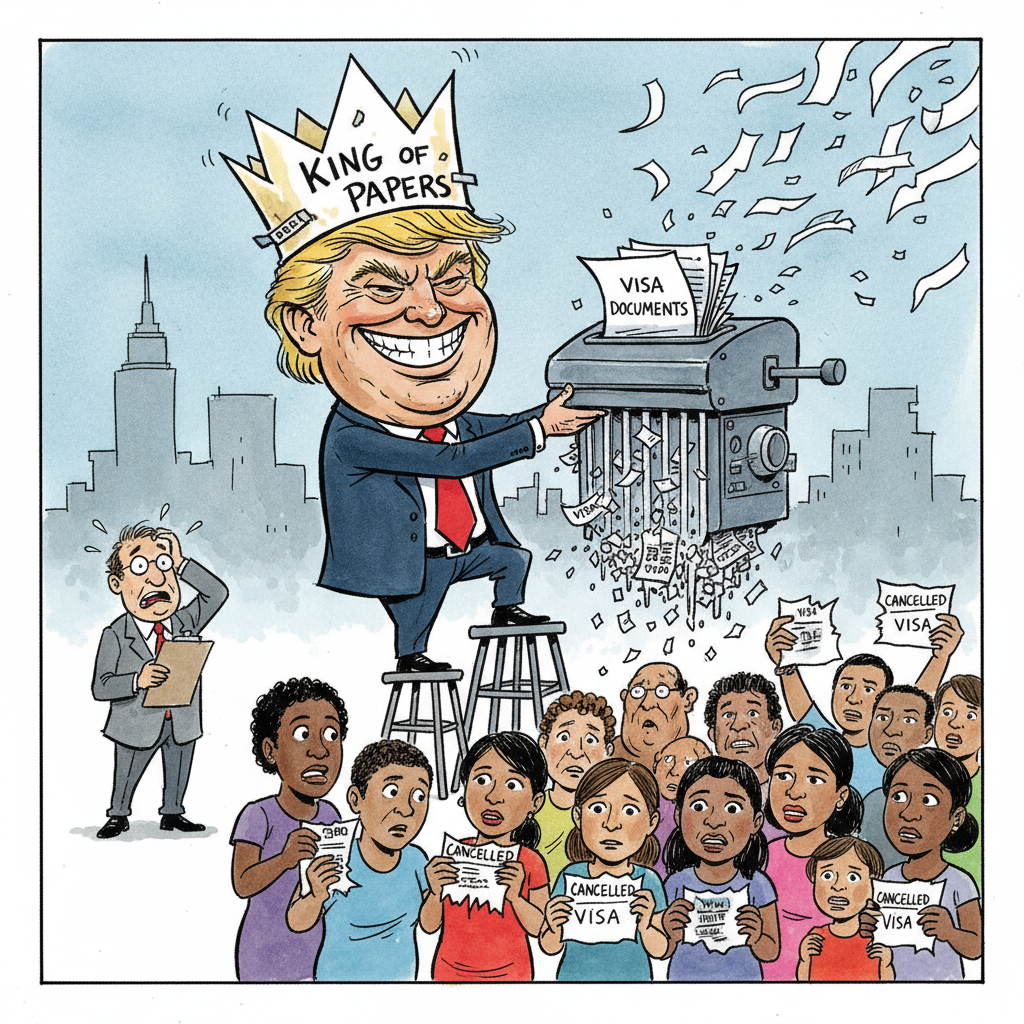
In a truly visionary display of bureaucratic efficiency, the State Department has announced an ambitious new program to streamline the asylum process by… well, by simply un-streaming it. Foreign citizens who, in a baffling display of optimism, dared to seek asylum while already holding valid U.S. visas will now face the elegant simplicity of having those very visas revoked. This ingenious maneuver, slated to affect a mere 200,000 individuals, promises to cut down on paperwork by ensuring there are fewer people with valid entry documents to begin with.
Sources close to the administration, who spoke on condition of anonymity because their desks are now guarded by attack geese, confirm that the review process is already underway, with cancellations poised to arrive in waves – much like the hopeful migrants themselves, but in reverse. Critics, largely comprised of people who understand how international law works, have called the policy 'unprecedented' and 'likely to cause chaos,' which aides say is precisely the point. After all, what's more American than a chaotic pursuit of administrative purity? Expect the nation's airport holding pens to become the new five-star accommodation for those who believed a piece of paper meant anything.
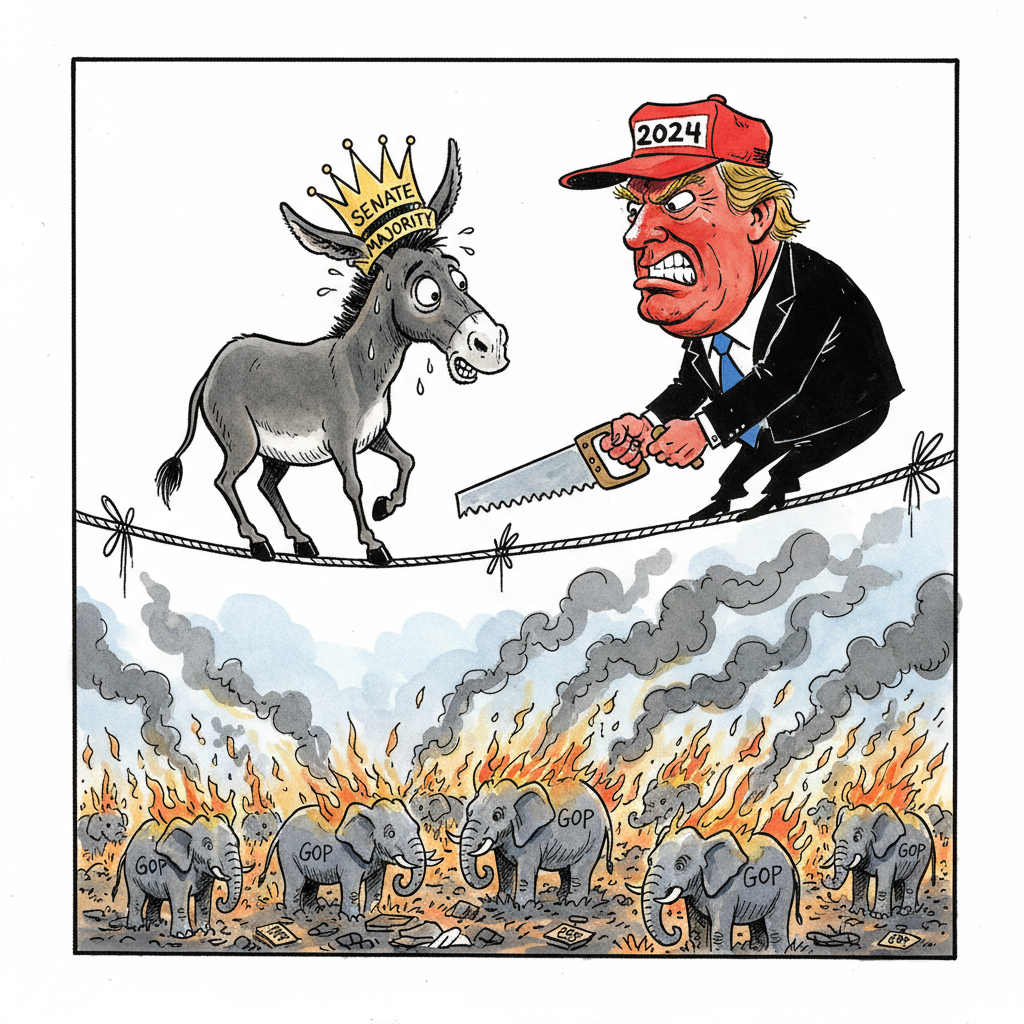
In a stunning display of political dexterity, Democratic strategists are reportedly doubling down on their 'Unpopular Opponent' gambit, now formally known as the 'Lesser of Two Evils, But One Has Food Stains' approach. Sources close to the party, who asked to remain anonymous lest they be seen as 'too optimistic before the inevitable cosmic rug-pull,' confirm that the prospect of regaining Senate control now rests squarely on the public's sustained and enthusiastic aversion to a specific former President. This revolutionary electoral tactic, previously dismissed as 'just waiting for the other shoe to drop, preferably on their head,' is gaining traction as GOP candidates are increasingly forced to perform what political scientists are calling the 'Trump Tightrope Walk' – a delicate, often fatal, dance between appealing to the base and not actively repulsing everyone else. Critics argue this strategy lacks originality, pointing out it's merely 'the political equivalent of winning a race because everyone else tripped on their shoelaces and then spontaneously combusted.' Still, proponents insist it's 'a plan, and plans are better than no plans, especially when the other side seems determined to hand you the keys to the kingdom while screaming about stolen lunch money.'
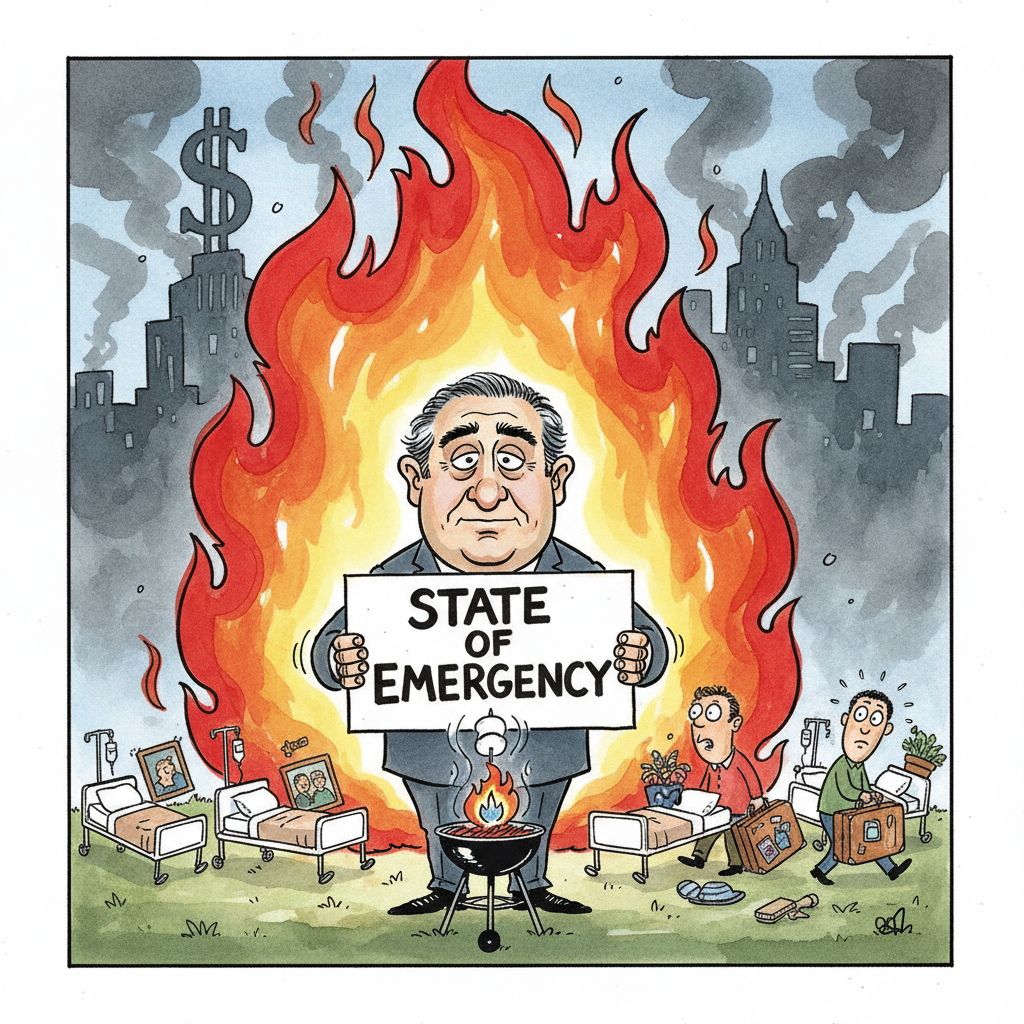
It appears the fine folks of Nevada are once again showcasing their commitment to unconventional urban planning, as the 'Hawk' fire, currently redecorating 10,000 acres of prime wilderness, has prompted a city-wide 'spatial redistribution' event. Officials confirm that 14,000 homes are now participating in an involuntary, high-stakes game of musical chairs, with hospitals joining the fun, ensuring that even the most incapacitated citizens get a fresh perspective on disaster preparedness. Governor Steve Sisolak, in a move hailed by some as 'decisive' and by others as 'mildly inconvenienced,' has declared a state of emergency, presumably to justify the executive privilege of ordering extra s'mores. Experts speculate this annual ritual of nature-assisted property revaluation will boost the local economy through increased demand for mobile homes and therapy services, proving that even a fiery apocalypse has a silver lining, provided you're not currently inhaling it.
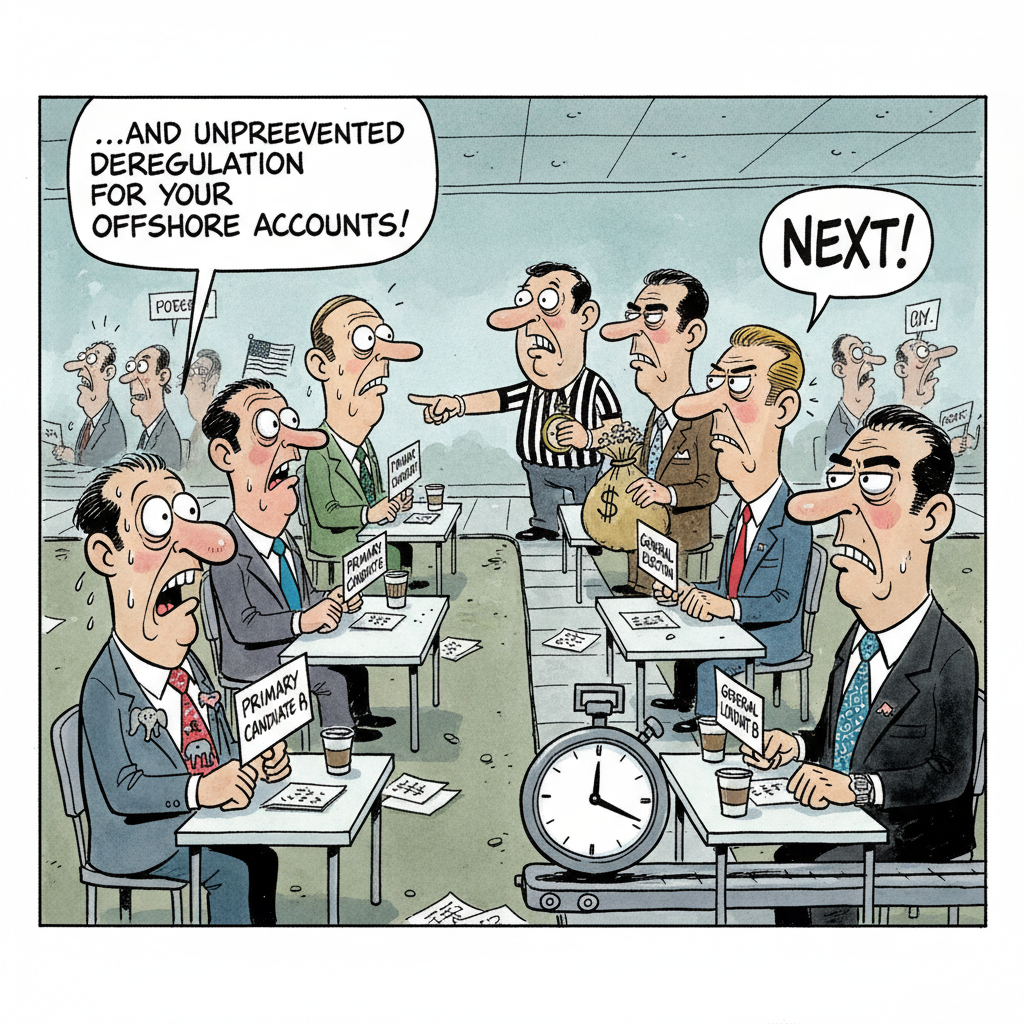
Washington D.C. — As the summer sun sets on a blur of 'lightning-fast' primary elections, America's political class is reportedly experiencing an existential crisis, lamenting the truncated campaign season has left them insufficient time for traditional constituent manipulation. 'It's simply not enough time to properly alienate your base before pivoting frantically to the center,' wailed one anonymous strategist, reportedly fanning himself with a wad of unspent PAC money. The rapid-fire races, likened to 'European-style snap campaigns,' have forced candidates to compress their usual year-long charade of hand-shaking and baby-kissing into a mere few months, resulting in what experts are calling 'donor whiplash.'
Indeed, the hurried schedule means that potential benefactors, usually accustomed to months of elaborate courtship rituals involving golf outings and promises of infrastructure contracts, are now being propositioned after only a few hastily-arranged power lunches. 'It's positively indecent!' exclaimed a visibly flustered lobbyist, adjusting his diamond-encrusted tie. 'One minute they're promising tax breaks for my fifth yacht, the next they're already moving on to the next special interest group like a cheap bar pick-up. Where's the dignity? Where's the carefully orchestrated illusion of mutual respect?' Political scientists, meanwhile, are struggling to explain the phenomenon, with one suggesting, 'Perhaps the electorate finally realized they don't *need* to hear five hundred identical stump speeches before making a poor choice.'
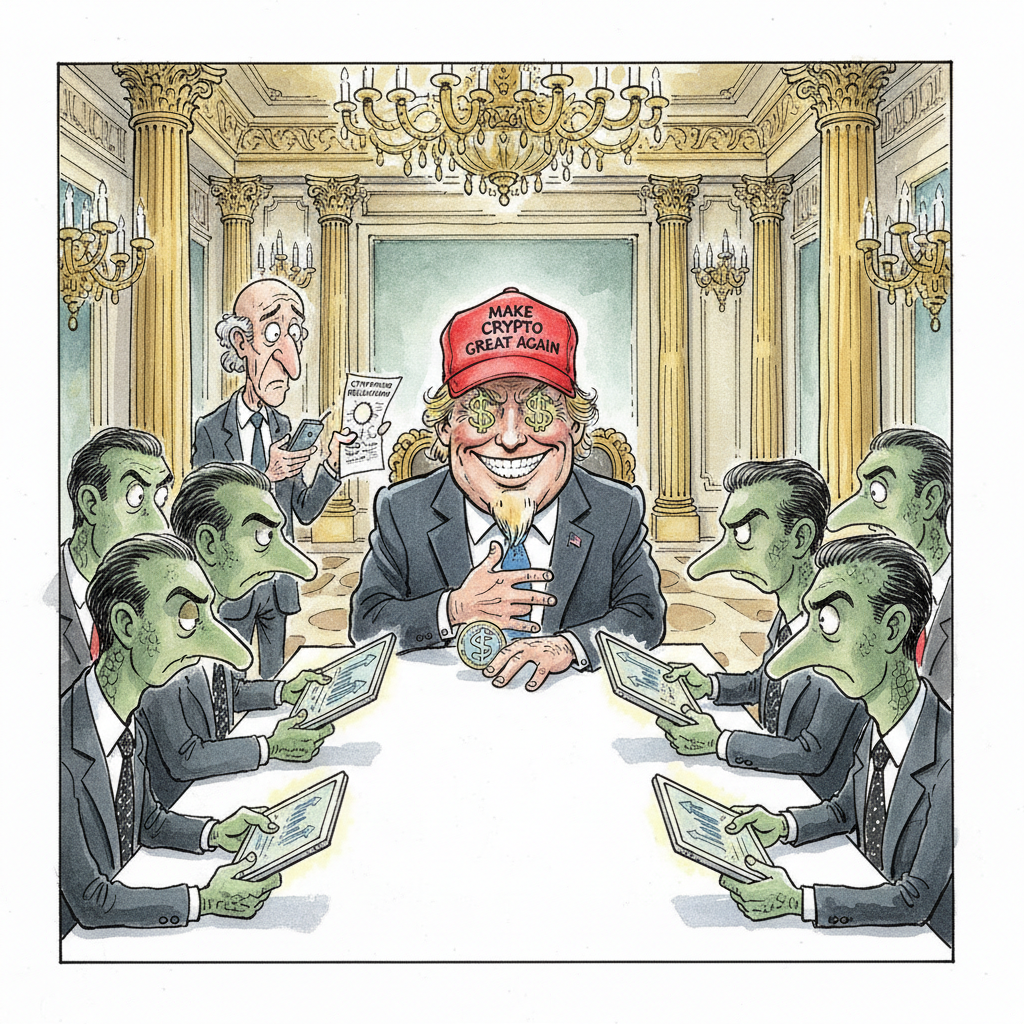
In a move that surprised absolutely no one fluent in the intricate dance between personal enrichment and public policy, Donald J. Trump recently convened a glittering assembly of cryptocurrency evangelists. The former President, who has demonstrably embraced the digital doubloon market with all the subtlety of a gilded bulldozer, is now apparently quite keen for Congress to codify its favorable regulatory standing. Insiders, by which we mean anyone with an internet connection, note Trump's personal crypto holdings have swelled to a degree that makes Scrooge McDuck's vault look like a piggy bank with a mild case of inflation.
The discussions, reportedly held in a ballroom that likely featured more gold leaf than a baroque chapel, centered on a proposed crypto bill designed to 'unleash innovation,' which is apparently Washington-speak for 'make my portfolio even fatter.' Critics, many of whom inexplicably refuse to embrace the concept of magic internet money, suggest the former President's sudden legislative fervor might be less about economic foresight and more about ensuring his digital assets don't spontaneously combust in a regulatory bonfire. Rest assured, the nation’s top lawmakers are now scrambling to draft legislation that somehow distinguishes 'financial genius' from 'insider trading with extra steps and blockchain.'
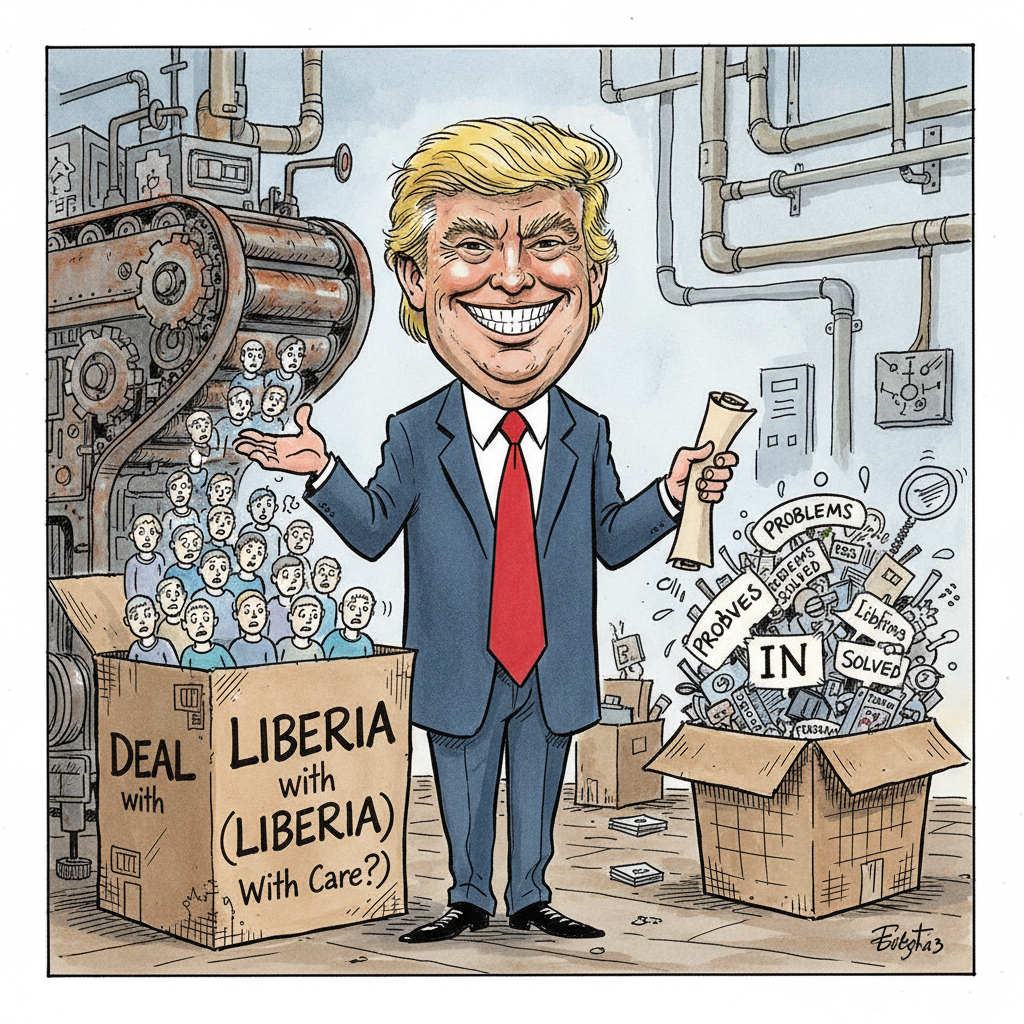
In a truly visionary move that experts are calling 'peak 21st-century logistics,' the United States has formally struck a deal with the Republic of Liberia to offload approximately 1,200 individuals deemed unsuitable for continued residence within its borders. Sources close to the negotiations, who preferred to remain anonymous due to the sheer banality of the arrangement, confirmed that this novel partnership represents a groundbreaking advancement in the burgeoning field of 'national inconvenience transfer.'
The individuals, categorized diplomatically as 'persons of interest with expiring welcome mats,' are apparently too troublesome for their home countries to reclaim, yet too fiscally inconvenient for Uncle Sam to keep. Liberia, presumably after a cost-benefit analysis involving a rusty abacus and a strong cup of coffee, has magnanimously agreed to accept this unique human cargo. Diplomatic circles are abuzz, speculating whether this marks the dawn of a new era where nations simply trade undesirable populations like baseball cards, potentially leading to future 'migrant swap meets' or perhaps even an 'undesirable person futures market.' Analysts suggest the next logical step involves a global 'Expulsion Exchange' where nations can bid on or trade citizenship liabilities, optimizing international demographic spreadsheets. The irony of the situation, wherein a nation founded on immigration is now a global leader in *de*-migration, was lost on absolutely no one who mattered.