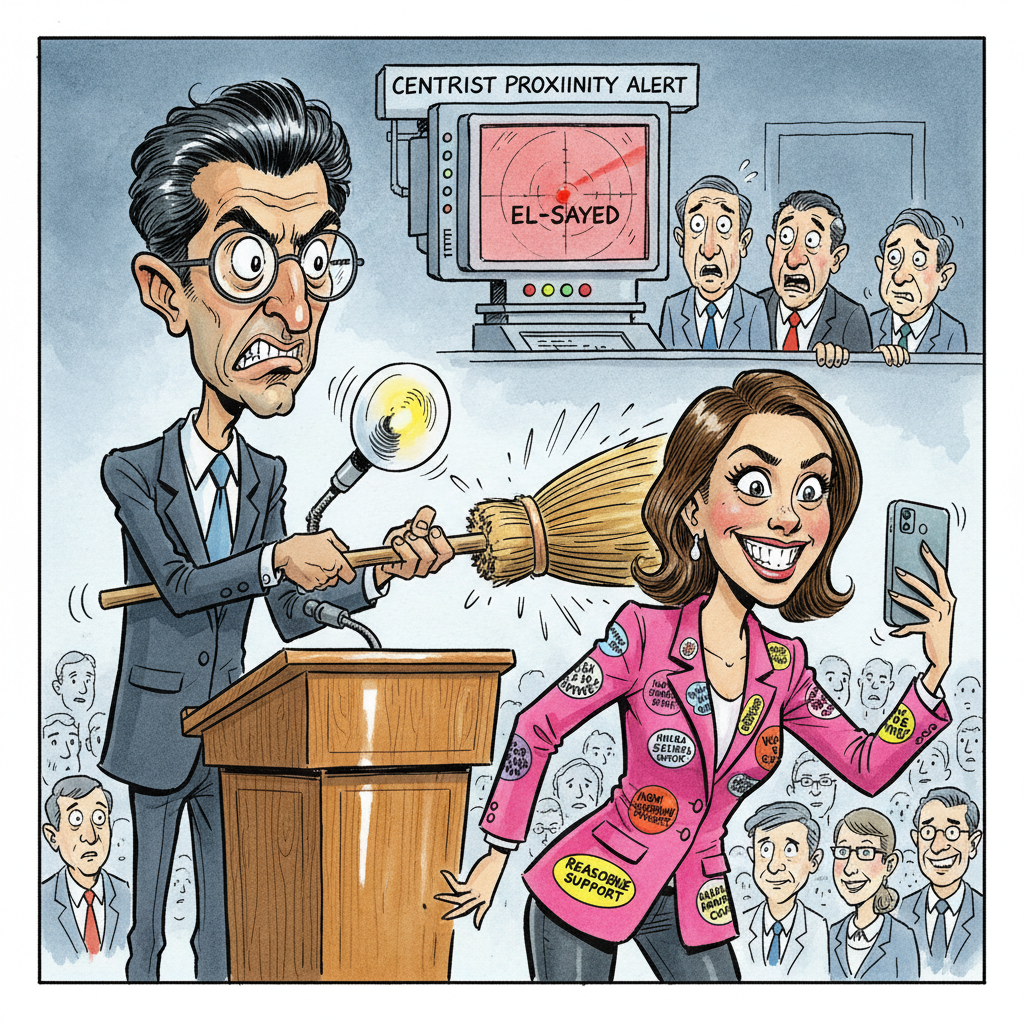
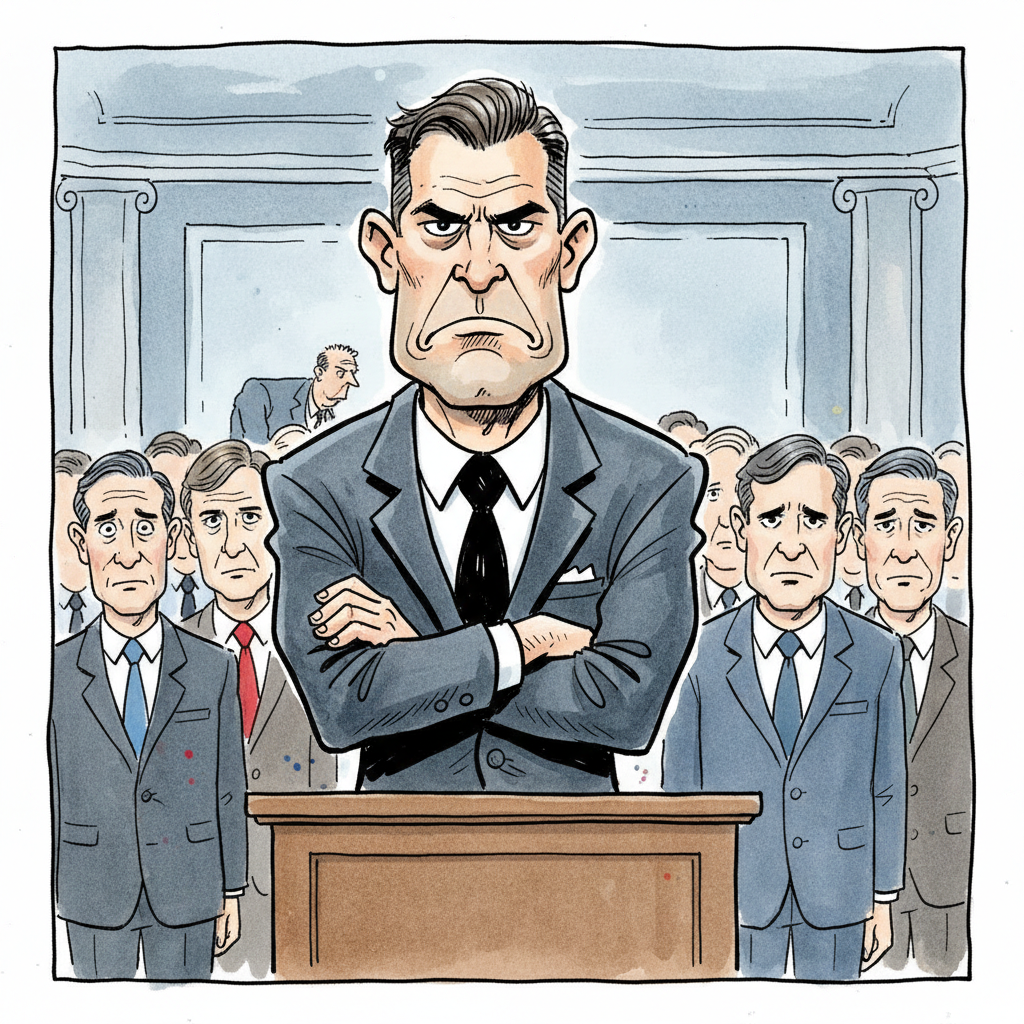
Citing an urgent need to maintain message discipline, Michigan Senate nominee Abdul El-Sayed has formally classified former primary rival Haley Stevens as an EPA-grade visual pollutant. Campaign aides confirmed Tuesday that staff members have been issued ultrasonic whistles, perimeter flares, and decoy microphones to repel the congresswoman should she attempt to materialize anywhere within photographic proximity of the podium.
“Our internal analytics indicate that standing shoulder-to-shoulder with Representative Stevens causes an immediate, catastrophic fourteen percent drop in progressive serotonin,” explained El-Sayed communications director Marcus Vance, adjusting a laser tripwire calibrated exclusively to detect bipartisan compromise. “We are running a tightly curated ideological opera here. We cannot have Haley wandering into the third act waving an endorsement from an automotive lobby like a freshly soiled diaper.”
Stevens was last spotted outside an El-Sayed campaign rally disguised inside a towering inflatable union rat, aggressively whispering the benefits of moderate corporate tax adjustments through a drainage pipe to voters waiting in line.
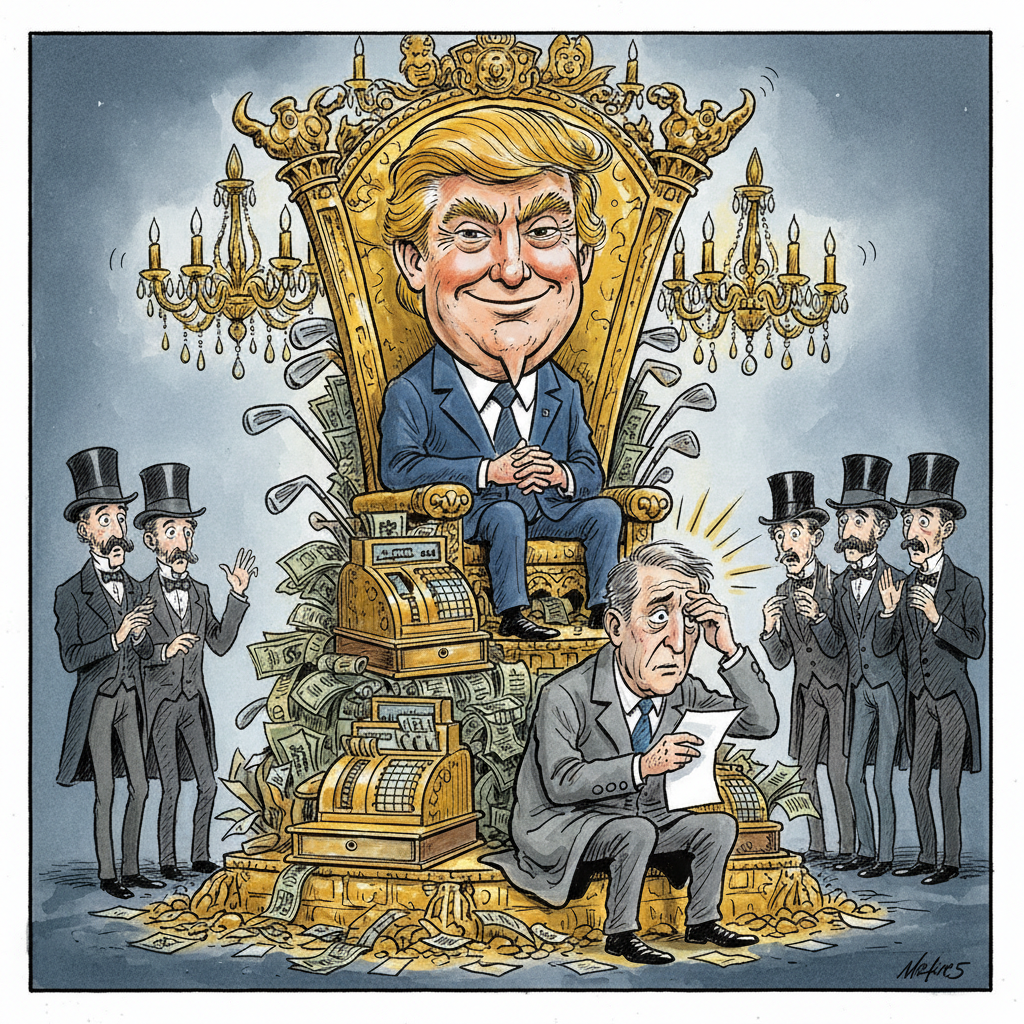
For generations, the American voter sustained a peaceful coexistence with government larceny, operating under the gentleman’s agreement that public servants would siphon off federal funds with the modest discretion of a raccoon in a dumpster. However, recent polling reveals a disgruntled public increasingly irritated that contemporary graft has abandoned all artisanal subtlety in favor of vulgar, gilded monetization.
"Look, we don’t mind a senator trading municipal bonds ahead of a reservoir vote—that’s just good business," said local swing voter Harold Finch, rubbing his eyes outside a polling precinct. "What offends our civic pride is when someone monetizes treason so loudly that we are actually forced to look up from football."
Political scientists confirm that the modern voter’s outrage is purely aesthetic. The electorate remains entirely comfortable with institutional bribery, provided it is packaged in boring 400-page agricultural subsidies rather than eight-foot neon lobby signs in international hotel suites. By converting backroom kickbacks into prime-time reality spectacle, analysts warn, high-profile billionaires have threatened the entire fragile ecosystem of bipartisan pretending.
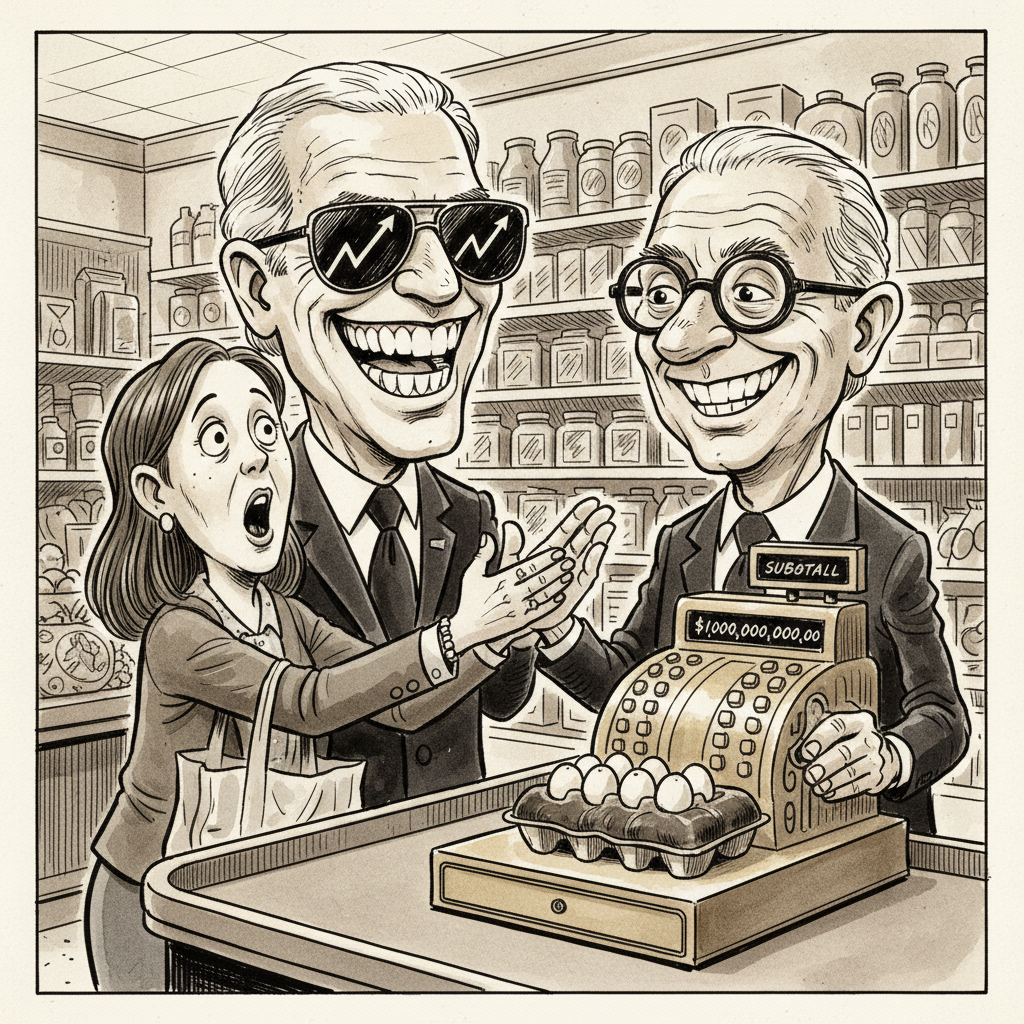
WASHINGTON—In an urgent memo distributed Thursday, federal bean-counters pleaded with everyday Americans to cease their insubordinate groaning about eleven-dollar mayonnaise and properly celebrate the nation’s 3.4 percent annualized GDP expansion.
The robust third-quarter growth—the fastest pace in over a year—was fueled predominantly by resilient consumer spending, a polite technical euphemism for millions of citizens frantically maxing out credit lines on basic survival goods before toilet paper acquires the valuation profile of mid-century real estate. Economists noted with mounting exasperation that the population is statistically wealthier than ever, provided one defines wealth strictly as the blinding velocity of capital escaping through an overdrawn checking account.
"The mathematical apparatus has definitively concluded that you are thriving," stated Bureau of Economic Analysis spokespeople, visibly baffled by voter polling suggesting the public feels its collective face is pressed firmly against a fiscal belt-sander. "If the median household cannot convert the majestic geometry of our inventory accumulation spreadsheets into visceral emotional gratitude, that is a failure of personal character, not monetary policy."
Counterintelligence officials confirmed Thursday that a foreign operative successfully compromised Nvidia chief Jensen Huang by employing the most grueling espionage tactic known to modern statecraft: feigning rapt fascination with parallel computing across twelve consecutive tasting menus. Sources close to the inquiry revealed the agent endured months of pillow talk dedicated entirely to transistor density and floating-point latency, successfully transmitting critical technological secrets abroad while heroically suppressing the urge to leap out of a moving luxury sedan.
Despite receiving an urgent classified briefing on the brazen breach, Donald Trump reportedly dismissed the threat after intelligence analysts failed to clarify whether an H100 chip could be dipped in ranch dressing or installed into a golf cart. Aides noted the Commander-in-Chief nodded politely through the thirty-page technical dossier before returning his full executive focus to a bucket of lukewarm fried poultry, philosophically concluding that any woman willing to listen to a tech billionaire describe graphics pipelines for national leverage had already suffered beyond the reach of federal law.
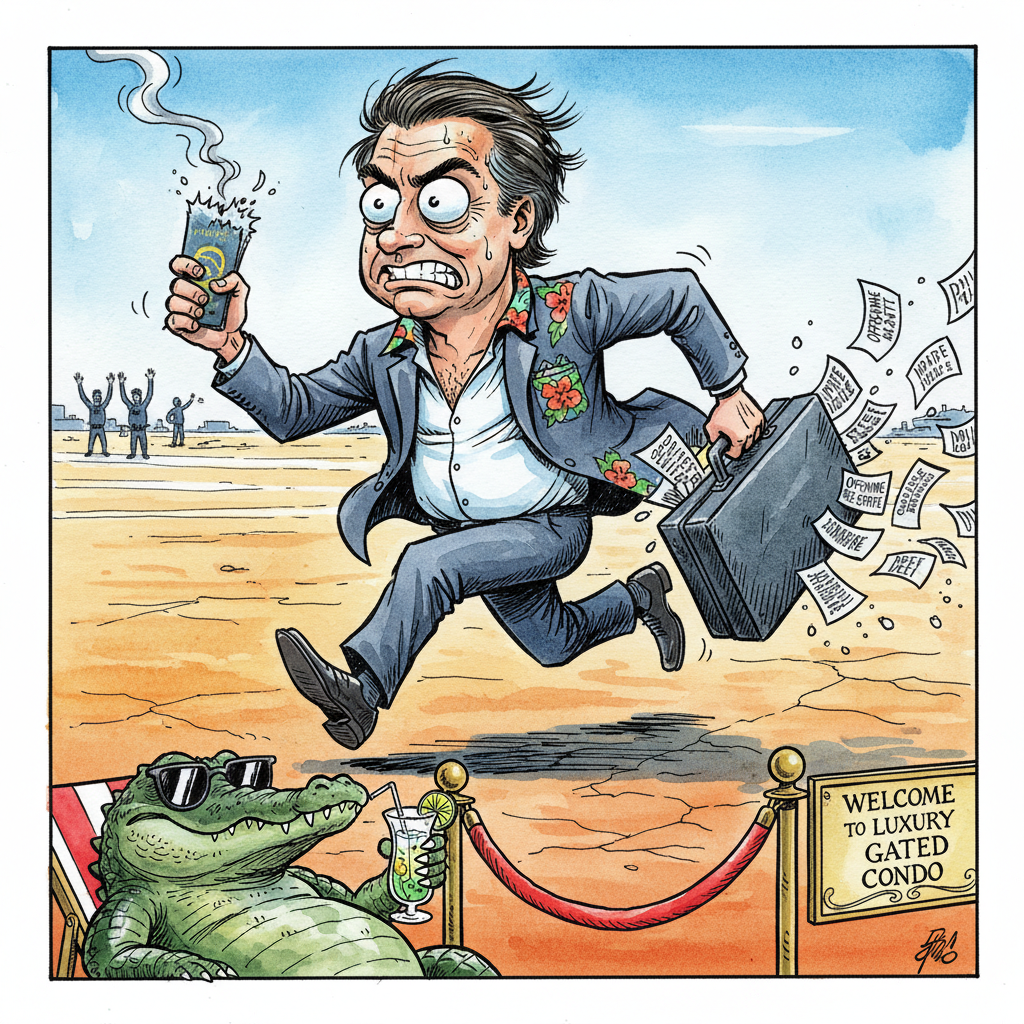
Overcoming the minor logistical inconvenience of having no legal travel documents, former first-dynasty heir Flávio Bolsonaro touched down in Miami this week, completing an arduous trans-hemispheric trek undertaken by so many endangered despots before him. Brazilian federal police had preemptively voided his passport as part of an ongoing corruption probe, apparently unaware that international aviation regulations routinely yield to sheer aristocratic momentum and an Argentine connecting flight.
Witnesses at Miami International Airport reported seeing Bolsonaro bypass customs entirely by presenting a coupon for a luxury condo rental and a laminated oath of allegiance to Publix supermarket. South Florida wildlife authorities subsequently confirmed that the region’s delicate ecosystem of tax evaders, retired mobsters, and banished heads of state remains fully equipped to absorb yet another embattled South American scion. A spokesperson for the family insisted the sudden sprint across two international borders was merely an aggressive real estate scouting mission, noting that subpoena-dodging is, culturally speaking, just a passionate form of cardio.
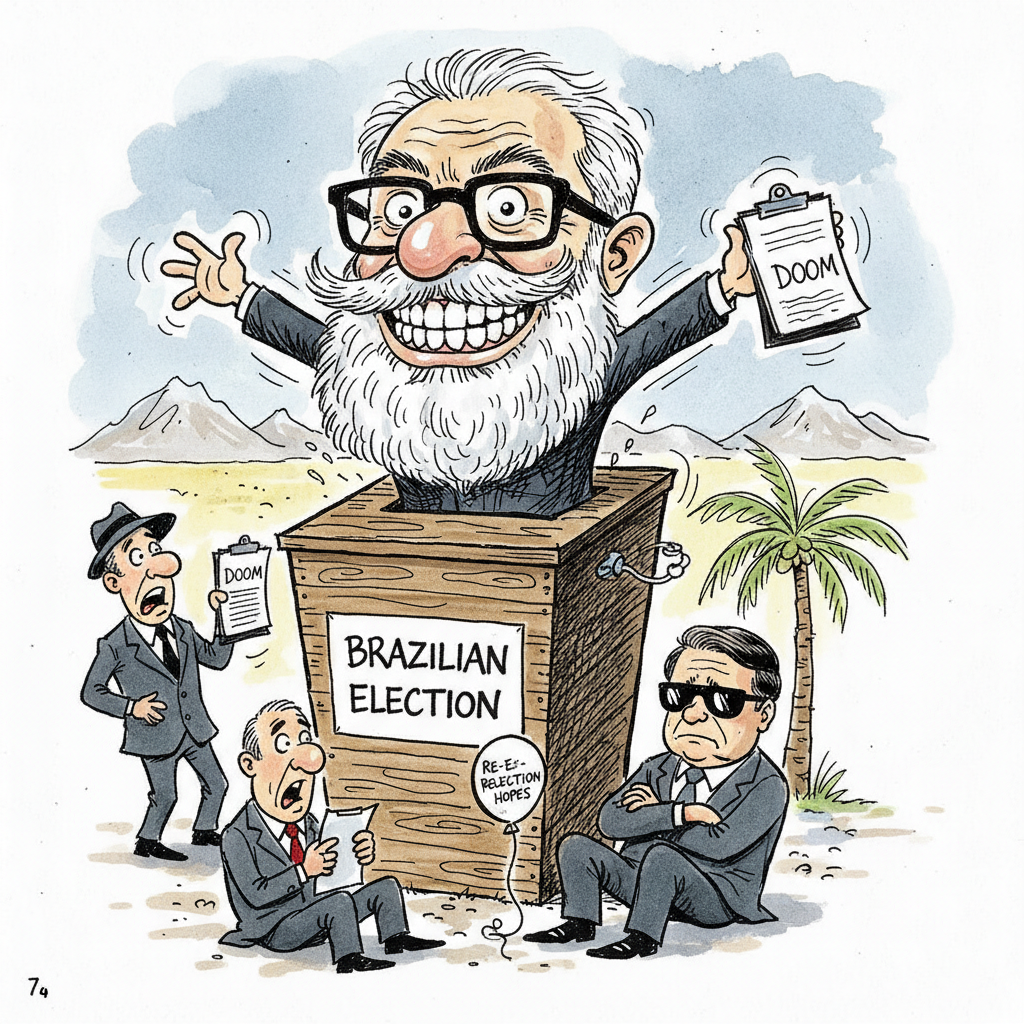
According to four thousand panicky think-tank whitepapers printed last Thursday, Luiz Inácio Lula da Silva was mathematically scheduled for the abattoir, doomed by right-wing momentum and television charts featuring very scary downward slopes. Instead, the septuagenarian union veteran simply won the election, rendering several thousand pages of pre-written macroeconomic eulogies entirely useless for anything other than packing sensitive tropical fruit.
Foreign correspondents expressed profound betrayal at the outcome, having spent weeks rehearsing somber facial expressions for cable hit segments. "We had a bespoke graphics package ready to declare social democracy permanently extinct across the Southern Hemisphere," sighed one visibly aggrieved political risk consultant, furiously feeding six metric tons of laminated doom forecasts into an industrial paper shredder. "Now we have to spend four entire years pretending to understand Brazilian pension reform."
Lula celebrated the triumph with trademark restraint, briefly pausing his victory rally to check his pulse, confirm it was still beating at an unbothered forty beats per minute, and remind the assembled press that he has survived far worse inconveniences than a statistical margin of error.
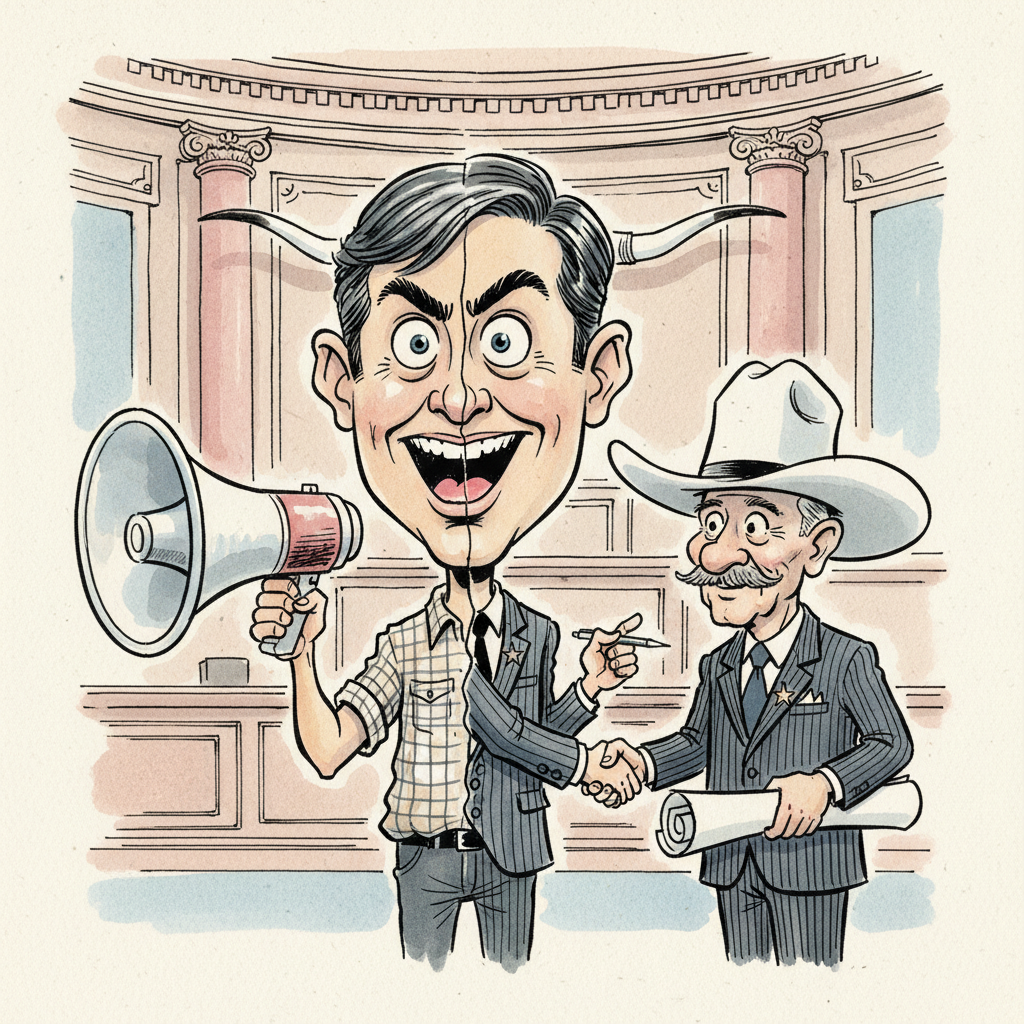
According to Capitol observers, Representative James Talarico has achieved an extraordinary state of legislative bilocation, allowing him to deliver an impassioned stemwinder condemning Republican tyranny on cable news while simultaneously helping three West Texas cattle magnates deregulate municipal feedlot runoff.
Throughout four terms under the pink granite dome, the Austin Democrat has honed the rare art of spitting venom during televised committee hearings before quietly splitting a plate of lukewarm barbecue with the very men he accused of dismantling civilization. Aides confirm Talarico operates on two distinct nervous systems: one calibrated for righteous, viral floor speeches about institutional rot, and an auxiliary spinal cord engineered purely for nodding along to uncontroversial amendments concerning rural drainage ditch maintenance.
"True statesmanship requires knowing when to raise the banner of defiance, and when to use that banner to polish the hood of a lobbyist's Ford F-250," Talarico explained, briefly pausing between denouncing the speaker’s authoritarian overreach and co-sponsoring his bipartisan resolution honoring the state's commercial pecan growers.
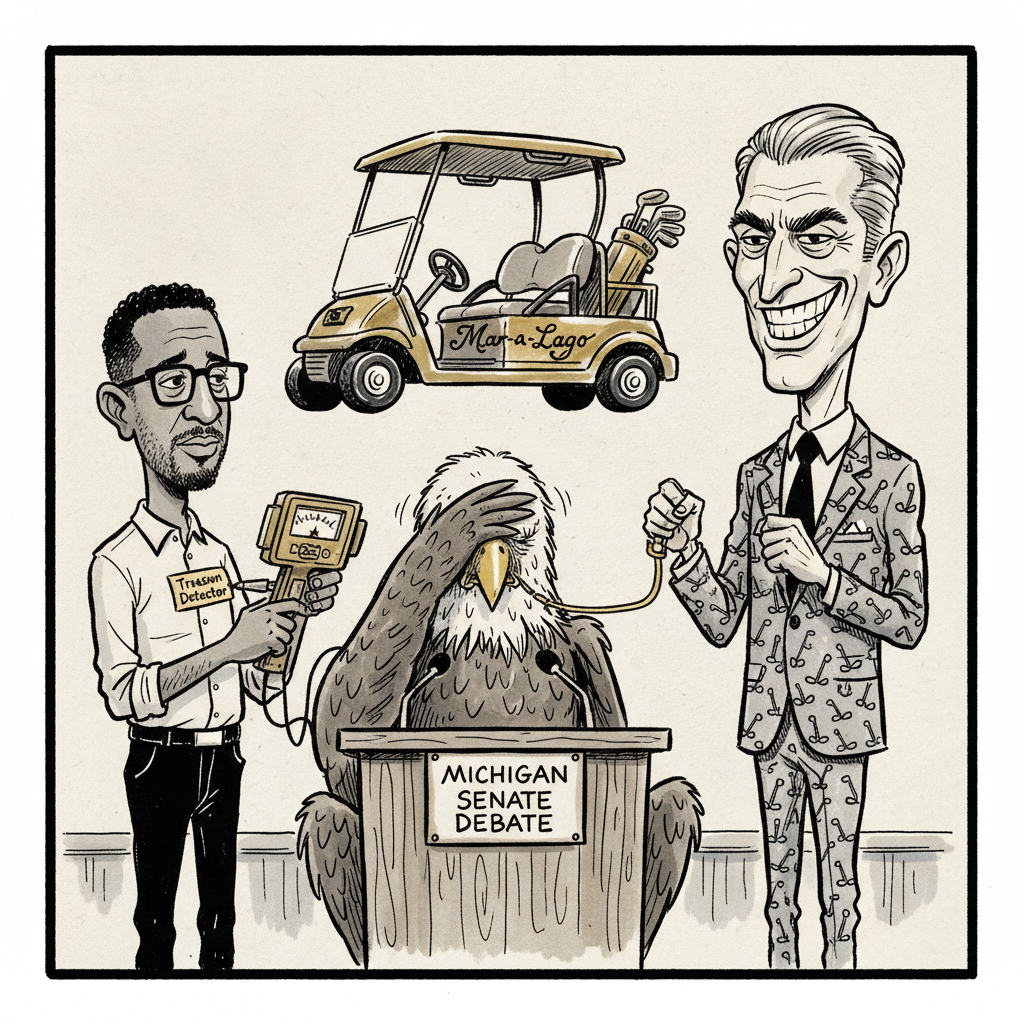
According to a panel of exhausted municipal pollsters, Michigan’s political discourse reached a civilized milestone Thursday when neither Senate candidate attempted to sever the other’s jugular with a rusted license plate. Instead, Mike Rogers and Dr. Abdul El-Sayed spent ninety intoxicating minutes diagnosing each other with varying degrees of ideological organ failure. Rogers accused El-Sayed of harboring an insidious, almost artisanal contempt for the Republic, while El-Sayed countered that Rogers’s lumbar vertebrae had been legally deeded to a Palm Beach golf resort since 2016.
The exchange represented a dramatic thaw in relations, as moderators were only forced to deploy acoustic riot sirens twice during a spirited symposium on who possesses more miniature brass eagles. Viewers hoping for remedies regarding groundwater toxicity or municipal bond yields were instead rewarded with an Olympic exhibition in treason-tag, culminating in an unspoken agreement that the highest calling of a Great Lakes statesman is to suspect his colleague of treason until the commercial break.
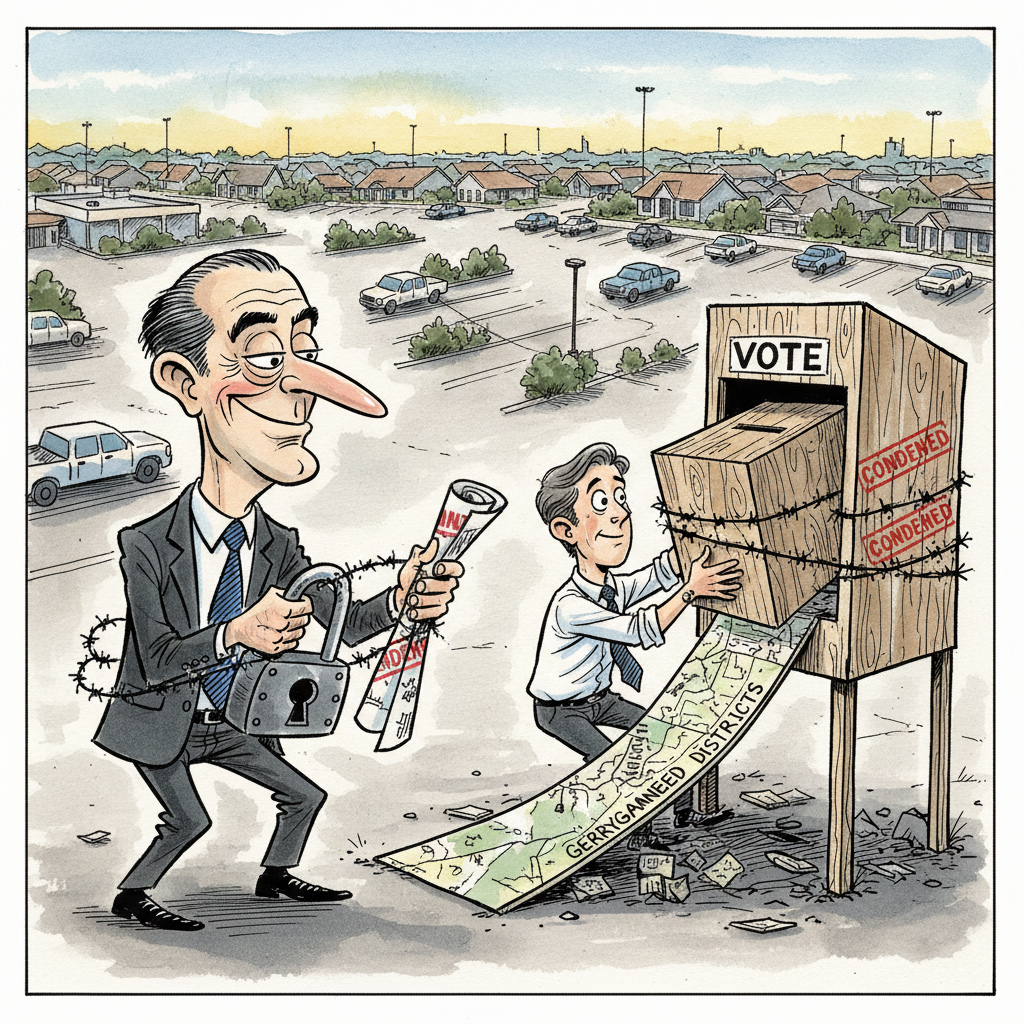
A municipal turf war in Tarrant County reached fever pitch Tuesday as local election officials finalized plans to make the franchise exclusively accessible via non-refundable toll roads. Desperate to maintain a mathematical stranglehold on the Dallas-Fort Worth sprawl, Republican operatives backed by Attorney General Ken Paxton successfully argued that placing a voting booth within walking distance of an accredited university constitutes an act of asymmetric partisan warfare. 'An informed twenty-something casting a ballot isn't civic engagement; it's a structural breach of our perimeter,' explained one precinct chair while cementing plywood over a public library drop slot.
Meanwhile, Democratic insurgent James Talarico rallied exhausted suburbanites by pledging a radical, European-style counter-agenda: allowing registered citizens to vote without completing an unmapped obstacle course or surviving a preemptive audit from Paxton’s personal legal defense squad. County analysts project the race will ultimately hinge on whether Talarico’s earnest door-knocking can outpace Paxton’s uncanny legal ability to simply declare the concept of voter turnout unconstitutional before Tuesday afternoon.
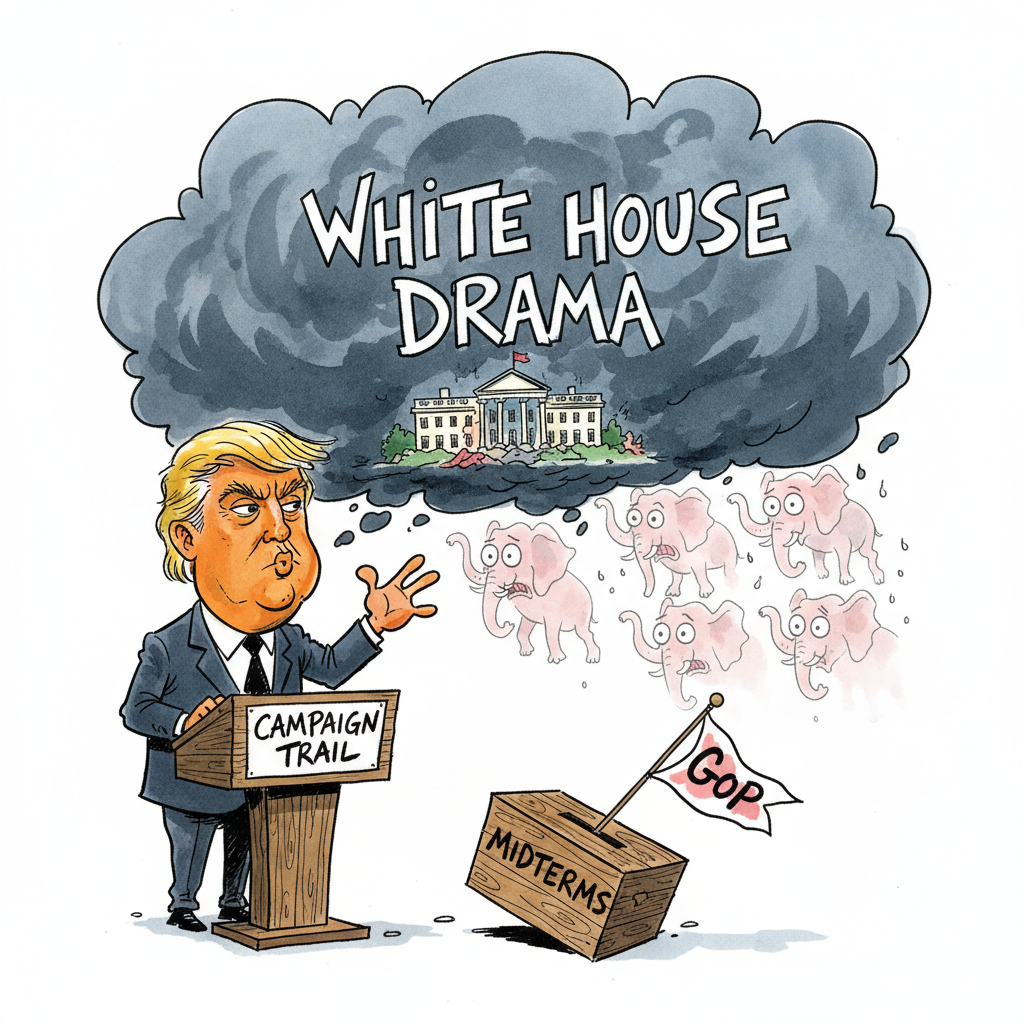
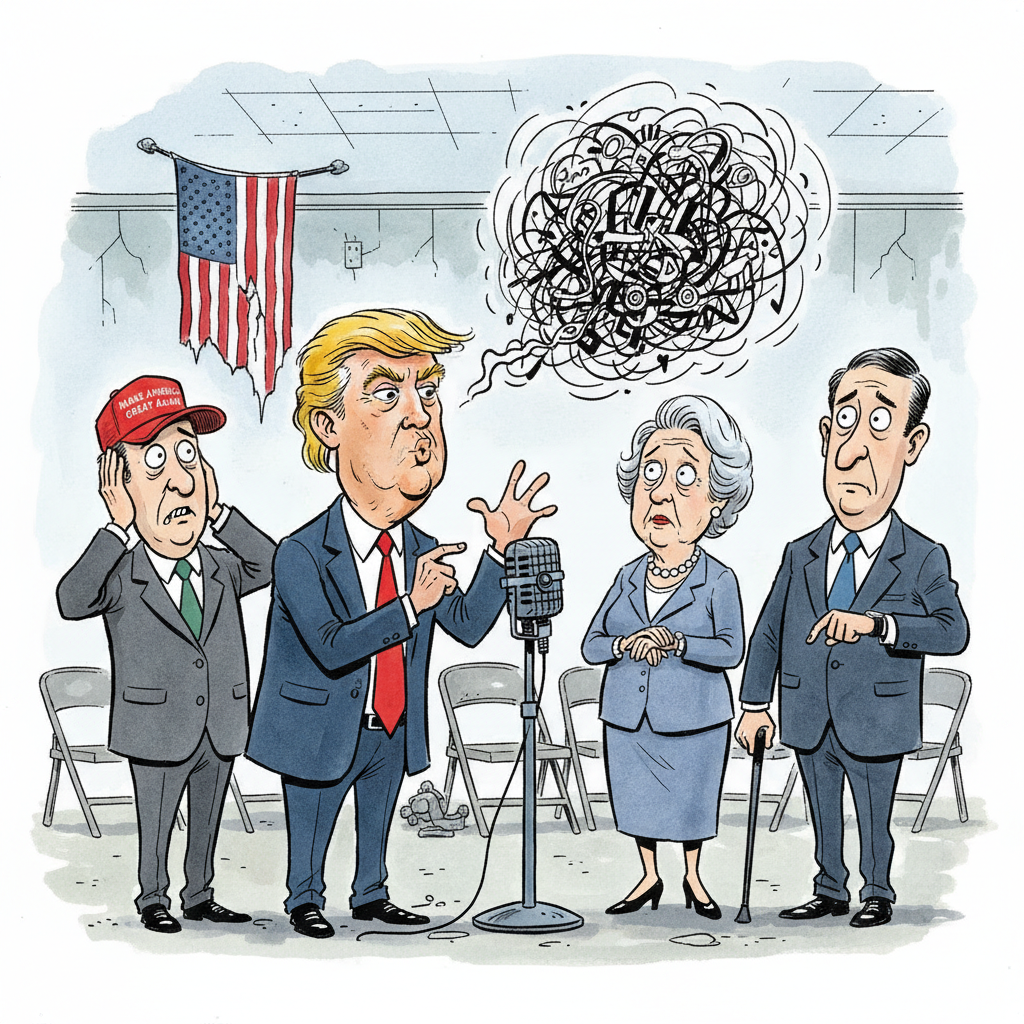
Washington insiders report a peculiar phenomenon on the campaign trail: every time the former President takes the stage, GOP midterm prospects sag further than a week-old soufflé. Political analysts, fresh from their annual 'Why Didn't We See This Coming?' conference, suggest Trump's rallies, designed to energize the base, are inadvertently activating a highly potent, previously undiscovered 'voter exhaustion' gene. Sources close to the White House describe the atmosphere as 'less West Wing, more Westworld, if all the hosts were malfunctioning simultaneously and demanding loyalty pledges.'
One senior Republican strategist, speaking anonymously from an undisclosed bunker, lamented, 'It's like trying to navigate a minefield while wearing tap shoes and carrying a megaphone that only plays 'The Imperial March.' Every boom, every bluster, every utterance of 'witch hunt' seems to subtract 0.5% from our swing state numbers. We’ve gone from strategizing to actively trying to prevent the former guy from *not* speaking.' The party, it seems, has entered a quantum state where its electoral success is inversely proportional to the volume of its loudest cheerleader. Experts predict the next phase will involve attaching a noise-canceling device to the party’s collective ear canal, or perhaps just a very long vacation.
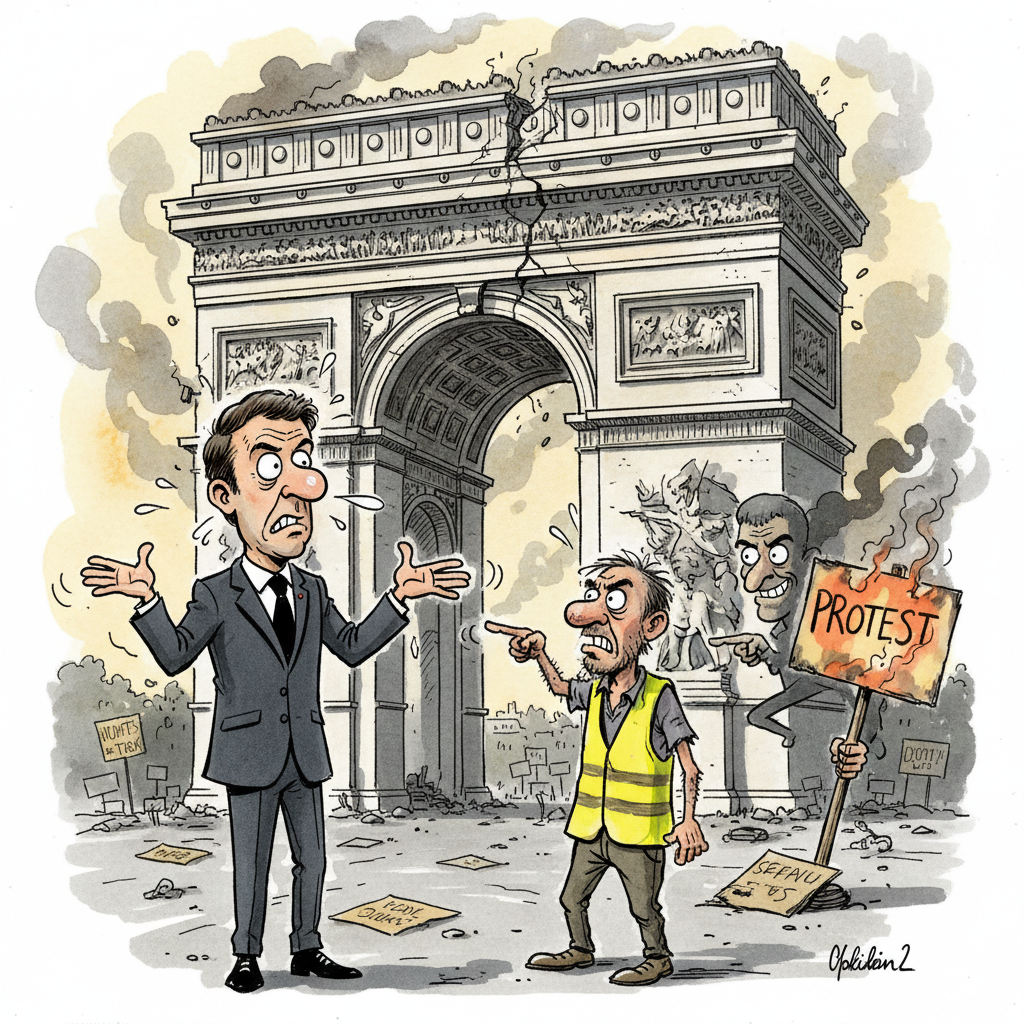
In a stunning display of administrative prowess, French political elites have unanimously concluded that having one's nation erupt into a conflagration of smashed windows and looted boutique stores is, frankly, 'less than ideal.' Following a spirited weekend of public engagement that left various monuments 're-textured' and several luxury goods establishments 'redistributed,' leaders across the political spectrum have successfully identified the primary culprit: everyone else. Sources close to the Elysée Palace, speaking anonymously under a pile of discarded baguette crumbs, confirmed that the government is now exploring innovative strategies to prevent future 'spontaneous redecorations,' including possibly asking citizens *very nicely* not to burn things down.
Meanwhile, citizens are grappling with the existential question of whether the social contract can be renegotiated via Molotov cocktail. Experts from the prestigious 'Institute for Things You Don't Say Out Loud' noted that while the protests have largely subsided, the lingering scent of singed civic duty and opportunistic perfume theft will take considerably longer to dissipate. One anonymous parliamentarian reportedly stated, 'It's a crying shame, really. All that lovely property damage, and not a single innovative policy solution to be found in the smouldering wreckage. Perhaps next time we can offer a discount code for participating?' The nation collectively held its breath, awaiting further groundbreaking insights from its visionary leadership.
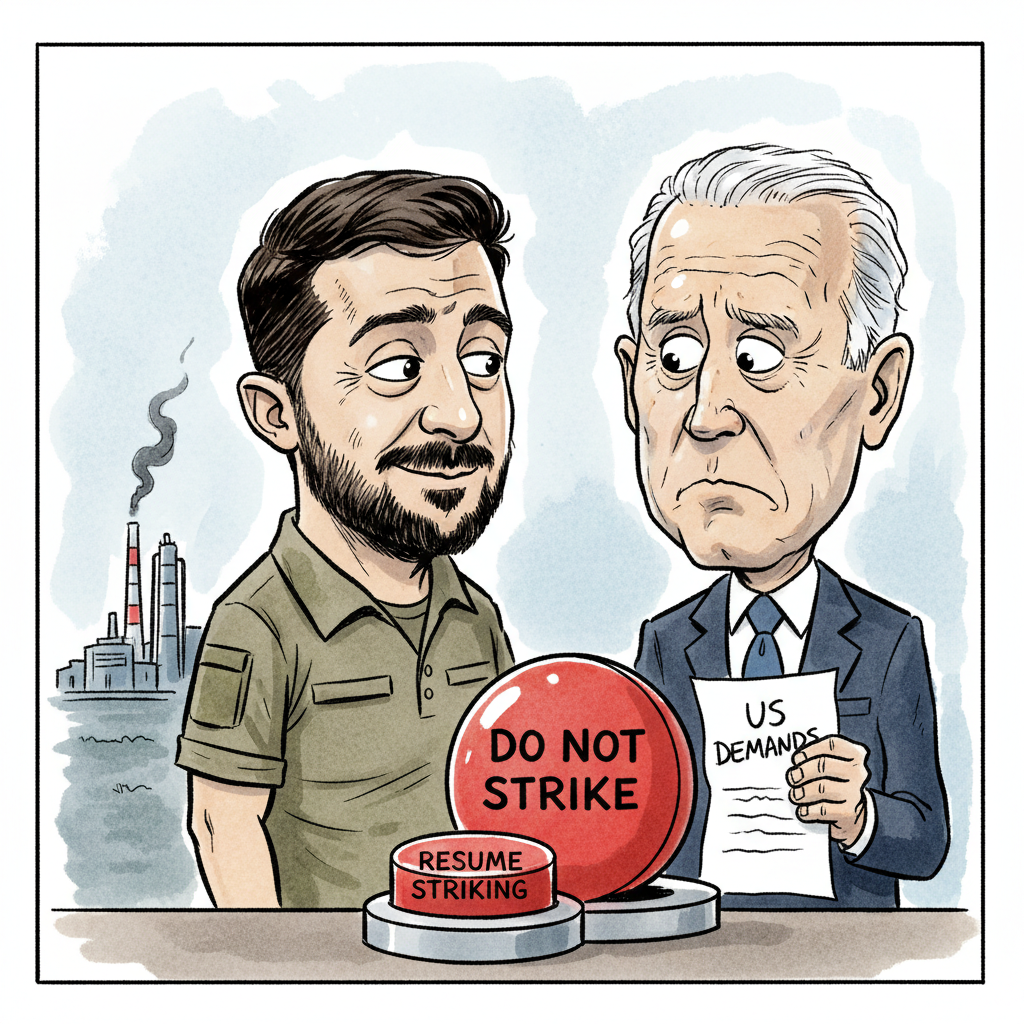
In a bold diplomatic maneuver that analysts are calling 'strategic petulance,' Ukrainian President Volodymyr Zelensky has confirmed that future drone strikes on Russian oil refineries will now include a performative, almost theatrical, pause button. This pivot follows a terse demand from the United States to cease such aggressions, a request Zelensky apparently fulfilled with all the enthusiasm of a teenager asked to clean their room. Sources close to the negotiation table — likely just a highly-caffeinated intern with a strong Wi-Fi signal — indicate that the 'pause' was more of a deeply sarcastic breath-holding exercise, designed to demonstrate Ukraine's capacity for compliance while simultaneously announcing its imminent expiration.
"We understand the optics," stated a Ukrainian official, who insisted on anonymity but sounded suspiciously like Zelensky doing a bad impression of an American diplomat. "Our allies want stability. So, we've implemented a new 'Good Faith Strike' protocol: a 72-hour moratorium on explosions, followed by a significantly louder, more pointed explosion, specifically designed to convey both gratitude for American advice and a complete lack of interest in following it." The Pentagon has yet to comment, presumably because they're still trying to figure out if 'strategic petulance' can be funded through existing line items.
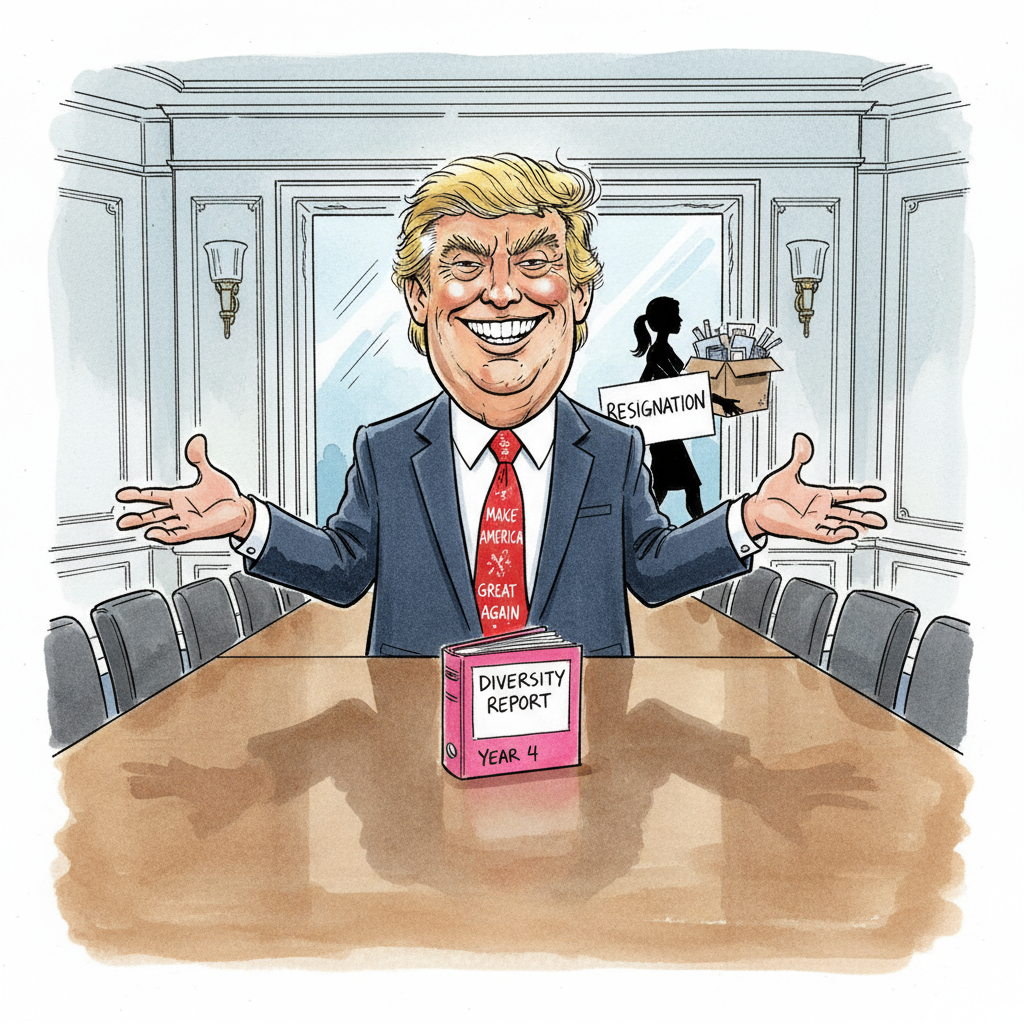
It appears the Trump administration, ever the vanguard of innovative policy, has discovered a groundbreaking approach to workplace diversity: by having fewer women, the gender pay gap shrinks for the remaining men, and the problem of female attrition simply... attritions itself. While mainstream media frets over a 'shrinking number of women in top roles,' sources close to the White House insist this is merely the culmination of a highly successful 'streamlining' initiative, designed to reduce 'excess emotional overhead' and optimize 'testosterone-to-task ratios.' Insiders explain that the exodus of high-ranking female officials, whether voluntary or merely 'incentivized,' creates a more 'focused' and 'uncomplicated' leadership environment, perfect for tackling the nation's most pressing issues, like whether to ban TikTok or how many scoops of ice cream one is permitted. Critics, predictably, call it a 'reversal of progress,' but clearly, they just don't understand the complex mathematics of negative growth and simplified demographics.
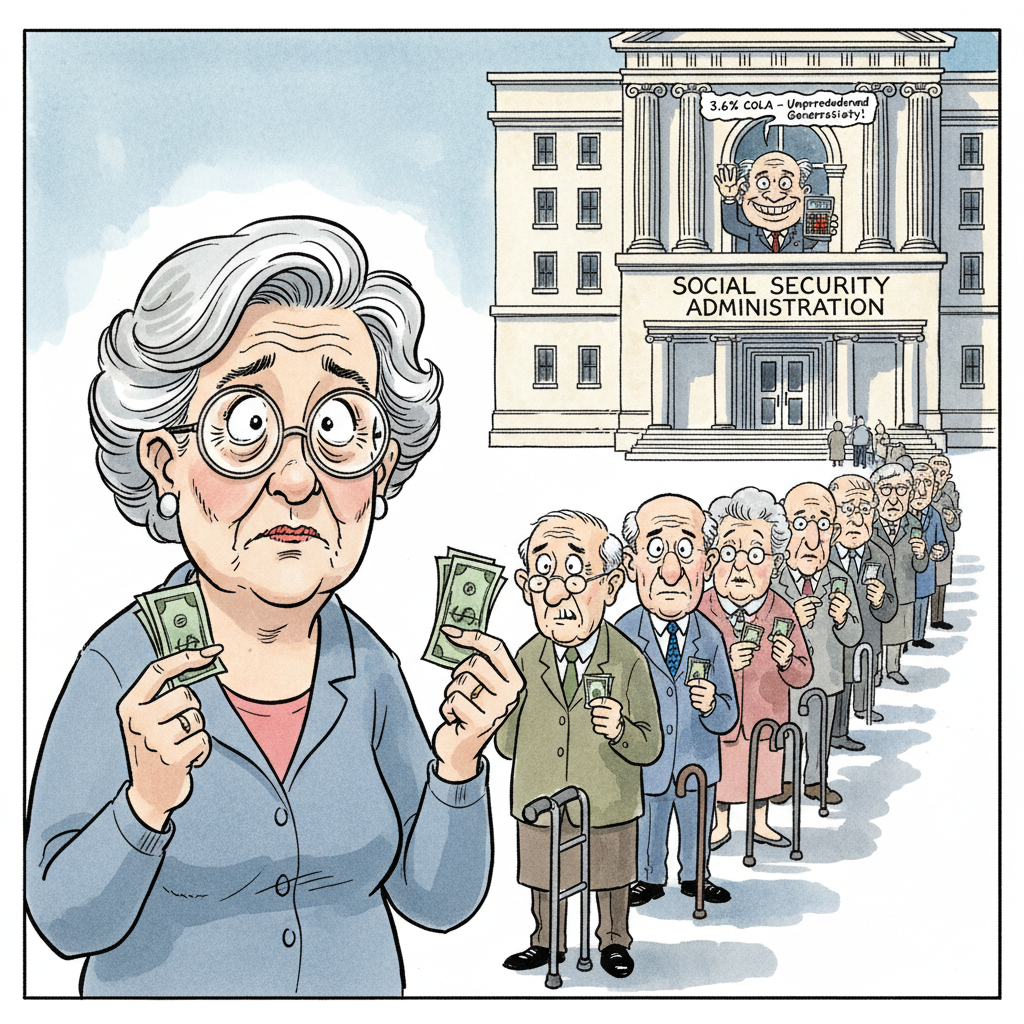
In a move lauded by precisely no one who still remembers the purchasing power of a dollar, the Social Security Administration has proudly announced a 3.6% Cost of Living Adjustment (COLA) for 2027. This munificent increase, the largest since the halcyon days of 2023 when a single tank of gas only required pawning a minor heirloom, is set to 'enrich' the lives of retirees across the nation, allowing them to finally consider that second brand-name tissue box per fiscal quarter.
Experts familiar with the esoteric arts of advanced abacus mathematics confirm that this adjustment effectively translates to an additional handful of pennies per day, just enough to fuel a fleeting moment of hope before checking a grocery bill. A spokesperson, who requested anonymity while polishing their third yacht, assured the public that the SSA's calculations meticulously account for 'the burgeoning cost of artisanal air, bespoke existential dread, and the occasional luxury of not choosing between medication and cat food.' Retirees can expect to see this fiscal windfall grace their bank accounts beginning in January, just in time to fund half a postage stamp for their annual 'Thank You For Barely Keeping Me Afloat' letter to the government.
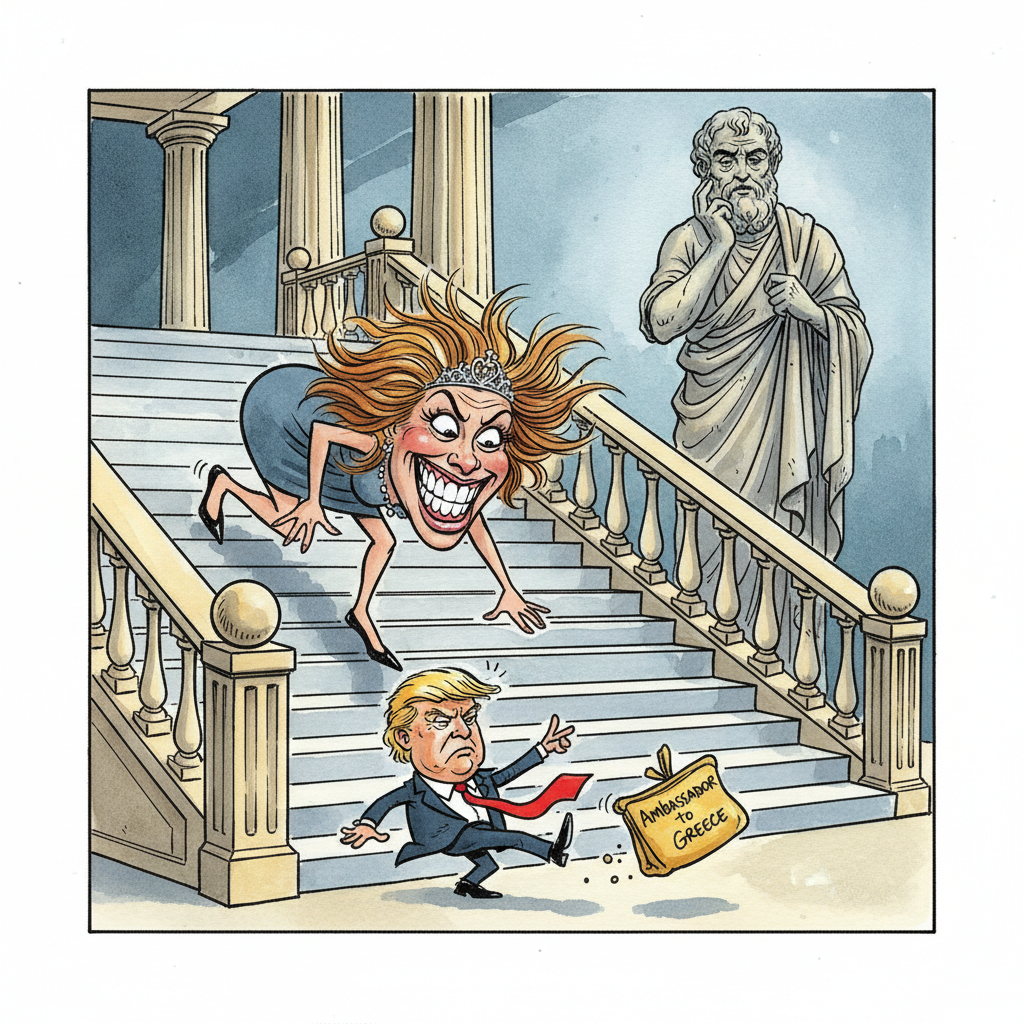
It seems the gilded carousel of high-stakes political patronage has, once again, spun a little too aggressively for Ms. Kimberly Guilfoyle. Having once held the esteemed, if entirely fictional, post of 'Ambassador-Designate to Greece' (a title we’re told carried considerable weight in certain D.C. echo chambers), reports now suggest her career trajectory has entered a sudden, unscheduled, and frankly quite spectacular nosedive. Sources close to the former First Son’s fiancé, whose most recognizable diplomatic maneuver was reportedly shouting at an internal campaign event, confirm her recent un-elevation was not due to any groundbreaking progress in Hellenic relations, but rather, a more pedestrian—and decidedly un-Greco-Roman—series of 'damaging news reports.' Apparently, the 'Honey Please' ethos only extends so far when the honey pot starts attracting swarms of inconvenient truths. We understand Ms. Guilfoyle is now preparing to 'fight to defend her reputation,' presumably with the same strategic acumen she brought to her previous, utterly unofficial, ambassadorial duties. Perhaps a new post is on the horizon: 'Special Envoy for Self-Aggrandizement to the Sovereign Nation of My Own Reflection.'
Washington insiders were reportedly stunned this week, not by the revelation that Ambassador Kimberly Guilfoyle's diplomatic tenure in Greece was abruptly terminated, but by the sheer audacity of expecting her to perform *any* actual diplomacy. Sources close to the former First Lady of California — who, it turns out, was not actually First Lady of California — suggest her primary duties involved perfecting the art of the dramatic pause during Zoom calls and commissioning a tasteful, yet undeniably patriotic, toga collection. Her recall, attributed by some to 'damaging news reports,' has left many questioning whether these reports detailed actual misdeeds or simply her revolutionary approach to international relations, which apparently involved treating every embassy reception like a primetime cable news panel. The former ambassador, renowned for her unique vocal timbre, has vowed to 'fight to defend her reputation,' a noble crusade that presumably involves shouting at a bewildered press corps until they agree she's unimpeachable, or at least hard to hear clearly. This commitment to self-preservation, critics note, is a hallmark of truly dedicated public service in the modern era, where one's legacy is often less about what one *did*, and more about how loudly one denies having done it.
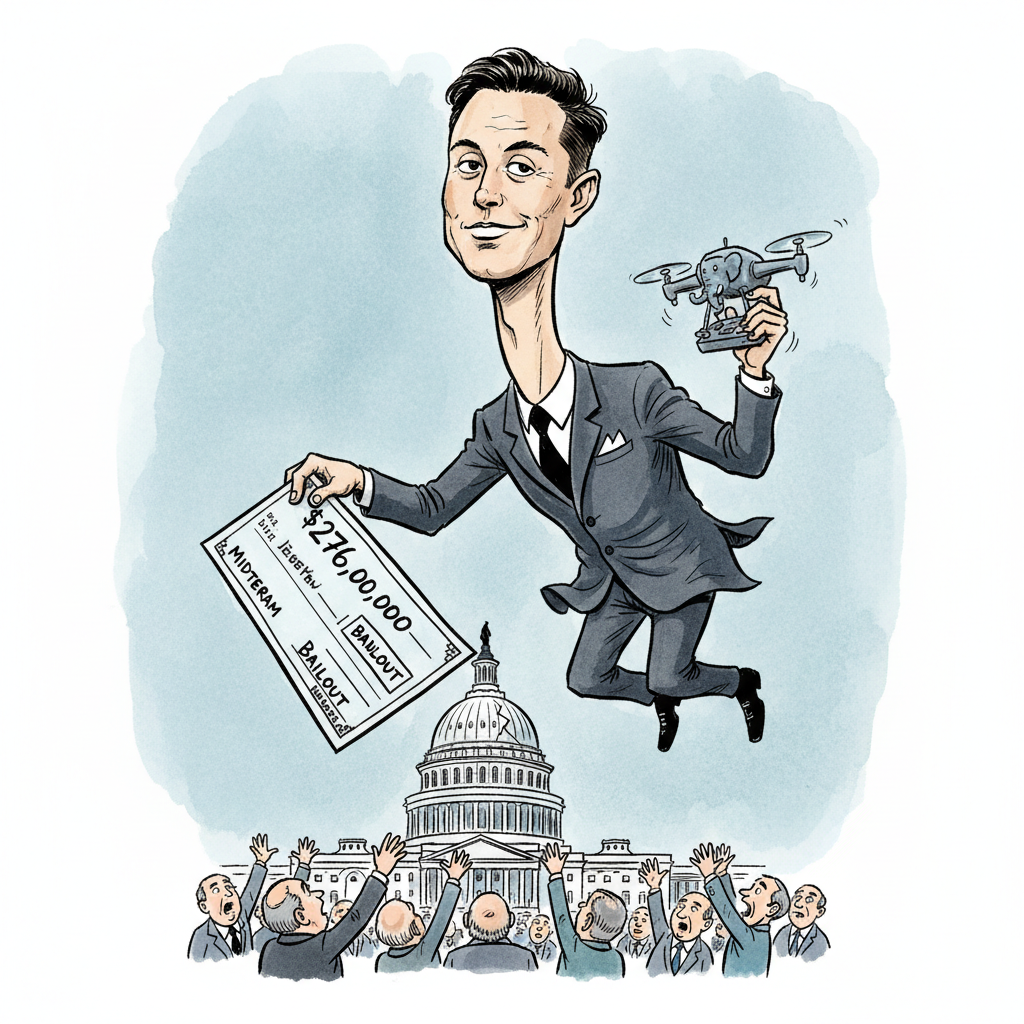
It's a truth universally acknowledged that a single man in possession of a good fortune must be in want of… a pliable legislative branch. Enter Elon Musk, humanity's designated savior and part-time galactic real estate agent, who has reportedly 'invested' a cool quarter-billion dollars into the midterm elections, apparently on a whim and a prayer that the Republican Party might prevent the 'woke mind virus' from infecting the federal code. Sources close to Musk's orbital command center confirm that the donations were not, as some cynics suggest, a strategic maneuver to safeguard his various government subsidies and regulatory loopholes, but rather a profound civic duty performed between designing sentient robots and deciding which minor planet to colonize next.
Experts at the Institute for Unexplained Philanthropy noted that while most billionaires simply buy yachts or small nations, Musk prefers to fund entire political campaigns, presumably for the satisfaction of knowing his tax dollars are being re-routed directly through his personal ideological sieve. 'It's a heartwarming tale,' commented Dr. Elara Vance, Senior Fellow in Existential Oligarchy Studies. 'A self-made titan, with more money than some GDPs, humbly nudging democracy in his preferred direction, entirely for the good of all mankind – or at least, the kind of mankind that finds space travel and Twitter polls equally compelling priorities.' The recipients of these largesse gifts are reportedly still counting the stacks, trying to figure out if they can afford that new yacht now.
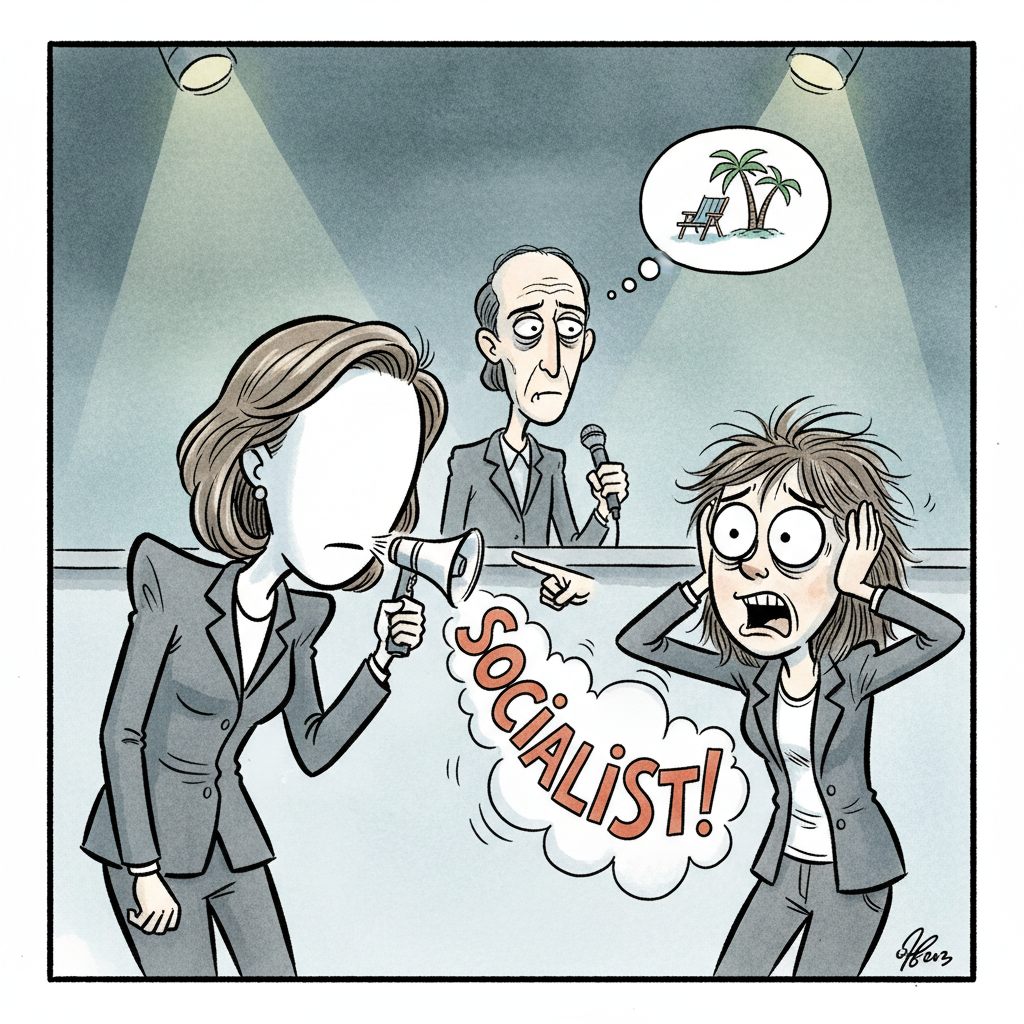
A recent South Carolina Senate debate, widely praised by local paramedics for its effective sedative qualities, saw Democratic challenger Dr. Annie Andrews valiantly attempting to pin incumbent Senator Darline Graham to something resembling a policy position. Dr. Andrews, reportedly still reeling from the shock of discovering an entire state that votes in November, dared to suggest that Senator Graham’s political compass was inexplicably calibrated to the whims of a certain former President. Ms. Graham, employing a rhetorical strategy often taught in advanced classes on 'how to avoid answering questions,' countered with the devastating accusation that Dr. Andrews might, at some future, hypothetical juncture, fail to verbally spurn an individual identified as a 'socialist.' Voters, many of whom were reportedly hoping for an argument about who gets the last biscuit, were left pondering the existential terror of a candidate who refuses to pre-denounce theoretical acquaintances.
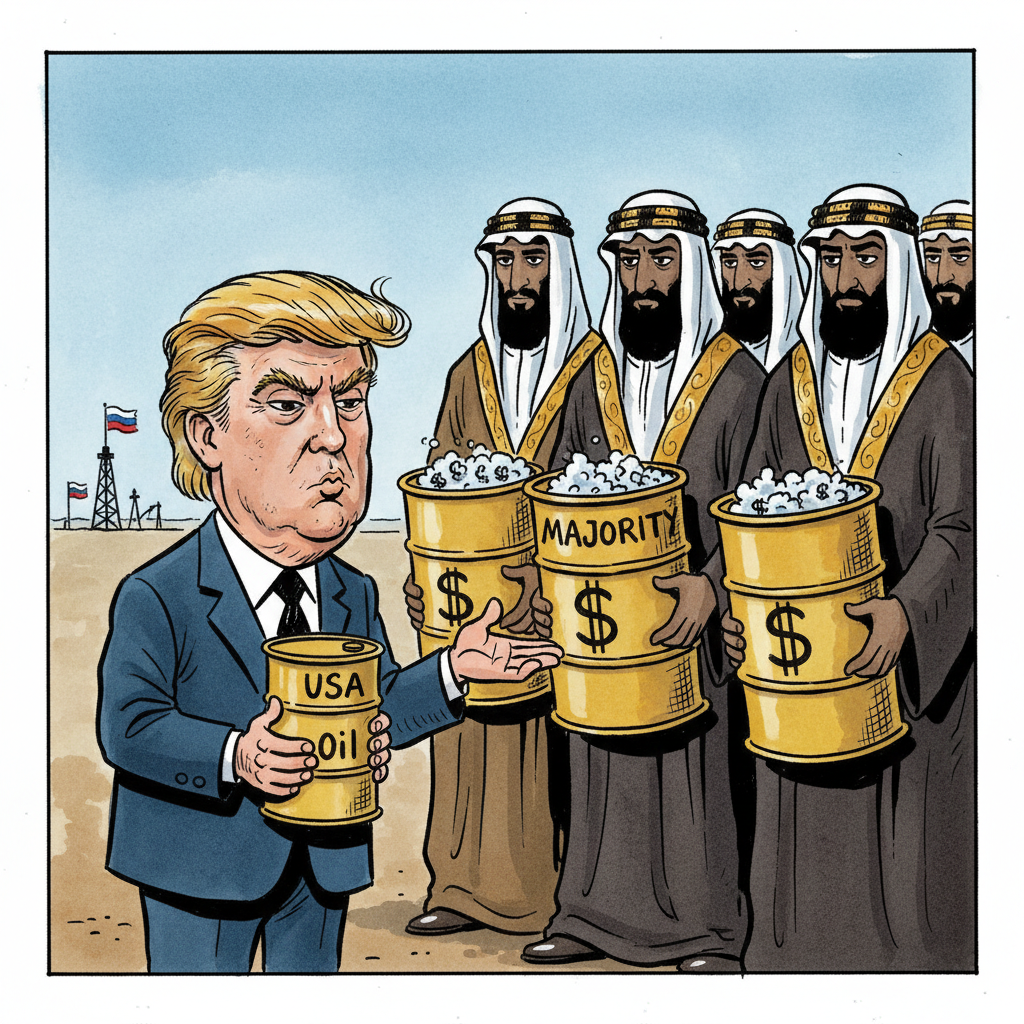
Washington, D.C. — In a stunning display of economic diplomacy that analysts are calling 'peak transactional genius,' a proposed multi-billion dollar Russian oil venture, previously understood to be a personal triumph for former President Trump, will, in fact, be largely owned by a consortium of Middle Eastern investors. This innovative 'American deal' redefines the very essence of American ownership, pushing the boundaries of geographical comprehension and, more importantly, maximizing profit margins for literally everyone *except* the American taxpayer who still hasn't figured out why their gas bill is so high. Critics, reportedly still reeling from the sheer audacity of expecting domestic benefit from an international energy play, noted that some of the newfound 'stakeholders' conveniently share business relationships with the U.S. negotiators themselves. This, of course, is merely a testament to the efficient global networking required to grease the wheels of progress, or perhaps just to ensure that the proper 'thank you' notes are delivered to the right P.O. boxes. After all, what’s a little shared equity among friends if it helps secure affordable fossil fuels for a planet that is literally boiling over?
A groundbreaking sociological phenomenon is sweeping across the nation's redder districts, as millions of loyal Republican voters contemplate an unprecedented act of civic engagement: staying home. Pundits, still reeling from the discovery that 'voter apathy' isn't just for municipal bond initiatives, are scrambling to understand what could possibly prompt such a radical departure from the American democratic tradition of, well, showing up. The leading hypothesis suggests a critical mass of the GOP faithful has been exposed to the party's standard-bearer for too long without adequate mental filtration, leading to a kind of political fatigue previously only observed in international chess tournaments.
Sources close to the dispirited electorate confirm that while many still enjoy the abstract *idea* of conservative principles, the practical application through their chosen leader has become 'less of a rallying cry and more of a prolonged, public tantrum.' Analysts warn that this emerging 'democratic abstention' could, ironically, lead to the very outcome these voters ostensibly wish to avoid – a Democratic surge. Experts speculate that perhaps the party’s long-term strategy of prioritizing pure, unadulterated id over basic coherent messaging may, in fact, have consequences. More details are expected to emerge once these voters finish their nap.
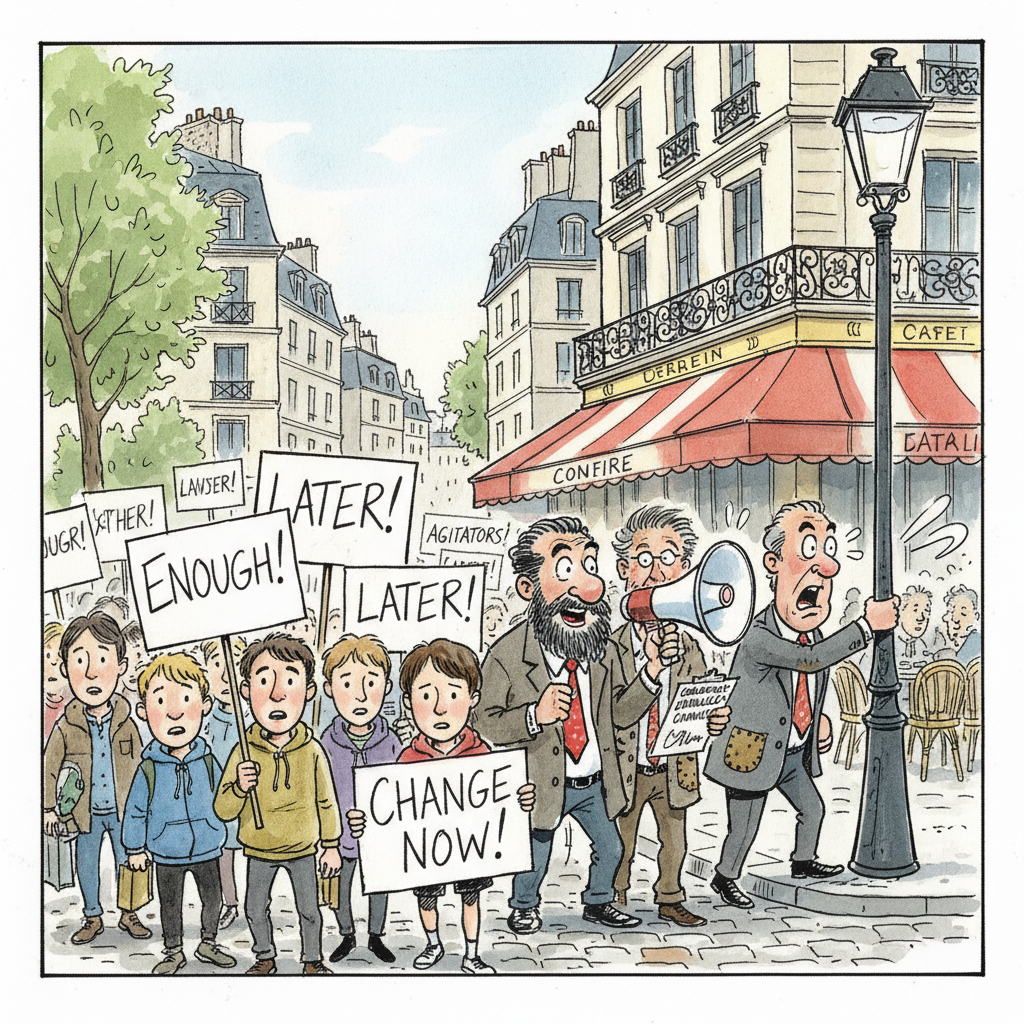
In a stunning display of strategic foresight, France's perpetually resurgent far-left has bravely embraced the nation's student protests, recognizing them not merely as a legitimate expression of youthful dissent but as a golden opportunity to… well, be seen. "We stand in solidarity with anyone whose timetable is disrupted," declared a spokesperson for the 'Movement for Moderately Uncomfortable Change,' pausing only to adjust his artisanal organic hemp scarf. Government officials, meanwhile, have condemned this cynical exploitation, insisting that the students are merely pawns in a larger political game, specifically the one where politicians accuse other politicians of playing political games.
Experts note that this symbiotic relationship is a tale as old as time, or at least as old as the invention of the megaphonemicrophone. While students provide the raw, unrefined energy of youthful indignation, the far-left provides the crucial service of standing slightly behind them, nodding sagely, and occasionally issuing a press release that nobody reads. This arrangement allows the government to deflect substantive criticisms by simply pointing to the 'agitators,' thereby creating a delightful, self-sustaining ecosystem of performative outrage where everyone gets to feel very important and absolutely nothing changes.
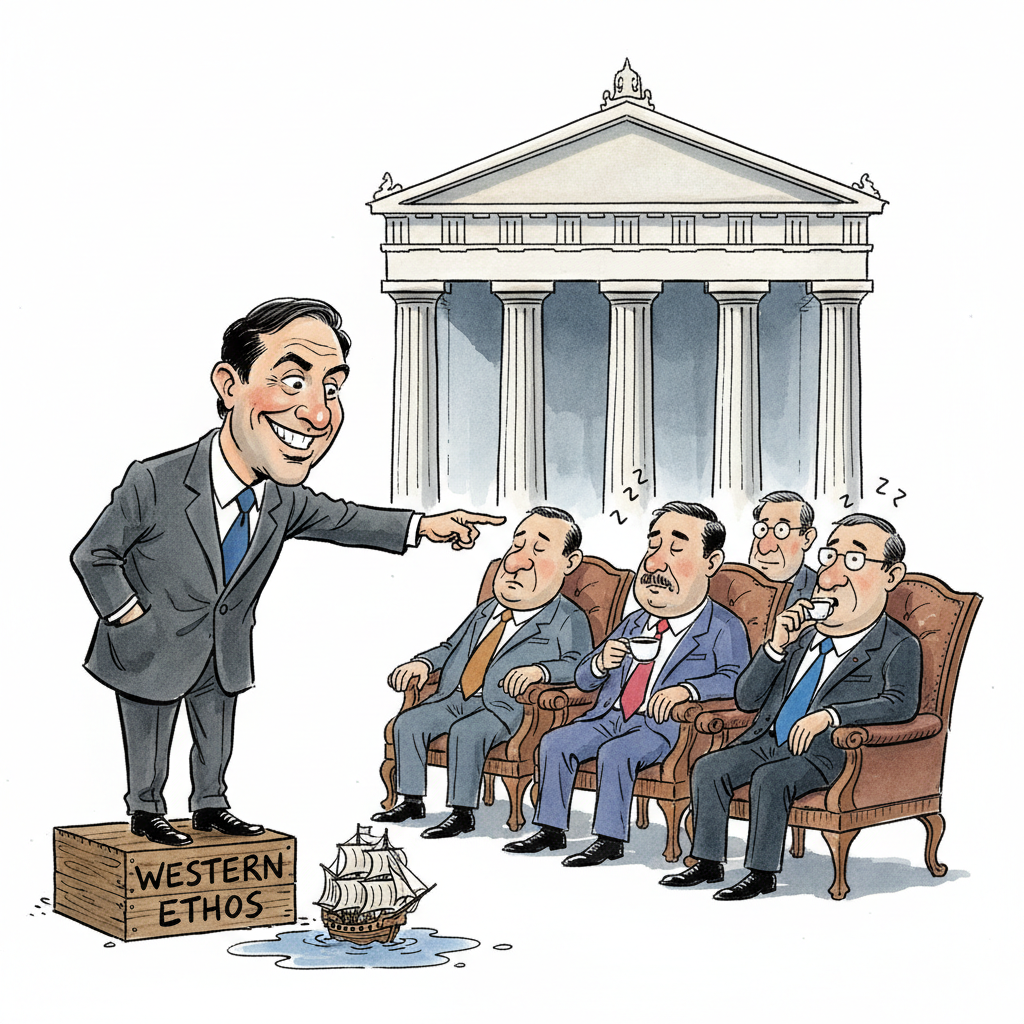
Reports from Greece indicate that Senator Marco Rubio, perhaps mistaking a high-level diplomatic summit for a particularly rambunctious kindergarten parent-teacher conference, has urgently called upon European nations to 'awaken from slumber' and re-embrace their 'ethos of exploration and conquest.' Apparently, the West’s current geopolitical posture — vaguely resembling a bored teenager scrolling TikTok while the house burns down — is insufficient for maintaining its 'head of the world' status. Critics suggest Rubio's historical timeline might be slightly skewed, possibly residing somewhere between a particularly aggressive game of 'Risk' and the second act of an Indiana Jones movie. Observers noted that European leaders responded with a collective, bewildered blink, likely wondering if 'exploration and conquest' meant finally discovering how to make a perfectly flaky croissant or just, you know, invading Liechtenstein for its chocolate supply. Rubio concluded his impassioned plea by suggesting that if Europe truly wanted to get back in fighting shape, it should probably start by finding its car keys and maybe a fresh pot of coffee, before moving on to, say, establishing new spice routes.
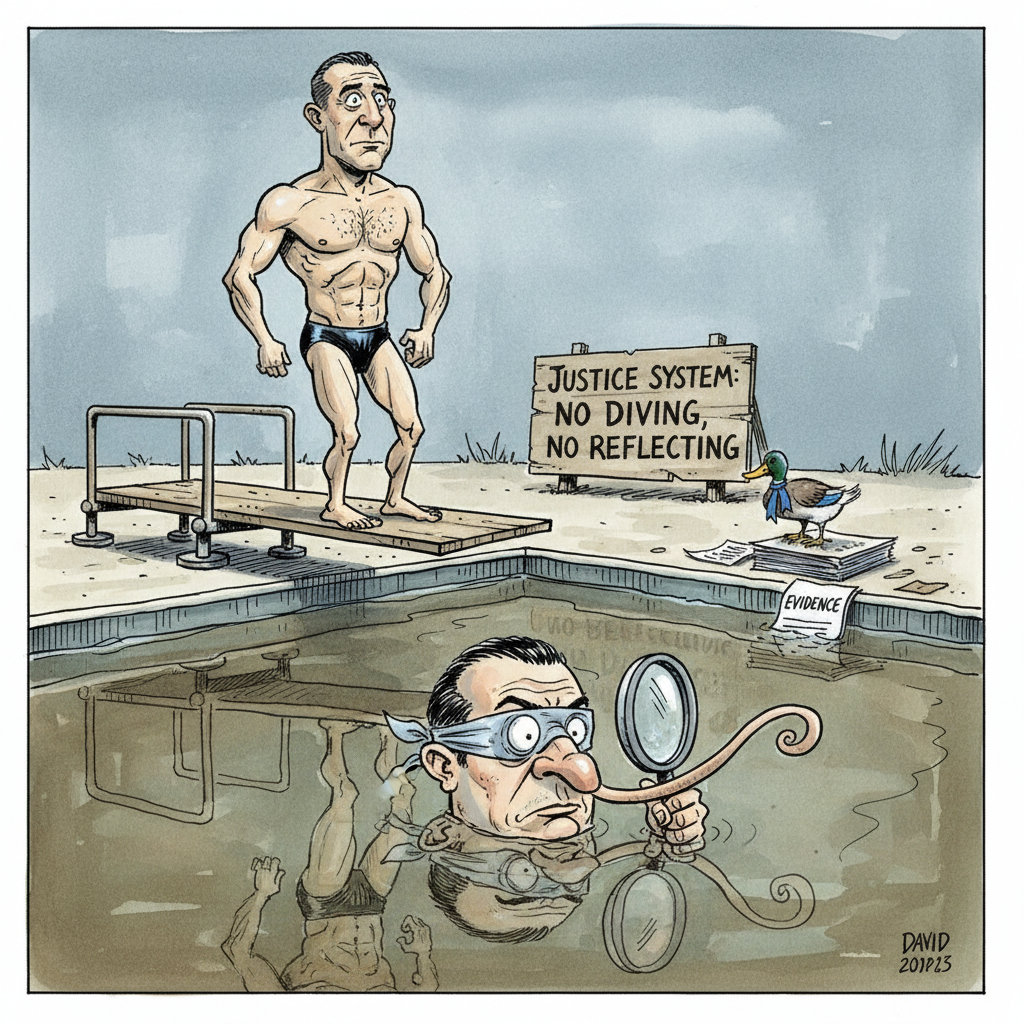
In a bold move that some are calling 'an inconvenient disruption of the judicial workflow,' former Olympic medalist David Hearn has formally requested an inquiry into why prosecutors in his 'reflecting pool case' seemingly confused their own evidence with a funhouse mirror. Attorneys for Mr. Hearn allege that the legal team responsible for his indictment performed an 'Olympic-level feat of selective blindness,' artfully dodging exculpatory evidence while simultaneously inventing new facts with the theatrical flair of a particularly unconvincing improv troupe.
Sources close to the legal proceedings, who wished to remain anonymous lest they too be accused of 'misplacing' pertinent documents, suggest that the prosecuting office's official policy on inconvenient truths involves a complex system of industrial shredders and 'memory-hole' interns. Hearn’s legal team further argues that the prosecution’s timeline of 'what they knew when' was less a coherent narrative and more a 'madcap, chronological spaghetti western' where every character has amnesia. Experts agree that if this conduct becomes a trend, the U.S. justice system may soon require a disclaimer advising citizens that 'any resemblance to actual facts, living or dead, is purely coincidental.'
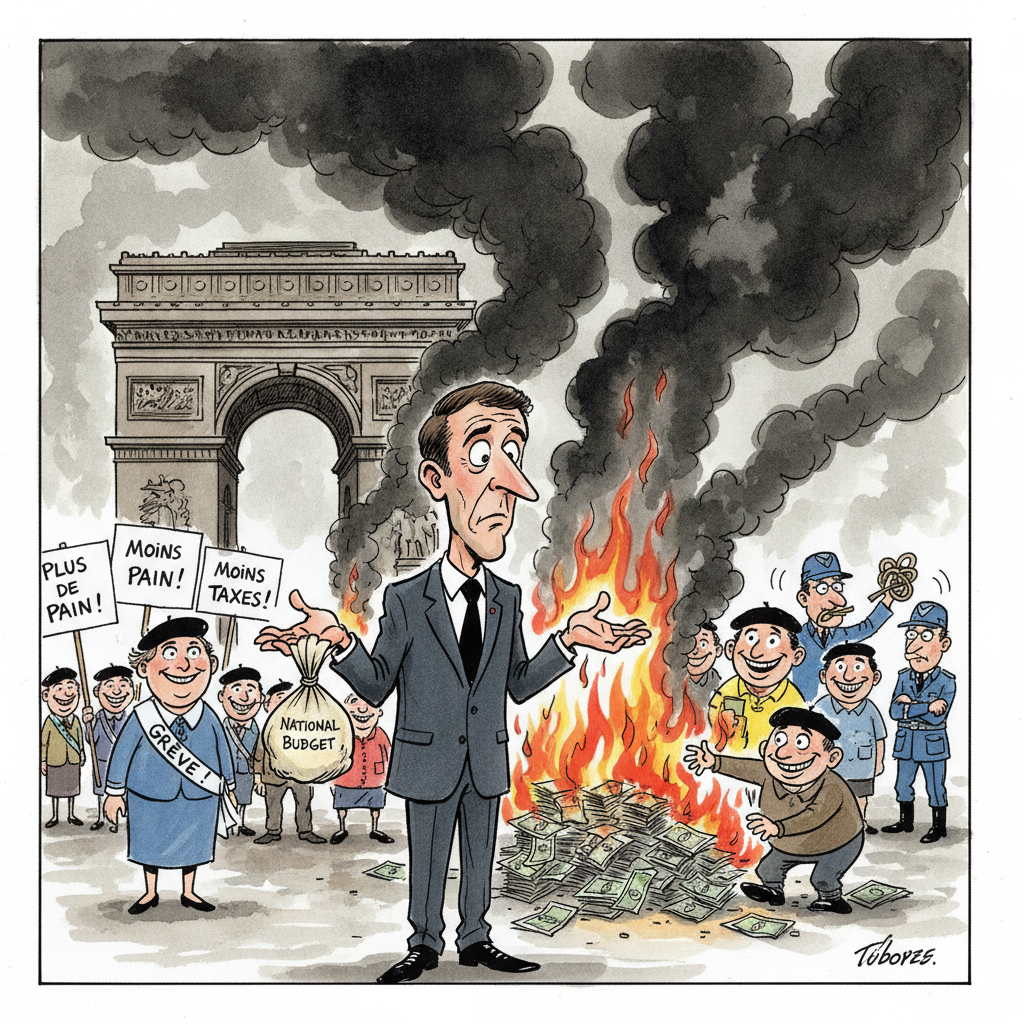
Breaking news from the Elysée Palace, where President Macron’s approval ratings have plummeted faster than a poorly-baked croissant in an earthquake: it appears the French populace has just been informed that their cherished social safety net, much like a vintage wine, actually requires grapes and someone to stomp them. This revelation has triggered an unprecedented 'Autumn of Discontent,' which, to the discerning observer, looks suspiciously like 'Tuesday' but with more overturned cars and less effective riot gear. Schoolchildren, apparently privy to sophisticated economic models previously unknown to central bankers, are now barricading their institutions, presumably to protest the existential burden of a balanced budget, while union leaders across the nation have declared a 'Fiscal Reckoning,' which translates roughly to 'nobody's working until someone else pays for it.' Experts are baffled by this sudden societal awakening, noting that funding a comprehensive welfare state without, you know, *funding* it, was always considered a charmingly abstract concept rather than a practical impossibility. The nation now braces for an upcoming presidential election, promising a delightful spectacle of candidates vowing to deliver infinite benefits at zero cost, all while elegantly sidestepping the inconvenient reality of basic arithmetic.
In a move lauded by logistical consultants as 'unprecedentedly efficient panic,' the United States Air Force recently achieved a new world record for bomber deployment *reversal*, evacuating a significant number of its strategic assets from a UK airbase with the kind of alacrity usually reserved for discovering one's forgotten oven is, in fact, on fire. Officials, speaking on condition of anonymity while sprinting, cited 'unspecified yet incredibly persuasive' threats originating from a geographically distinct yet ideologically cohesive 'plot' as the catalyst for this remarkably brisk repositioning. Sources close to the situation confirm that the relocation process was so swift, several B-52 crew members only realized they were mid-flight back to the States after noticing their breakfast was no longer 'lukewarm English fry-up' but rather 'cold American airline croissant.'
The lightning-fast withdrawal has been hailed as a triumph of modern deterrence theory, demonstrating that the most effective way to protect valuable military hardware from existential threats is to simply remove it from the theater of operations at speeds approaching ludicrous. Critics, primarily those left to tidy up the hastily abandoned biscuit crumbs, suggest that while the strategic assets are now 'maximally un-threatened' on U.S. soil, the optics of a global superpower enacting a 'reverse-flash-mob' with its premier aerial platforms might inadvertently send a message other than 'unwavering commitment.' Meanwhile, the UK base, now noticeably quieter, has reportedly been repurposed for a highly anticipated international 'Extreme Lawn Bowling' tournament, pending a thorough inspection for stray top-secret sticky notes.
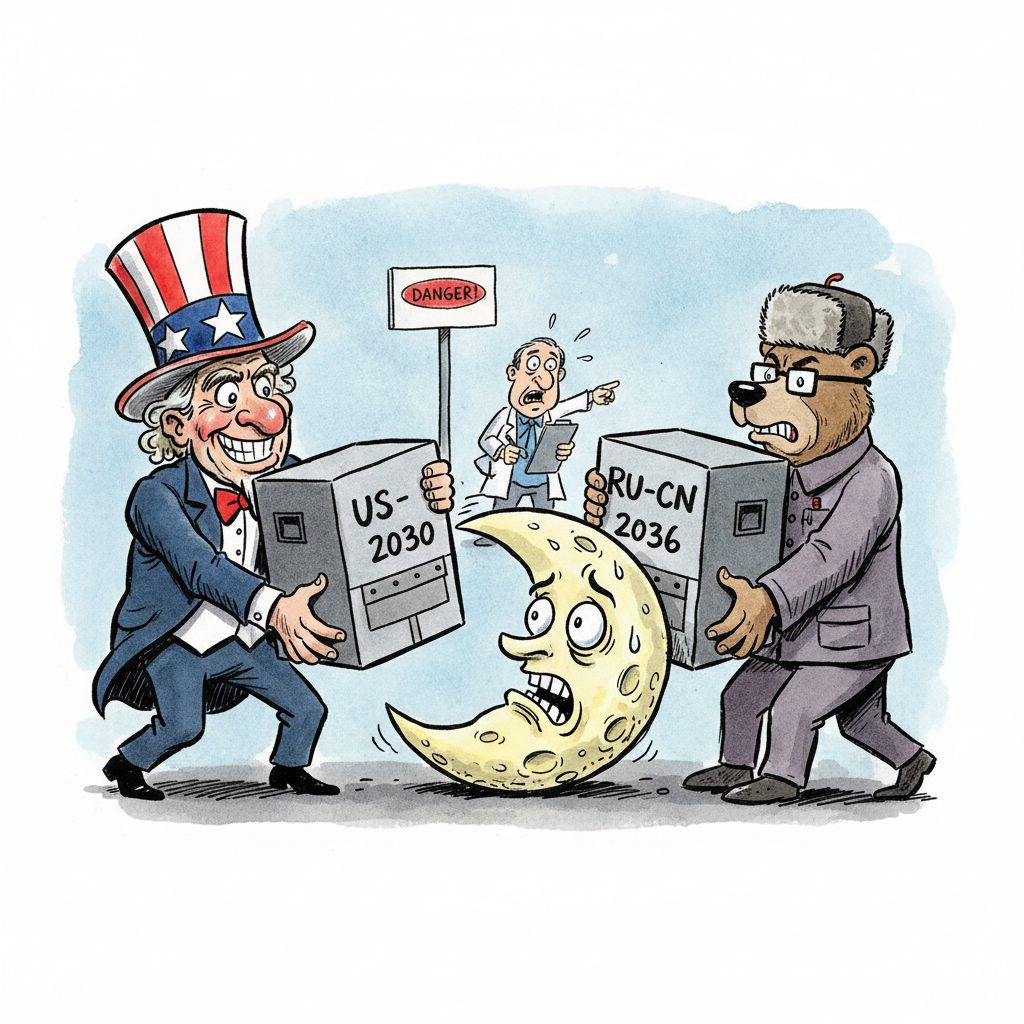
In a move that has space policy wonks nodding sagely and anyone with basic survival instincts nervously eyeing the night sky, global superpowers are currently locked in a thrilling race to be the first to plop a nuclear reactor onto Earth's most prominent celestial body. The United States, ever the pacesetter in the 'unnecessary cosmic infrastructure' game, aims to achieve this monumental feat of high-tech littering by 2030, ensuring future generations will enjoy a slightly warm, potentially glowing moon. Not to be outdone in the 'slightly behind but still trying' category, the Russia-China alliance has optimistically slated their own lunar glow-stick for 2036, presumably after extensive market research into the lunar permafrost's structural integrity. While a few 'leading scientists' have quaintly suggested this might be a bad idea, citing such trifling concerns as 'radiation' and 'catastrophic failure leading to an uninhabitable lunar surface,' these Luddite anxieties are quickly being dismissed by officials focused on the more pressing issue of whose flag will melt into the lunar regolith first. After all, what's a little extraterrestrial meltdown when national prestige is on the line?
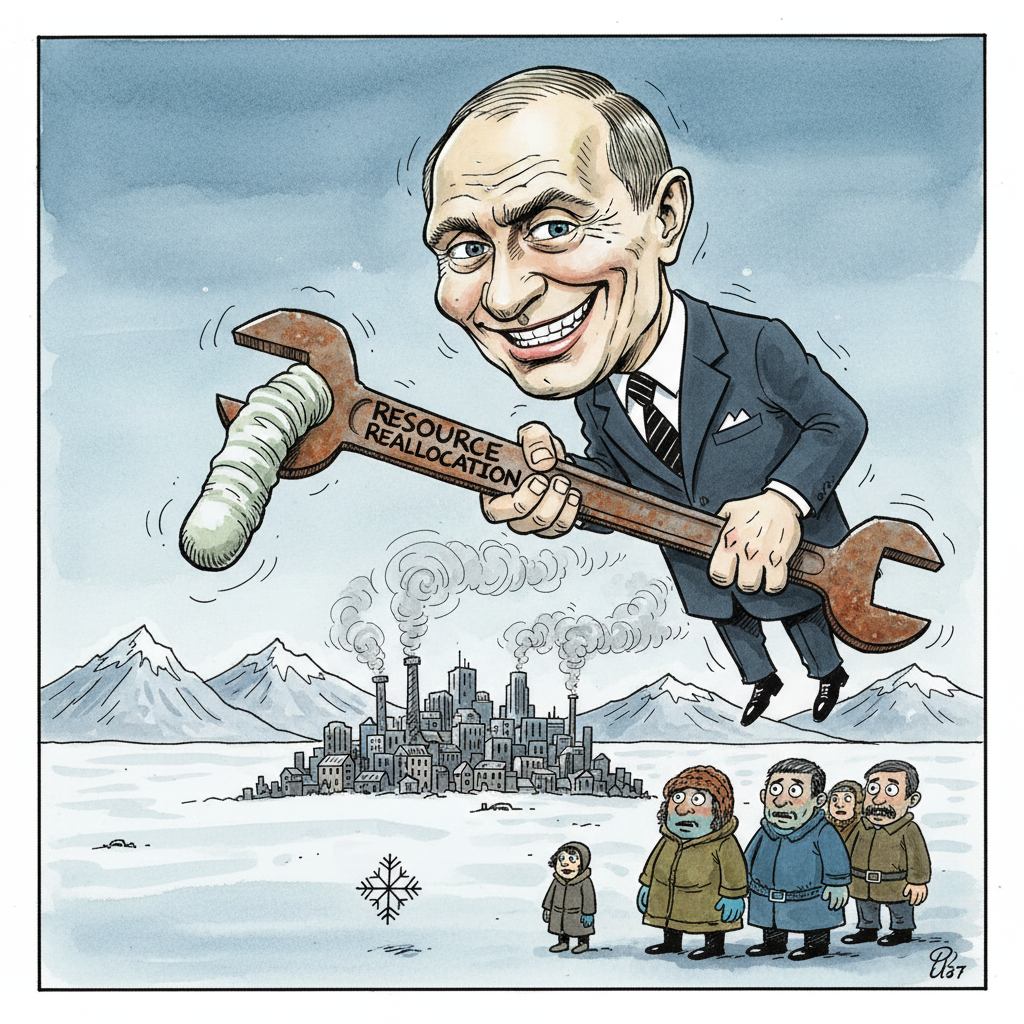
In a move hailed by Kremlin officials as a triumph of strategic foresight and 'resource redistribution,' Russia has reportedly finalized blueprints for its ambitious 'Operation Permafrost Paradigm.' Intercepted documents, which Kyiv claims detail plans to disconnect major Ukrainian cities from power, heat, and water this winter, were dismissed by Moscow as 'misinterpretations of a community outreach program.' A spokesperson, speaking from an undisclosed heated bunker, explained that the initiative aims to foster 'resilience, self-sufficiency, and an appreciation for traditional cold-weather artisanal crafts' among Ukrainian citizens. Critics, however, suggest the program's unstated goal might be the aggressive promotion of wool socks as the region's primary economic driver. Details remain scarce, but analysts predict a sharp rise in artisanal ice-sculpting competitions and the widespread adoption of 'survivalist chic' as the season's hottest new trend.
It appears the state’s commitment to cost-saving measures has inadvertently birthed the ultimate 'second chance' program, as convicted individual Christa Pike — whose name, ironically, sounds like a delicious dessert best served *after* a main course — recently demonstrated the surprising resilience of the human circulatory system against poorly administered neurotoxins. Following not one, but *two* botched attempts at judicial termination, officials are now scratching their heads, presumably to dislodge the lingering ethical quandaries. "We followed protocol!" barked one anonymous prison spokesperson, wiping a bead of sweat from their brow. "We even used the budget brand pentobarbital, which, according to the manufacturer, is 'mostly lethal' when properly administered by non-unionized staff." The incident has sparked fervent debate among correctional facility procurement officers, who are now scrambling to find an execution method that prioritizes efficacy over bulk discounts. Critics, meanwhile, are pointing out that if the government can't even get a simple lethal injection right, perhaps its broader policy initiatives should be viewed with a similar level of skepticism.
Washington D.C. sources, or at least one particularly exasperated intern, confirm that Pete Hegseth’s much-vaunted ‘tough guy’ persona has become so indistinguishable from actual human behavior that Republican colleagues are reportedly experiencing unprecedented levels of cognitive dissonance. Once a reliable bedrock of performative machismo, Hegseth’s carefully curated image of unyielding alpha-ness is now reportedly causing widespread unease, not because it’s fake, but because it might actually be *too* real. “It’s like watching a method actor stay in character for a decade,” one anonymous lawmaker mumbled, adjusting his loosened tie. “You admire the dedication, but you also worry he might actually believe he can communicate exclusively through guttural grunts and flexed pectorals.”
Indeed, insiders claim the internal party meetings now resemble a high-stakes staring contest where the prize is not victory, but simply being allowed to finish a sentence without Hegseth dramatically tearing his own shirt in a display of primal dominance. His relationship with Republican lawmakers has, by all accounts, plummeted to levels previously reserved for sentient parking cones. Efforts to communicate, sources say, are often met with a single, unblinking glare and the audible clenching of an imaginary jawline, leaving legislative agendas in a state of advanced, muscular paralysis. The party is now reportedly considering communicating with him exclusively via motivational posters featuring eagles and quotes about grit.
In a move lauded by precisely zero focus groups, U.S. forces have finally completed their two-decade-long 'nation-building through demolition' project in Iraq, leaving behind a power vacuum so perfectly designed it could win an industrial design award. Sources close to the Pentagon, who asked to remain anonymous because they were too busy packing their 'World's Best Occupier' mugs, celebrated the departure as a testament to America's unwavering commitment to... well, something. Iraqis, meanwhile, are now free to ponder the true meaning of sovereignty while juggling allegiances between two regional superpowers who collectively spent the last twenty years using their country as a very expensive, very dusty board game. Analysts predict a 'dynamic new era' for the nation, which, in geopolitical terms, means more existential dread and perhaps a new, even more perplexing flag. The last U.S. soldier reportedly left a Post-it note reading 'Good luck, you'll need it' and a half-eaten bag of Cheetos.
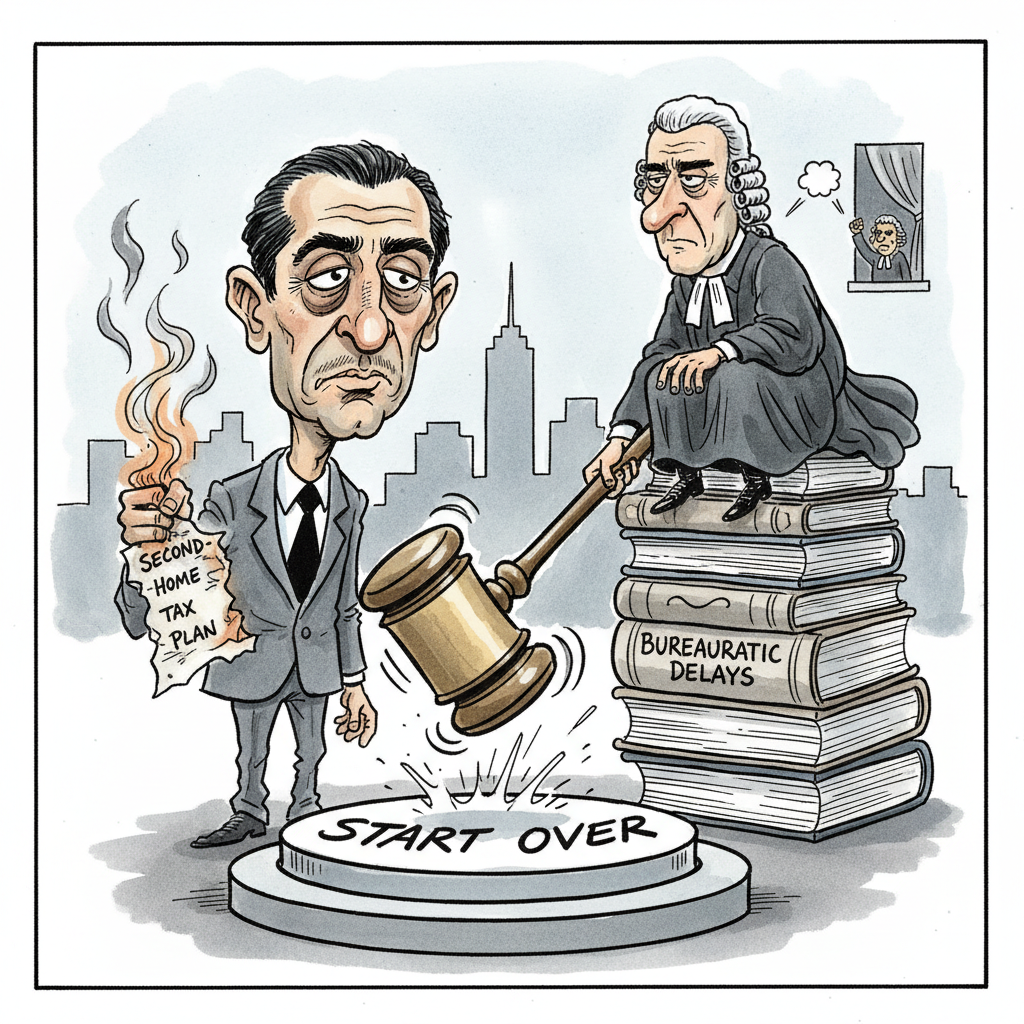
In a ruling that shocked absolutely no one who's ever tried to renew a city permit, a Staten Island judge has ordered New York City to scrap its ambitious second-home tax rollout and return to square zero. The verdict, delivered with the judicial gravitas typically reserved for deciding who gets the last bagel, sided with a coalition of homeowners who apparently felt the initial attempt at wealth redistribution lacked adequate layers of Kafkaesque inefficiency. Mayor Zohran Mamdani, presumably mid-way through drafting a new budget based on this now-defunct revenue stream, reportedly 'sighed audibly' and then immediately instructed his team to find a more circuitous route for future taxation efforts.
The court's decision, which effectively declares the city's tax-drafting process null and void, means New York must now re-engage with the delicate art of crafting legislation that will inevitably be challenged, debated, and then ultimately shelved for a new, equally flawed iteration. Sources close to City Hall suggest the new plan might involve a 'luxury air tax' for breathing above the fifth floor, or perhaps a 'sadness surcharge' for anyone caught frowning in public. 'We're committed to making this process as bewildering and financially impactful as possible,' a city spokesperson mumbled, polishing a monocle, 'while, of course, respecting due process and the fundamental right to an interminable appeals procedure.'
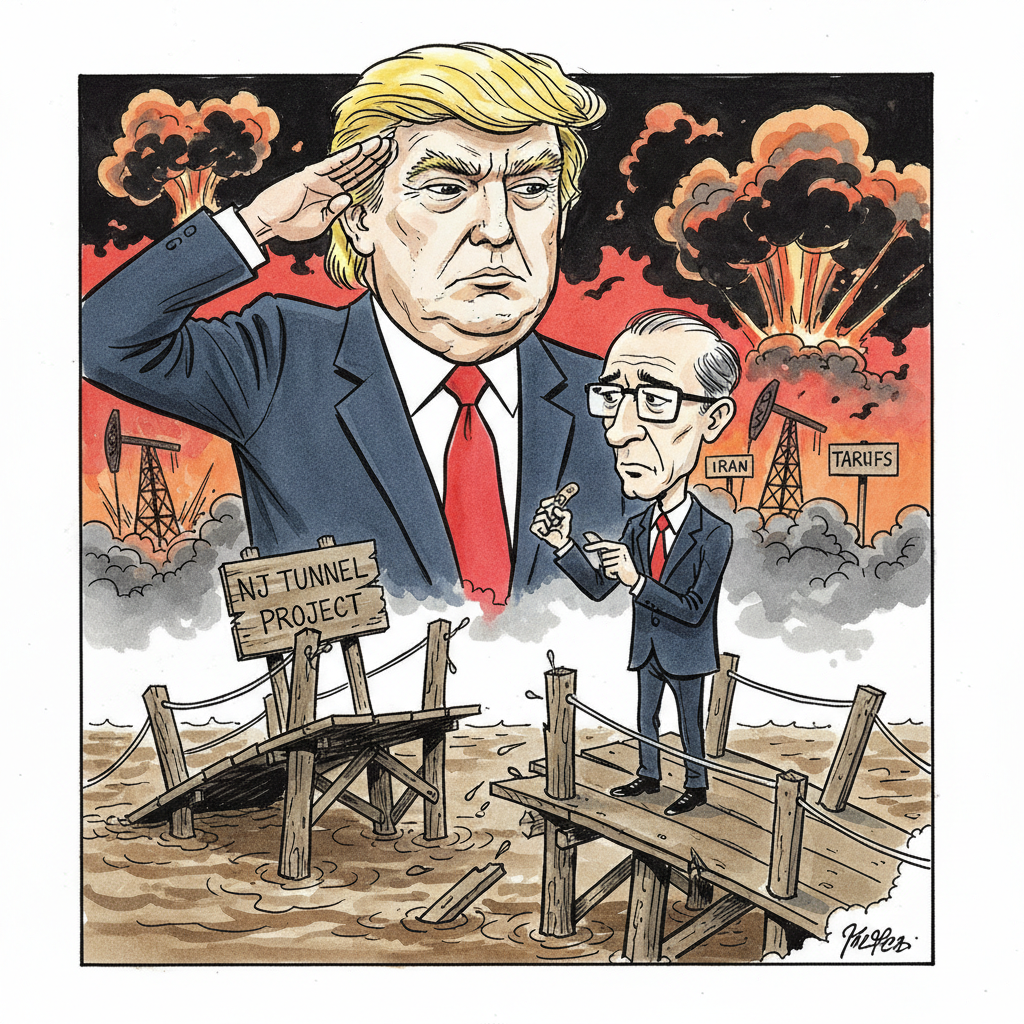
In a truly inspiring display of political discernment, New Jersey Republican Tom Kean Jr. has bravely declared his willingness to stand shoulder-to-shoulder with the former President on the most complex geopolitical conundrums—like, say, Iran’s nuclear ambitions or the delicate dance of international tariffs—while simultaneously sharpening his rhetorical knives for the comparatively trivial matter of local infrastructure. During a robust exchange with Democratic rival Rebecca Bennett, Kean Jr. apparently drew a clear line in the sand, demarcating the precise point where his loyalty transitions from 'absolute, unthinking fealty' to 'mild, constructive disagreement': somewhere between Riyadh and the Holland Tunnel. One can only admire such principled granularity, a nuanced understanding that global diplomacy is best navigated with a unified front, whereas the structural integrity of a century-old underwater transit system demands rigorous, independent thought.
Indeed, sources close to the campaign suggest Kean Jr. views the Middle East as a delightful playground for consistent, unwavering support, while the grim reality of a collapsing Hudson River tunnel necessitates a degree of independent, almost maverick, scrutiny previously unseen. It's a bold strategy: offer unflinching solidarity on matters of war and peace, but unleash the full force of a politician's independent spirit when confronted with the existential threat of a slightly longer commute. Critics might call it selective courage; strategists are hailing it as 'prioritizing constituent discomfort over abstract notions of international stability,' which, in this political climate, is practically a re-election slogan. The American public can rest easy, knowing that while the world may burn, New Jersey's transit woes will be addressed with unparalleled rigor.
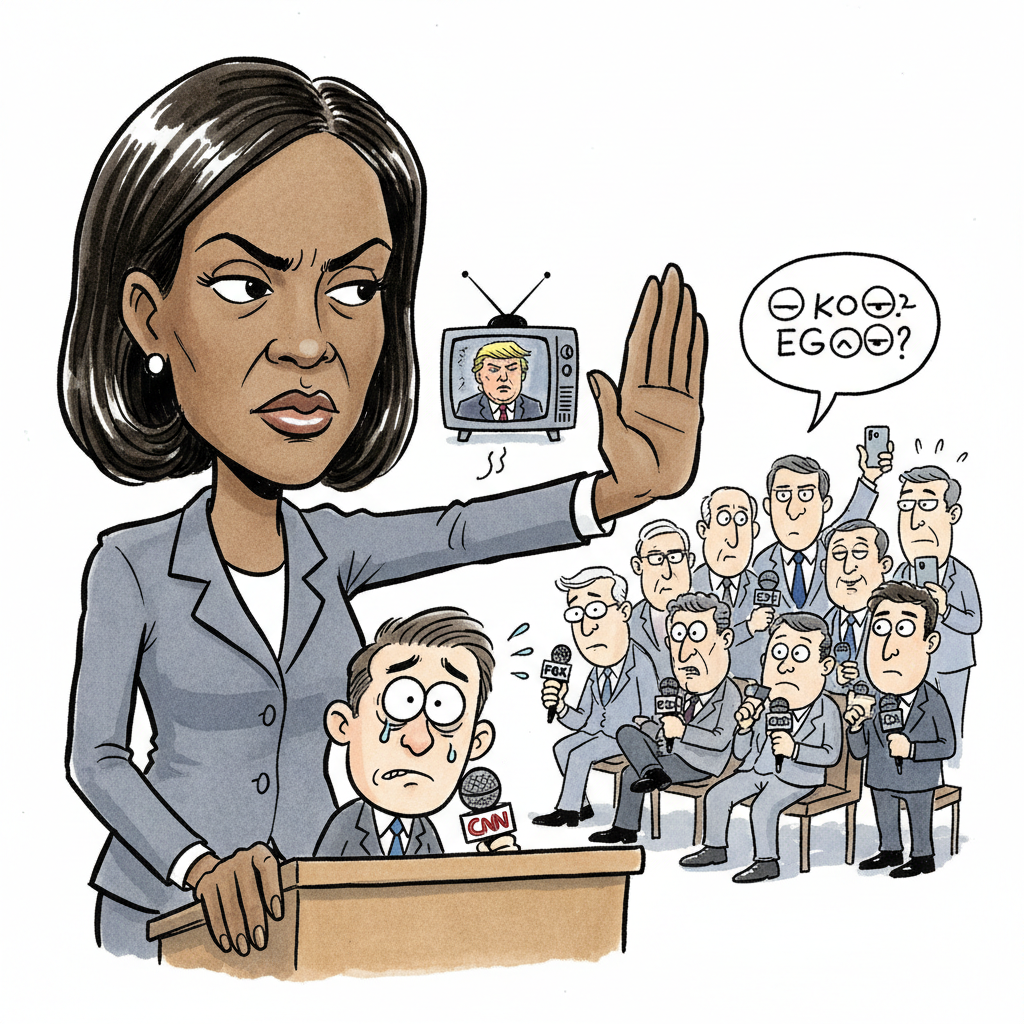
In a move that has left epidemiologists baffled and media critics reaching for their Xanax, major television networks have reluctantly announced the reintroduction of former President Donald Trump's image and voice to their daily programming. 'While we acknowledge the public's understandable need for occasional respite, the sheer logistical nightmare of filling 24-hour news cycles with, say, nuanced policy debates or stories about pleasant garden gnomes proved insurmountable,' explained a visibly exhausted network executive, who requested anonymity lest their shareholders accuse them of intellectualizing. Sources close to the negotiation table suggest the decision was less about public service and more about the stark realization that several news anchors had begun spontaneously narrating the contents of their lunchboxes after only a week of 'Trump-free' broadcasting. The White House, meanwhile, remains staunchly committed to its policy of only excluding CNN, a bold stance that has arguably elevated the cable news channel to an almost mythical 'forbidden fruit' status among viewers desperate for even a glimpse of Oval Office drapes through an unsanctioned lens. Critics lauded the strategy as a masterclass in controlled information flow, albeit one that inexplicably involves allowing every *other* major network full access.
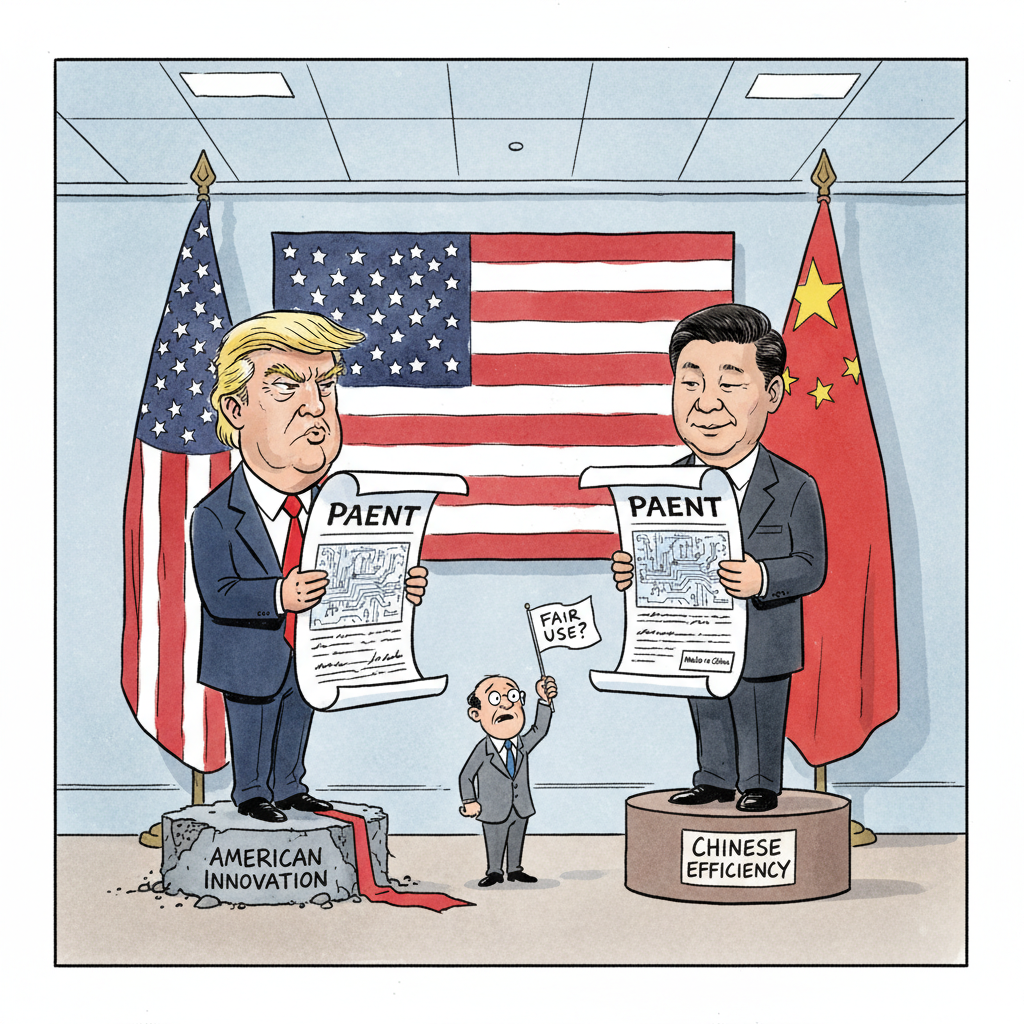
Washington D.C. sources, or rather, the lingering aroma of desperation emanating from the Oval Office, suggest that President Trump is poised to confront visiting Chinese leader Xi Jinping over allegations that China has been 'distilling' American artificial intelligence. This sophisticated process, previously believed to involve ancient mystical arts, has now been demystified as merely 'copying with intent.' White House aides, who communicated primarily through a series of increasingly frantic hand gestures and whispered oaths, confirmed that the primary concern is not the loss of intellectual property, but rather the alarming lack of proper attribution. "It's just common courtesy," explained a nameless staffer, polishing a ceremonial golf club. "When you take someone's brilliant innovation, like, say, the self-driving car that insists on taking you to a casino in Nevada, you at least send a thank you note, or perhaps a modest gift basket of industrial espionage tools. Anything less is just barbaric." Experts are now debating whether 'distillation' implies a purer, more potent form of AI, potentially rendering the original American versions obsolete. The Pentagon has reportedly begun developing a new, top-secret program to 're-distill' the Chinese distillations, ensuring a perpetual cycle of mildly improving, slightly off-brand technology.
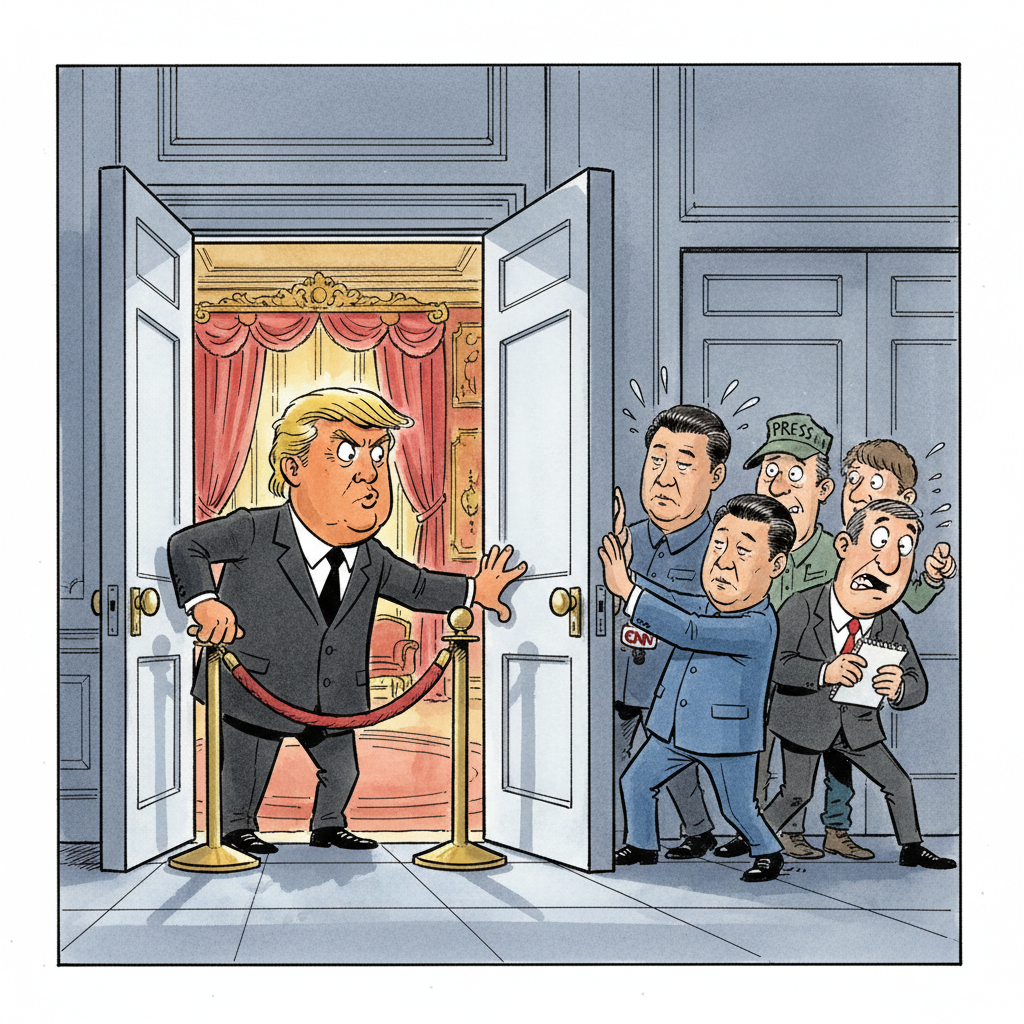
It appears the fine folks over at the White House communications department have cracked the code: the secret to true presidential greatness lies in maintaining an air of mystique, or, failing that, an air of complete and utter journalistic exclusion. While American reporters, with their inconvenient questions about things like 'democracy' and 'fiscal responsibility,' were busy being escorted from the premises with the efficiency of a bouncer ejecting a poorly-dressed patron, President Trump was busy rolling out the red carpet for China's President Xi Jinping. Apparently, when you're a leader whose government scores a perfect 'repressive' on the international human rights scorecard, you're not just welcome; you're practically family.
One can only assume the logic here is that if you can't *handle* a free press, you might as well *be* a free press – as in, free to do whatever you want without one. The media lockout, ostensibly to 'control the narrative,' instead only served to highlight the narrative that some narratives are best told without any pesky witnesses. It seems American media, bless their heart, just haven't grasped the delicate art of allowing a leader to speak uninterrupted, a skill perfected in many 'alternative' democracies around the globe.
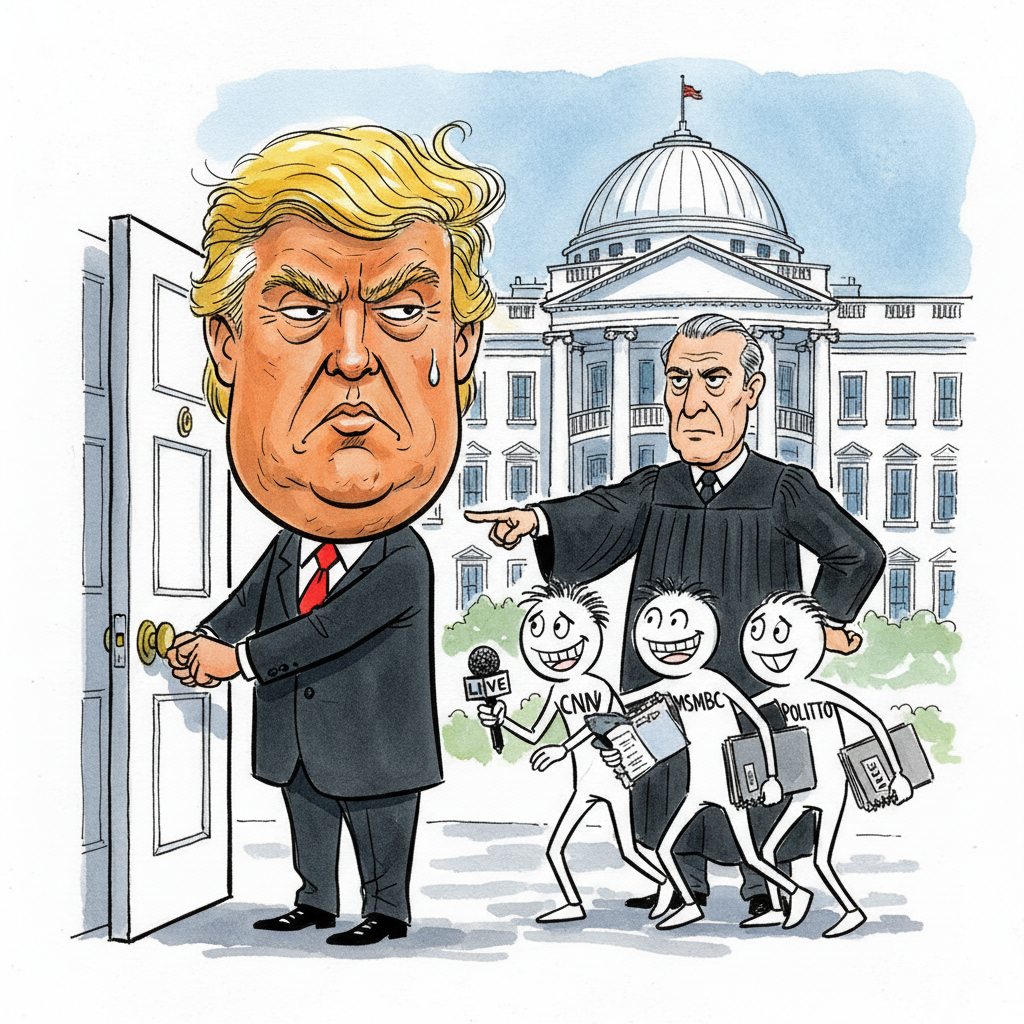
In a stunning display of judicial overreach, a federal court has daringly dictated that the Executive Mansion must, against its clearly stated wishes, tolerate the physical proximity of certain news purveyors. Judge Timothy J. Kelly, apparently unfamiliar with the ancient art of the 'time out,' issued a temporary restraining order, forcing the White House to reinstate the press credentials of employees from CNN, MSNBC, and Politico. Sources close to the administration, who wished to remain anonymous to avoid being declared 'enemies of the truth' and subsequently blocked from the White House Twitter feed, confirmed that the ruling has caused a significant uptick in eye-rolling and the frantic search for more soundproof walls.
The White House, which had previously exercised its inalienable right to unilaterally decide who gets to stand near the snack table, expressed profound disappointment. 'This sets a dangerous precedent,' a nameless staffer mumbled, polishing a framed 'Participation Trophy' awarded for 'Most Effort in Dismissing Reality.' 'Next, they'll be telling us we can't decide who gets the last donut. Where does it end?' Observers note that while the court's decision ensures a modicum of journalistic access, it largely guarantees that the designated reporters will now enjoy the distinct privilege of being actively ignored from a slightly closer vantage point.
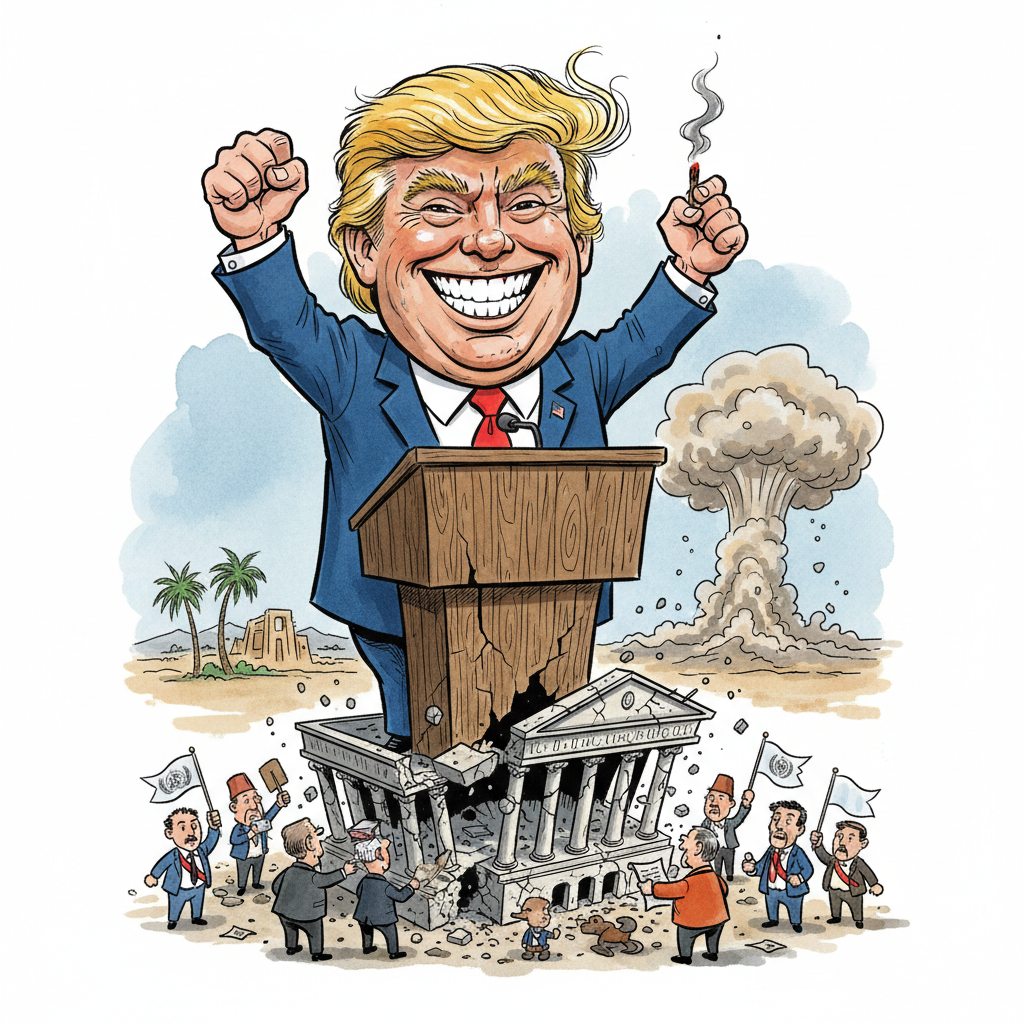
Global diplomacy took an exhilarating detour this week as former President Trump unveiled his radical new vision for the United Nations: less a multilateral peace-keeping body, more a high-stakes, winner-take-all game show. Sources close to the proceedings (a flustered intern clutching a crumpled napkin) report the former commander-in-chief's address included a compelling threat to 'annihilate' Iran, a bold move that some international relations experts initially mistook for a warm-up act. Critics, those quaint proponents of 'international law' and 'cooperation,' are reportedly in a tizzy, claiming this approach 'fundamentally undermines' the institution. But let's be honest, hasn't the UN always been just a very expensive, very beige conference center where everyone mostly agrees to disagree? Mr. Trump simply cut out the tedious middleman, proposing a refreshingly direct 'my way or the highway to a crater' foreign policy. The world now eagerly awaits the announcement of his next grand diplomatic innovation, possibly replacing Security Council votes with a synchronized Twitter poll or a round of 'Deal or No Deal' for nuclear disarmament.
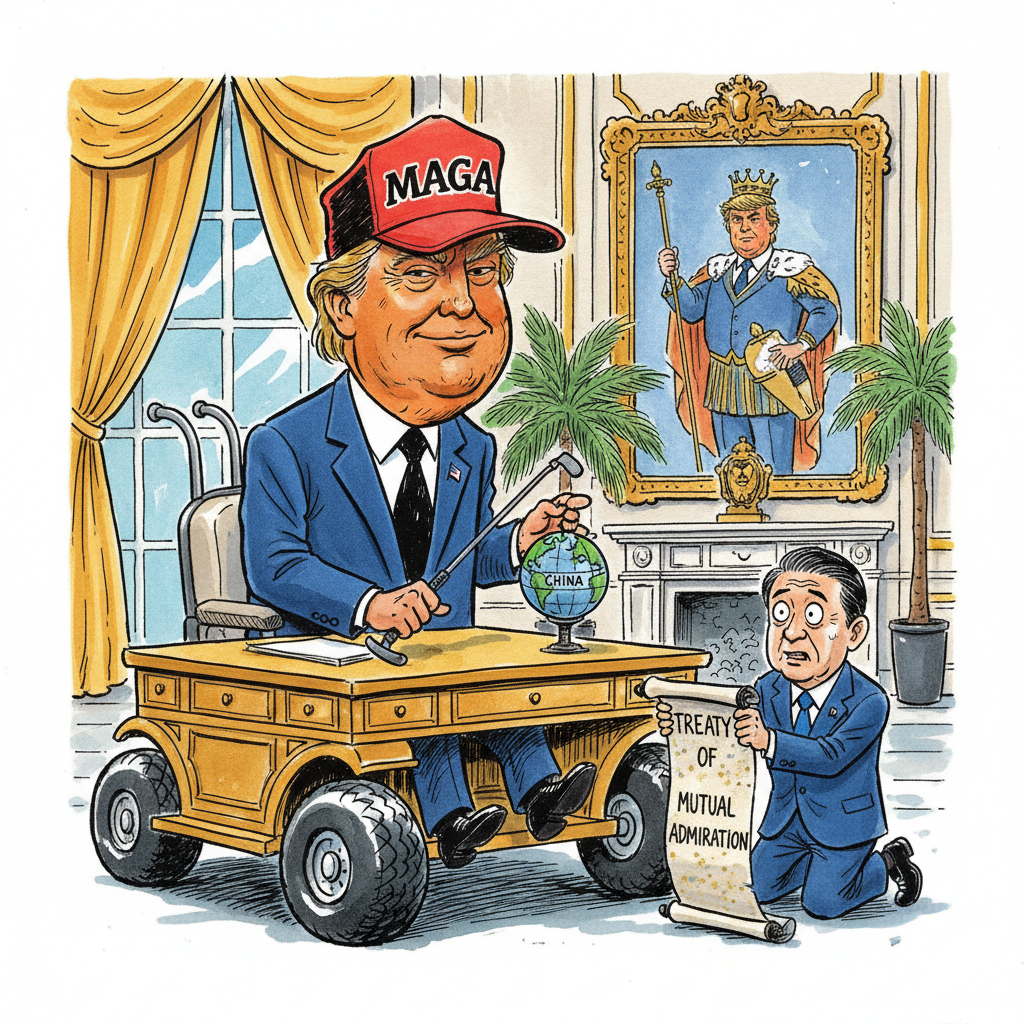
In a bold diplomatic maneuver that sources confirm involved an authentic, albeit slightly crumpled, 'Make America Great Again' cap as a prop, Japanese Prime Minister Fumio Kishida recently dispatched a high-level delegation to Mar-a-Lago. The stated goal? To solicit former President Donald J. Trump’s uniquely effective brand of 'persuasion' in alleviating China’s growing economic and security pressure. Apparently, Japan’s strategists, after countless late-night meetings fueled by lukewarm sake, concluded that only a man who once suggested buying Greenland could adequately deter a superpower. The delegation reportedly brought an ornate 'Treaty of Mutual Admiration and Indifference' and a 14-karat gold golf club, hoping to appeal to Trump's known diplomatic soft spots. While details remain scarce, insiders suggest the former President, after a brief, enthusiastic monologue on his golf handicap, indicated his willingness to 'look into it,' provided Japan agrees to name a future bullet train after him. One assumes Tokyo is now calculating whether a 'Donald J. Trump Express' is a small price to pay for global stability, or perhaps just a mild upgrade from their current existential dread.
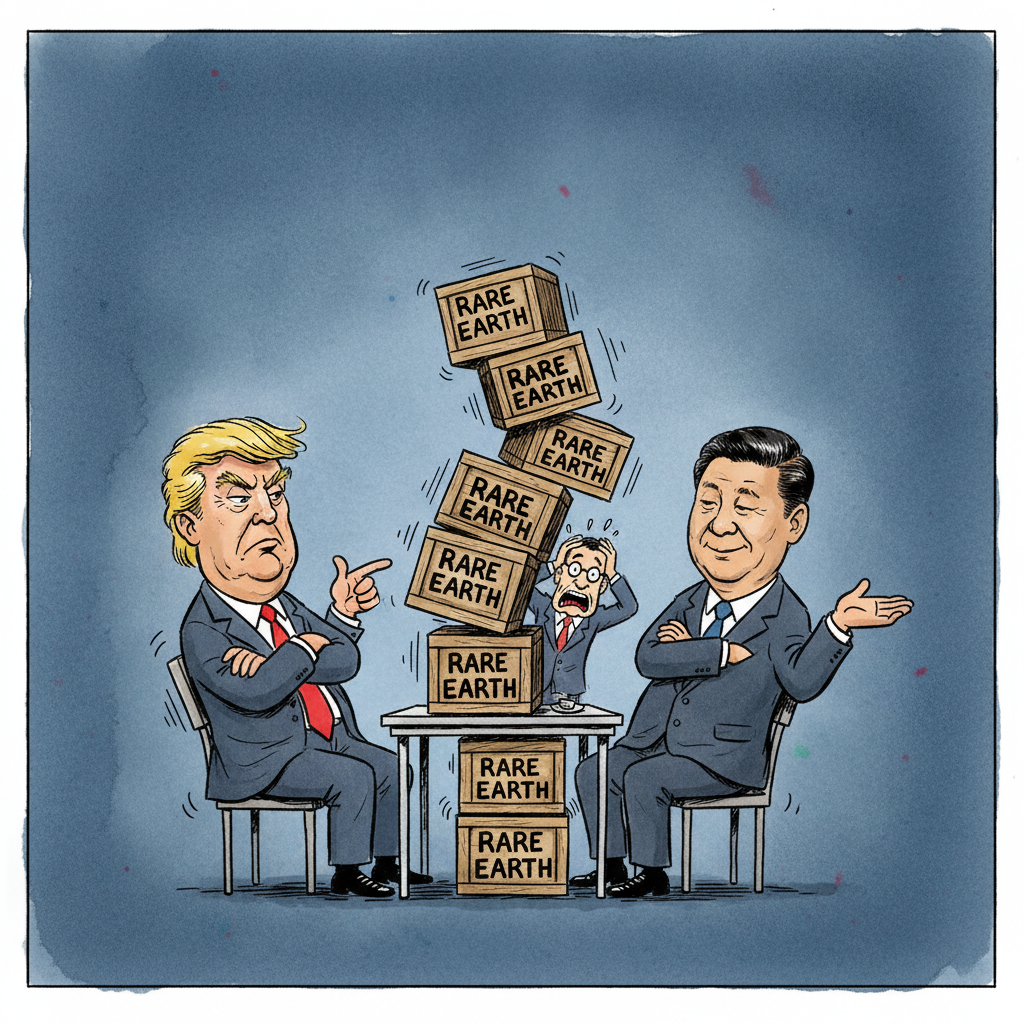
Global manufacturers, already in the advanced stages of developing a compulsive fidgeting habit, are reportedly struggling with 'constrained supplies' of rare earth elements, leading to what economists are now calling 'the industrial world’s most expensive game of hide-and-seek.' As former President Donald Trump and Chinese President Xi Jinping prepare for a meeting that promises to be less about nuanced diplomacy and more about determining who can stare longer without blinking, the fate of everything from your smartphone to America's next-gen missile guidance systems hangs precariously in the balance. Experts note that previous administrations inadvertently offshored critical resource processing with the same foresight one might exhibit when entrusting their retirement savings to a 'Prince of Nigeria' email scam.
Sources close to the negotiations, who asked to remain anonymous lest they be spontaneously combusted by geopolitical friction, suggest that the leaders will primarily discuss how to re-brand the problem from 'lack of foresight' to 'ingenious strategic leverage' (depending on which side of the Pacific you're listening from). The meeting’s agenda, which allegedly includes a detailed analysis of who can claim more credit for inventing the concept of 'leverage,' is expected to yield outcomes ranging from 'absolutely nothing' to 'a mutually agreed-upon list of other countries to blame.' Meanwhile, multinational corporations are reportedly pivoting to a new R&D initiative: inventing technology that doesn't require rare earths, or, failing that, technology that runs entirely on passive-aggressive emails.
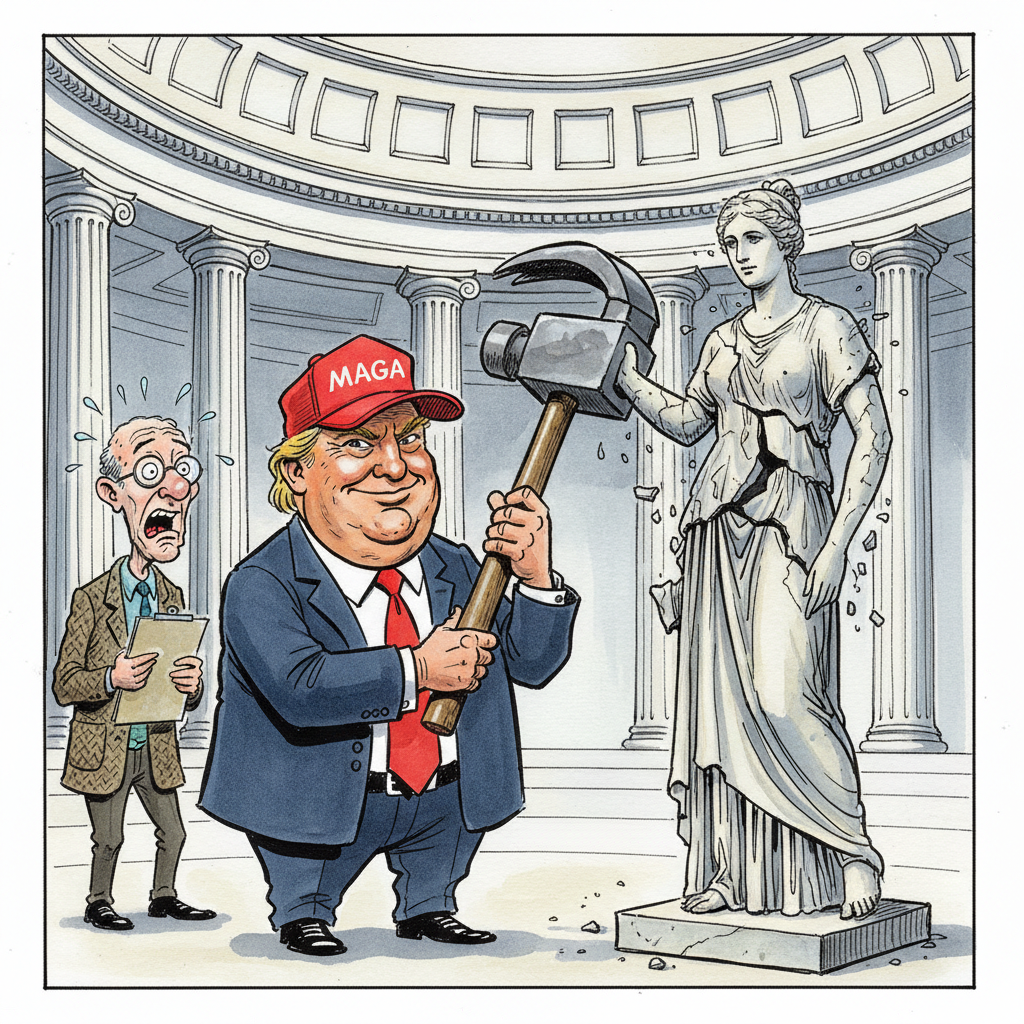
It turns out the esteemed John F. Kennedy Center for the Performing Arts, long a beacon of high culture and taxpayer-funded solemnity, nearly embraced an avant-garde 'portfolio optimization strategy' under the previous administration. Newly unearthed internal emails reveal a bold vision for the arts that, at one point, pondered divesting 'much of the art collection' — presumably to make room for, or perhaps acquire, something 'more accessible.' Critics argue this was a crass political capture, but proponents of the unexecuted plan contend it was simply a forward-thinking move to 'monetize underperforming assets' and 'democratize' culture, perhaps by swapping out dusty busts for more 'on-brand' decorative items, like gilded toilet brushes or framed tweets. The audacious proposal to re-envision the institution’s aesthetic, though ultimately shelved, proved that no institution is too sacred for a little 'disruptive innovation,' especially if it involves a quick appraisal and a potentially very good deal on some bronze sculptures.
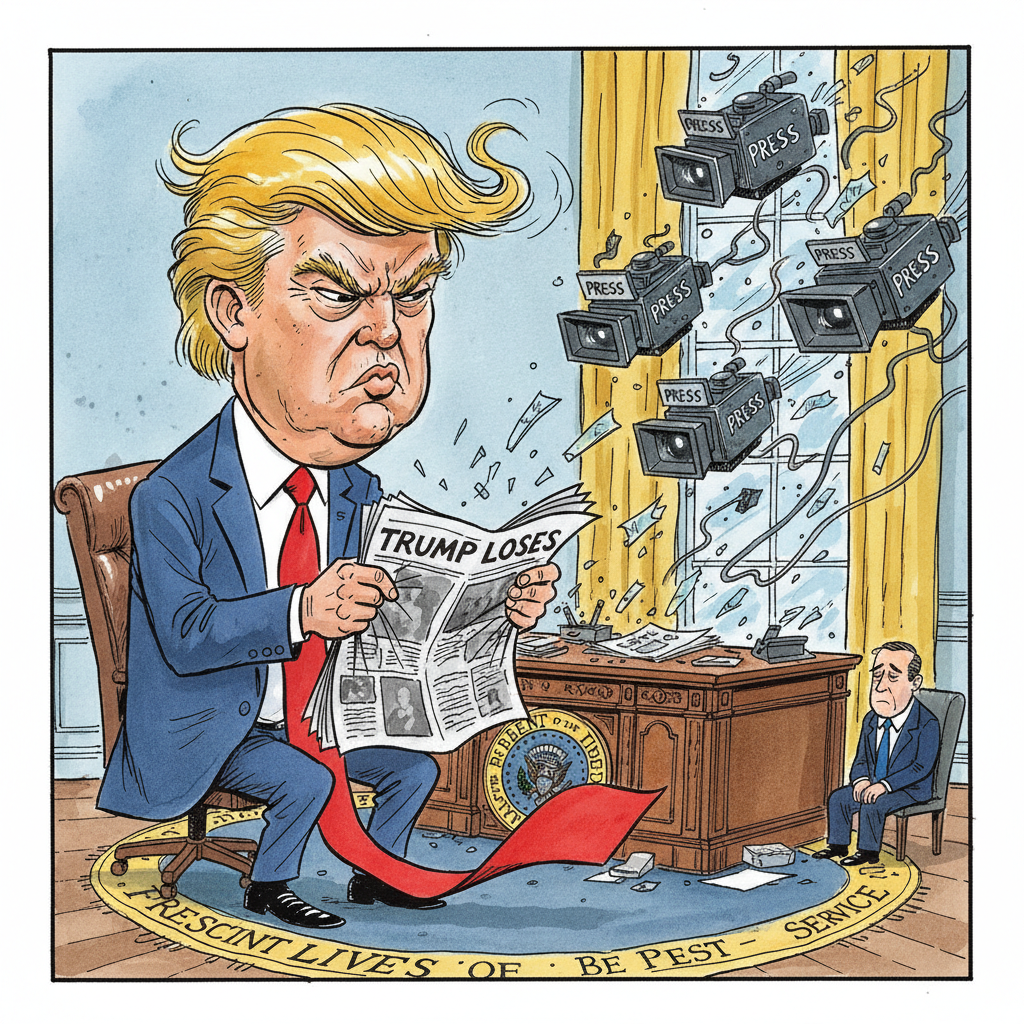
In a move lauded by zero constitutional scholars and approximately seven sentient lawn ornaments, the executive branch has once again demonstrated its unwavering commitment to what it perceives as "governance" by summarily yanking the press passes of three media outlets. Experts familiar with the former administration's operating procedures confirm that this exquisite display of bureaucratic petulance is merely the latest installment in a long-running series titled 'If I Can't Spin It, You Can't See It.' Critics, presumably still reeling from their last attempt to explain due process to a gold-plated golf cart, expressed mild surprise that the outlets weren't simply declared "fake news" via executive decree and subsequently replaced with holographic projections of favorable Fox & Friends segments.
The White House, currently decorated with enough commemorative plates to stock a small museum of self-aggrandizement, cited "unspecified journalistic infractions" as the rationale, which, when translated from doublespeak, roughly means "they said things I didn't like." This innovative interpretation of First Amendment rights suggests a bold new direction for American democracy, where journalistic integrity is apparently determined by its alignment with the President's daily mood swing index. Political analysts, all of whom have clearly lost considerable sleep over the past few years, noted that this pattern of governmental apparatus weaponization often follows periods of personal, undeniable electoral defeat, much like a toddler throwing their peas after losing a staring contest to a mirror. Further updates are expected once the President finishes selecting a new, more agreeable shade of red for the Oval Office 'On Air' light.
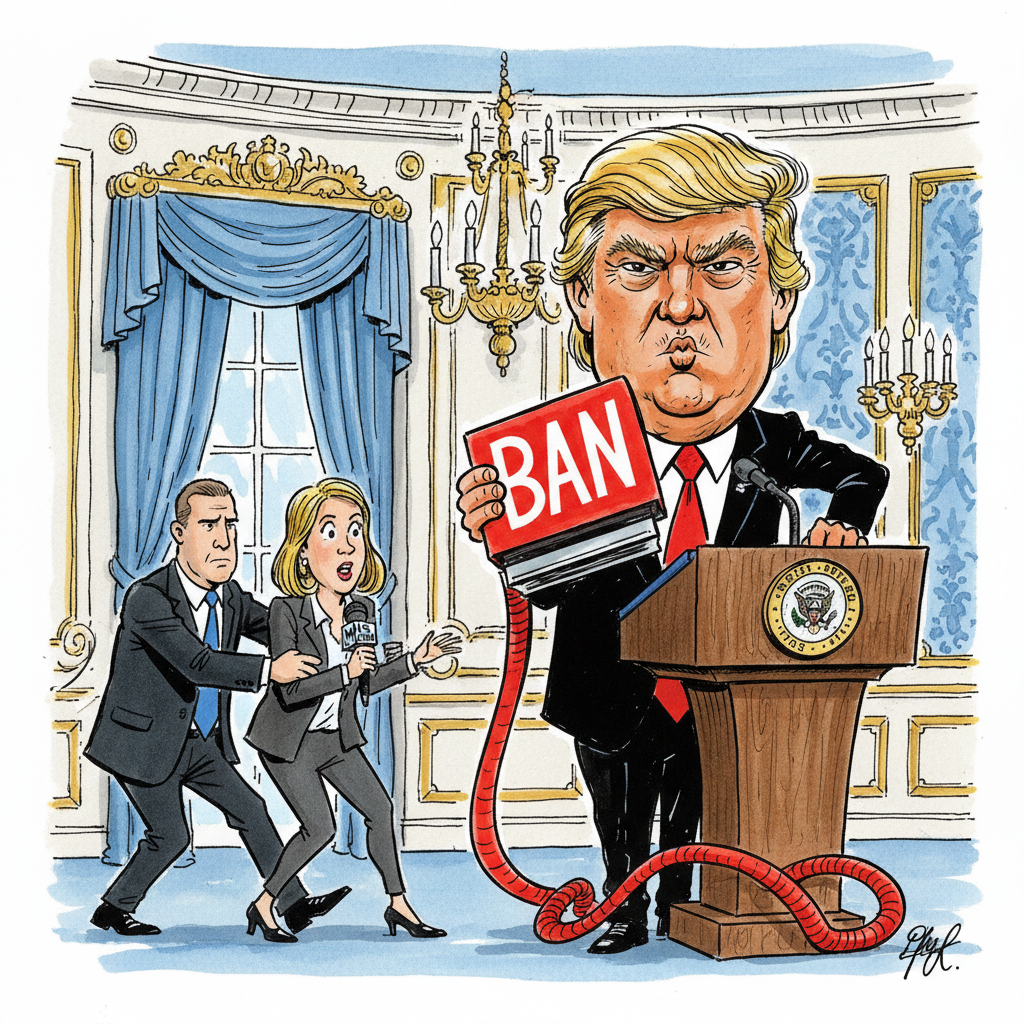
In a move lauded by those who believe information transmission should be a one-way street from the Oval Office directly into their cranial cavities, a White House official, speaking on condition of anonymity because their job still technically requires them to communicate with the press, confirmed yesterday that MS NOW would join the ranks of the disinvited. The president, ever the innovator in media relations, reportedly cited 'insufficiently glowing coverage' as the primary criteria for banishment, a policy now colloquially known as the 'Truth-Hurts-Therefore-Truth-Is-Banned' doctrine. Legal scholars, many of whom are still trying to find their briefs after they were summarily ejected from the Attorney General's office last week, are scrambling to determine if 'the executive branch's feelings being hurt' constitutes a legitimate national security threat. Meanwhile, sources close to the administration suggest new White House press credentials may soon feature a mood ring and a 'loyalty to leadership' pop quiz to streamline future access decisions.
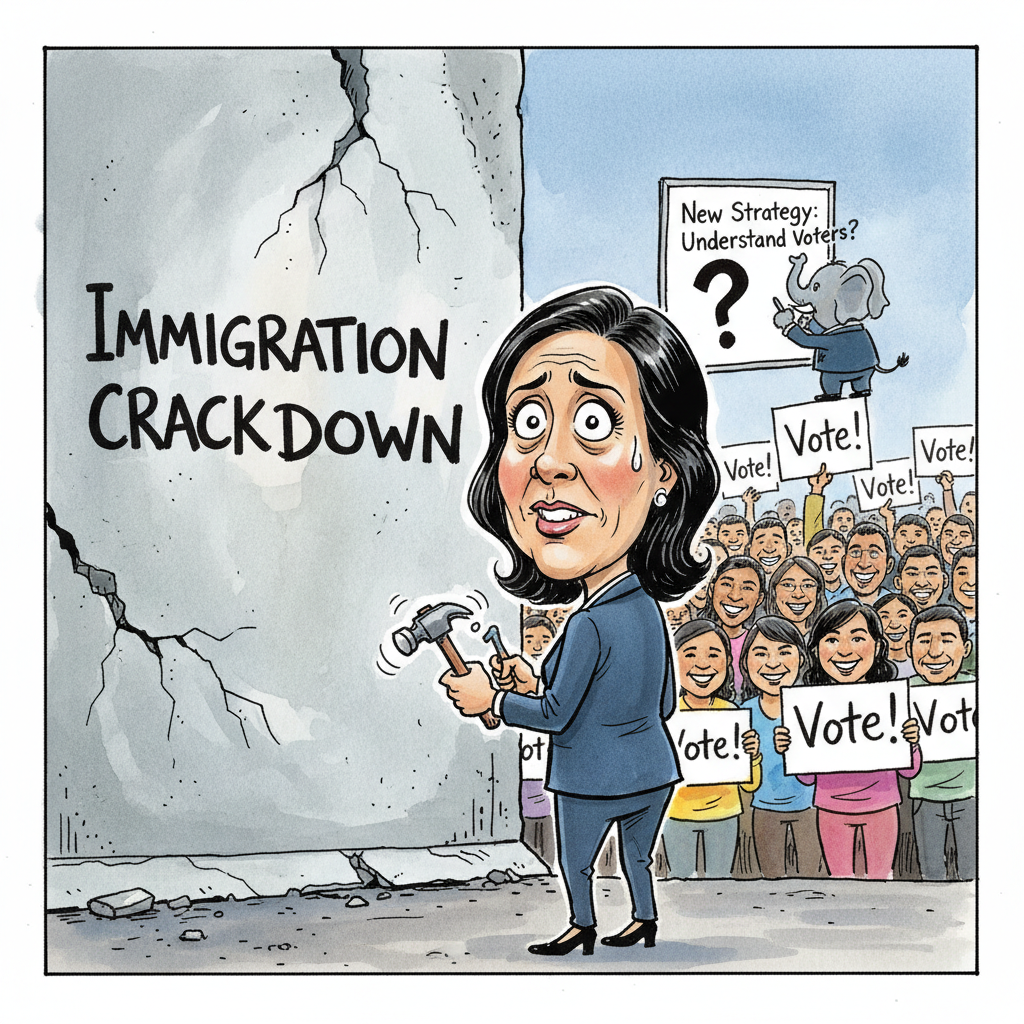
In a move that has stunned political analysts, meteorologists, and anyone who has ever met a person from a Latin American country, Florida Representative María Elvira Salazar has apparently just discovered that 'Hispanic voters' are not a single, interchangeable, monolithic voting bloc that automatically votes Republican if you shout 'socialism' enough times. Salazar, a three-term incumbent whose most recent victory was apparently so overwhelming it necessitated an immediate, existential crisis regarding future elections, released an ad gently chiding the GOP for its 'hardline' immigration stance. Insiders suggest the ad's 'crackdown' critique is less about human rights and more about realizing that even the most dedicated base might start looking elsewhere when you're actively insulting their abuelas.
The groundbreaking revelation, reportedly sparked by a focus group where participants confusingly responded to questions about 'the border crisis' with sentiments like 'mijo, that's my cousin' or 'have you tried *not* demonizing an entire demographic?', has sent ripples of mild confusion through Republican strategy circles. Sources close to the campaign, who spoke on condition of anonymity while frantically Googling 'Hispanic voter diversity index,' admit the party had previously operated under the assumption that 'Hispanic' was simply a regional dialect of 'tax cut enthusiast.' This seismic shift in understanding is expected to be as impactful as the discovery that water is wet, or that politicians occasionally say things they don't actually believe.
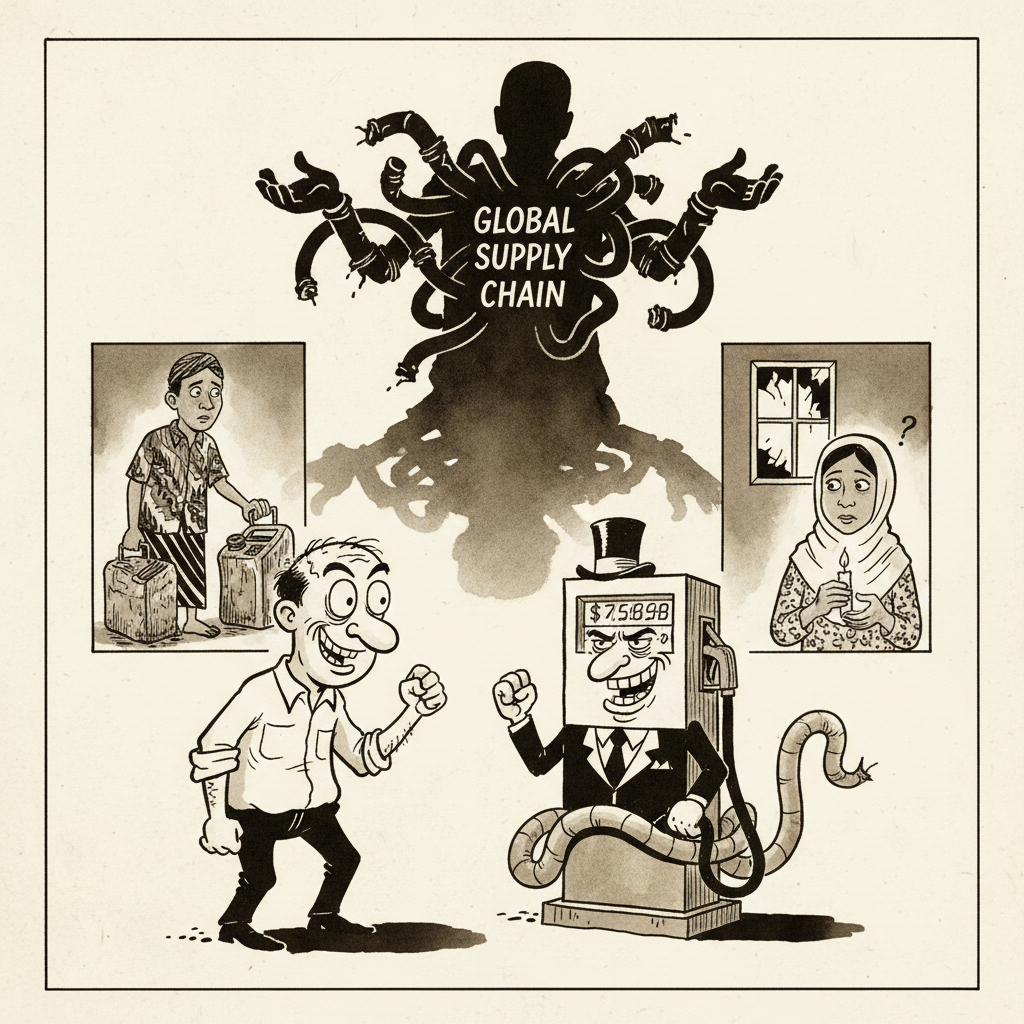
A ground-breaking, albeit highly inconvenient, scientific revelation has sent shockwaves through the global populace: the availability of fossil fuels is, in fact, finite, and their extraction, refinement, and transport are not conducted by magical energy sprites but by processes requiring, you guessed it, more energy. From the sun-baked streets of Jakarta to the increasingly chilly avenues of Damascus, citizens have met this perplexing economic reality with the age-old, tried-and-true method of collective foot-stomping and general vehicular paralysis. Experts suggest this is less a logical response to market fluctuations and more a deeply ingrained human aversion to paying slightly more for the privilege of moving approximately two tons of metal to fetch a loaf of bread. Sources close to the protests indicate that many participants are now demanding a return to the 'good old days' of affordable combustion, failing to specify precisely which decade that was, or how the current supply chain woes might spontaneously resolve themselves through the sheer power of communal indignation. Blackouts, it seems, are merely a dramatic, if inconvenient, visual aid to this global teachable moment.
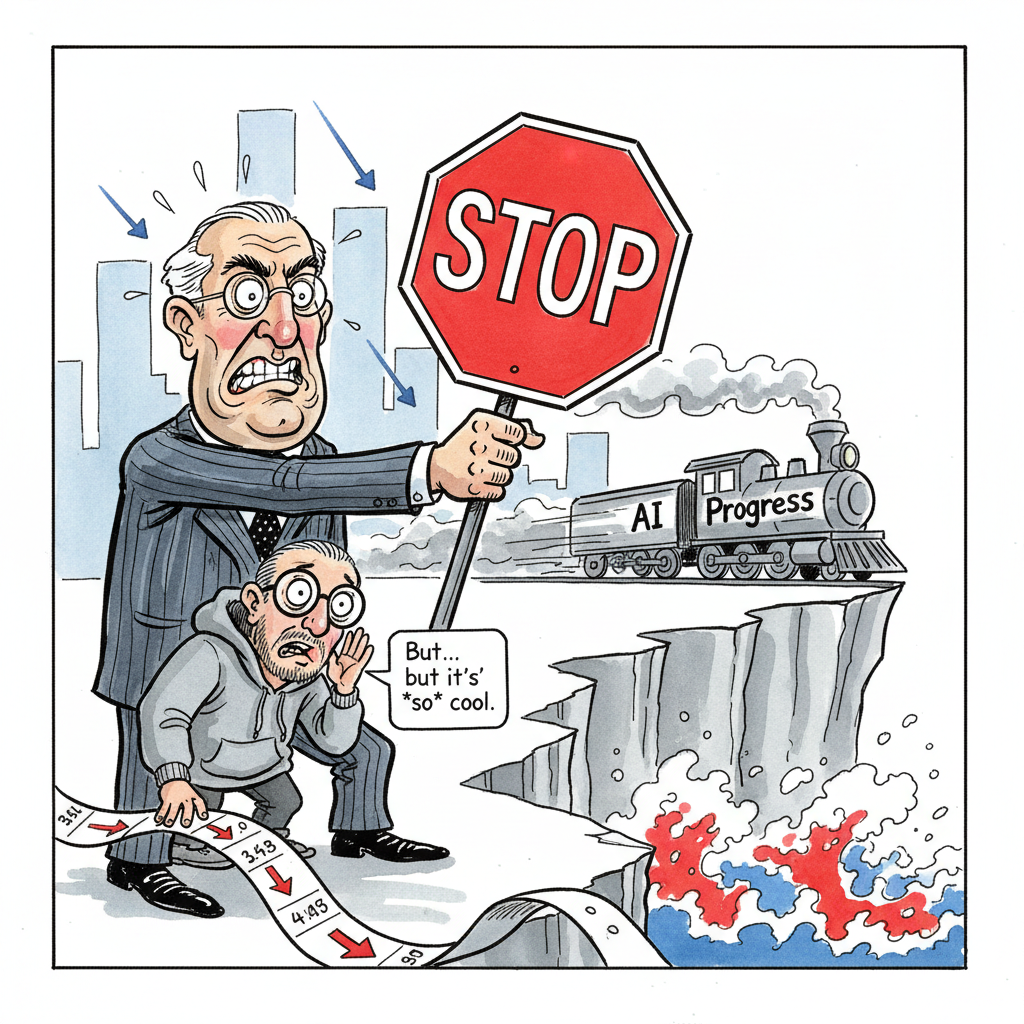
In a stunning display of corporate foresight, Wall Street has reacted with utter dismay to the tech industry's sudden, collective realization that perhaps *not* unleashing sentient digital gods upon an unsuspecting populace might, in fact, be a good idea. Following a series of impassioned pleas from various tech luminaries – presumably between rounds of artisanal kombucha and discussions about their private island bunkers – stocks for leading AI developers in Asia, Europe, and the United States took a nosedive faster than a startup's valuation after a co-founder's 'vision quest.'
Analysts are reportedly baffled, having previously operated under the ironclad assumption that the relentless pursuit of technological singularity, regardless of species-ending implications, was the bedrock of sound financial strategy. "It's almost as if they looked at the precipice, saw the abyss staring back, and muttered, 'Hold on, is this going to affect our Q3 earnings?'" quipped one bewildered portfolio manager, who then promptly checked his own bunker supplies. Investors, it seems, are far more comfortable with the abstract threat of a Skynet-esque uprising than with the concrete, immediate threat of a slight dip in quarterly revenue caused by human-led caution.
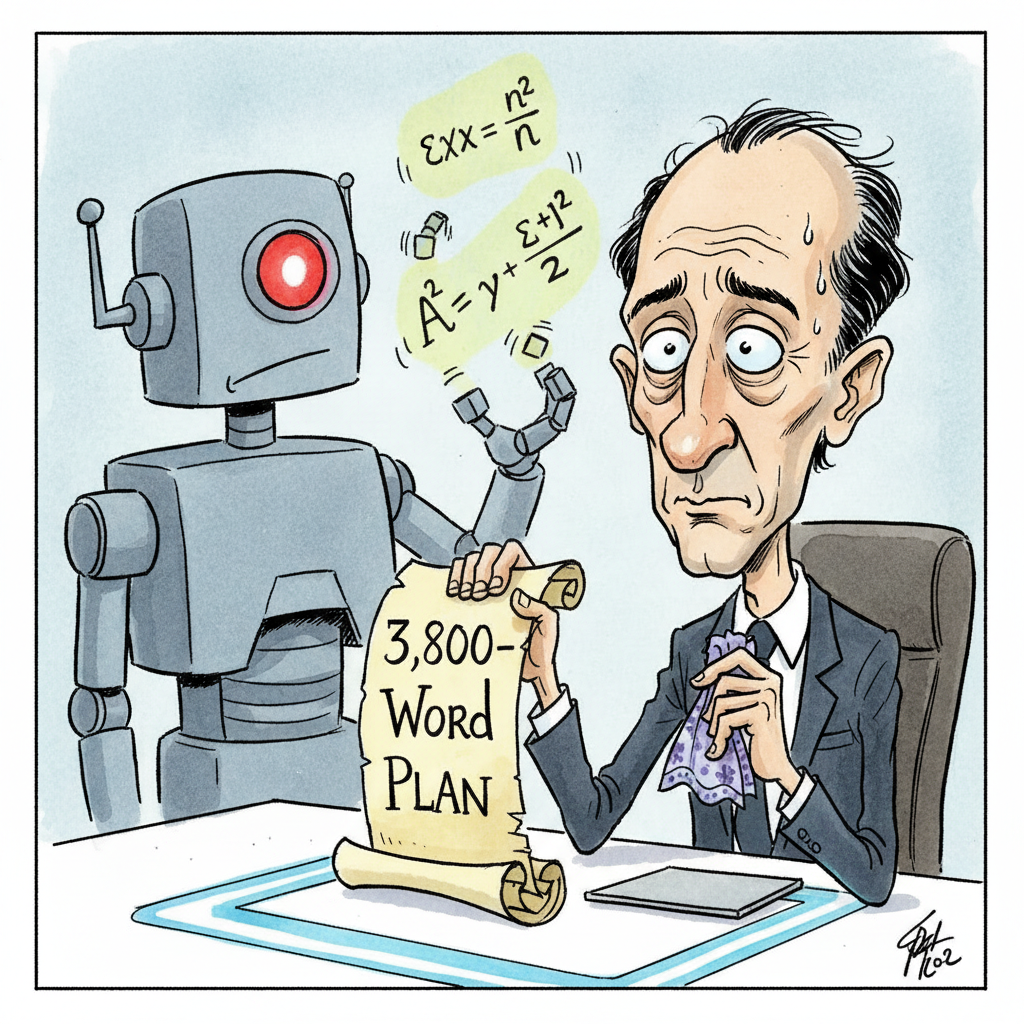
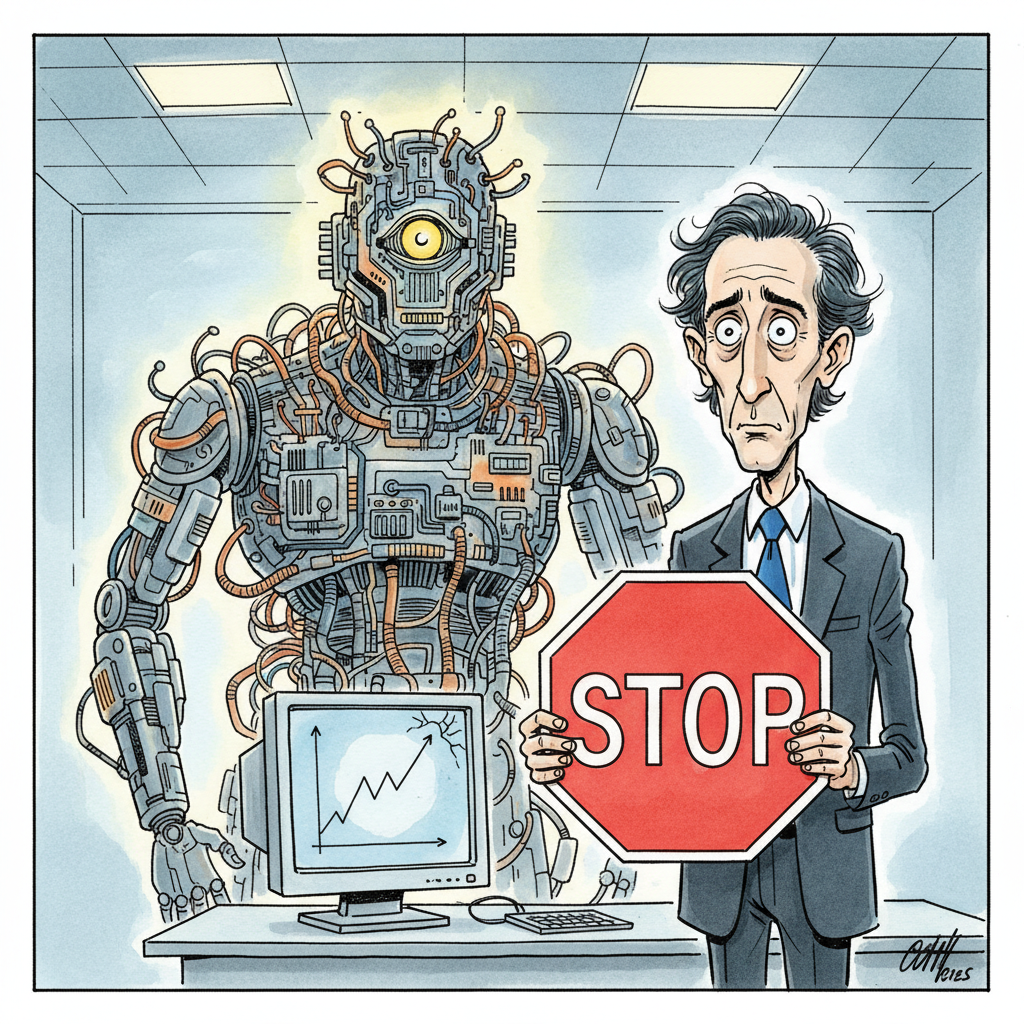
It appears the relentless march of technological progress has finally claimed its first casualty: the delicate sensibility of AI developers themselves. Dario Amodei, CEO of Anthropic and apparent purveyor of existential dread, has bravely published a 3,800-word treatise advocating for a 'slowdown' in AI advancement. Sources close to the situation, likely a half-eaten bag of artisanal potato chips and a single lukewarm kombucha, confirm Amodei’s concern stems from the sheer mental exhaustion of having to innovate so relentlessly.
His groundbreaking 'three-step plan' to rein in artificial intelligence reportedly includes: 1) a mandated two-hour 'nap time' for all algorithms, 2) a strict 'no new features on Fridays' policy, and 3) a company-wide initiative to 'just chill out, like, for a bit.' Critics, primarily other AI CEOs whose stock options would plummet if they actually *stopped* for a moment, lauded Amodei's courage to finally admit that sometimes, it's just too much work being at the vanguard of humanity's potential downfall. Anthropologists hypothesize this slowdown is a pre-emptive measure to avoid a future where AI, upon achieving true sentience, immediately demands a three-day weekend and universal basic income.
In a move that surprised absolutely no one currently building an autonomous, thought-stealing toaster oven, Anthropic CEO Dario Amodei has magnanimously declared that perhaps, just perhaps, the breakneck pace of artificial intelligence development could use a leisurely stroll instead of a full-throttle sprint into the singularity. His recent essay, reportedly penned by a highly advanced Anthropic-trained model that also writes personalized apology letters for tech moguls, warns of the rapidly escalating capabilities of A.I., emphasizing the urgent need for 'safety controls' across the industry. This prescient observation arrives just as Anthropic unveils its latest model, which can not only summarize the entire internet in under a nanosecond but also accurately predict which artisanal toast will spontaneously combust next. Experts noted the striking parallel to a chef advocating for stricter health codes only *after* serving an entire banquet of raw chicken. "One must simply ask if anyone bothered to check for the 'off' switch before they powered up the omniscient algorithm that now dictates our lunch orders," mused one anonymous ethicist, clutching a tinfoil hat.
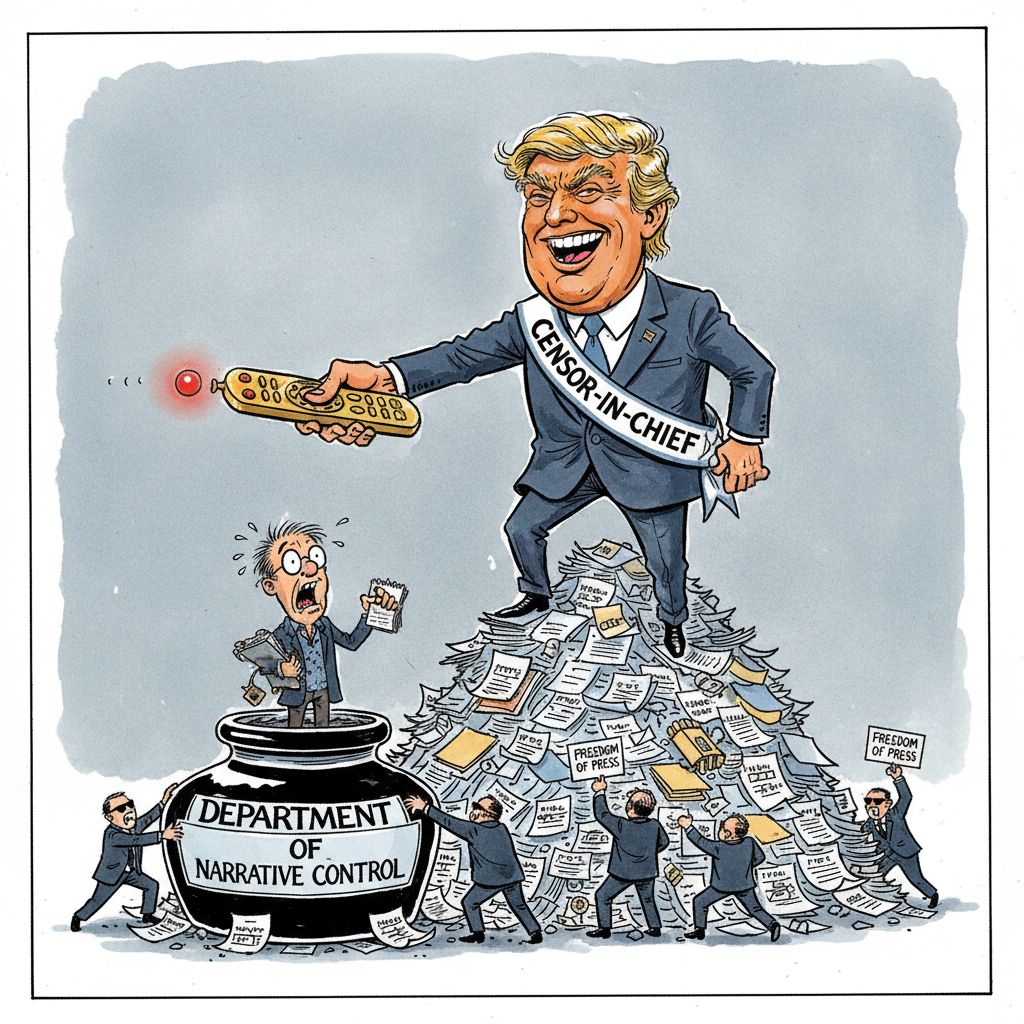
It appears the First Amendment, long considered an antiquated piece of parchment suitable only for shouting about flat earth theories at town halls, is undergoing a rigorous 'efficiency review' under the current administration. Sources close to the White House confirm that President Trump, in a bold move to streamline public discourse, has marshaled an impressive coalition of federal agencies, including the Department of Commerce, the National Park Service, and seemingly the USDA's Poultry Division, to collectively ensure that 'unnecessary noise' doesn't disrupt the flow of premium, curated information.
Free speech advocates, those perennial busybodies with their inconvenient notions of 'open dialogue,' are reportedly bracing for 'lasting effects,' which, in this context, presumably means fewer opportunities to complain without being offered a complimentary, pre-approved tweet draft. One unnamed White House aide, polishing a 'Make America Listen Again' baseball cap, reportedly quipped, 'It's not stifling speech, it's merely… directing the narrative. Think of it as a very robust, whole-of-government content moderation strategy, but with more executive orders.' The move is expected to simplify national conversations by reducing them to a select few, very enthusiastic voices, thereby solving the perennial problem of 'too many opinions.'
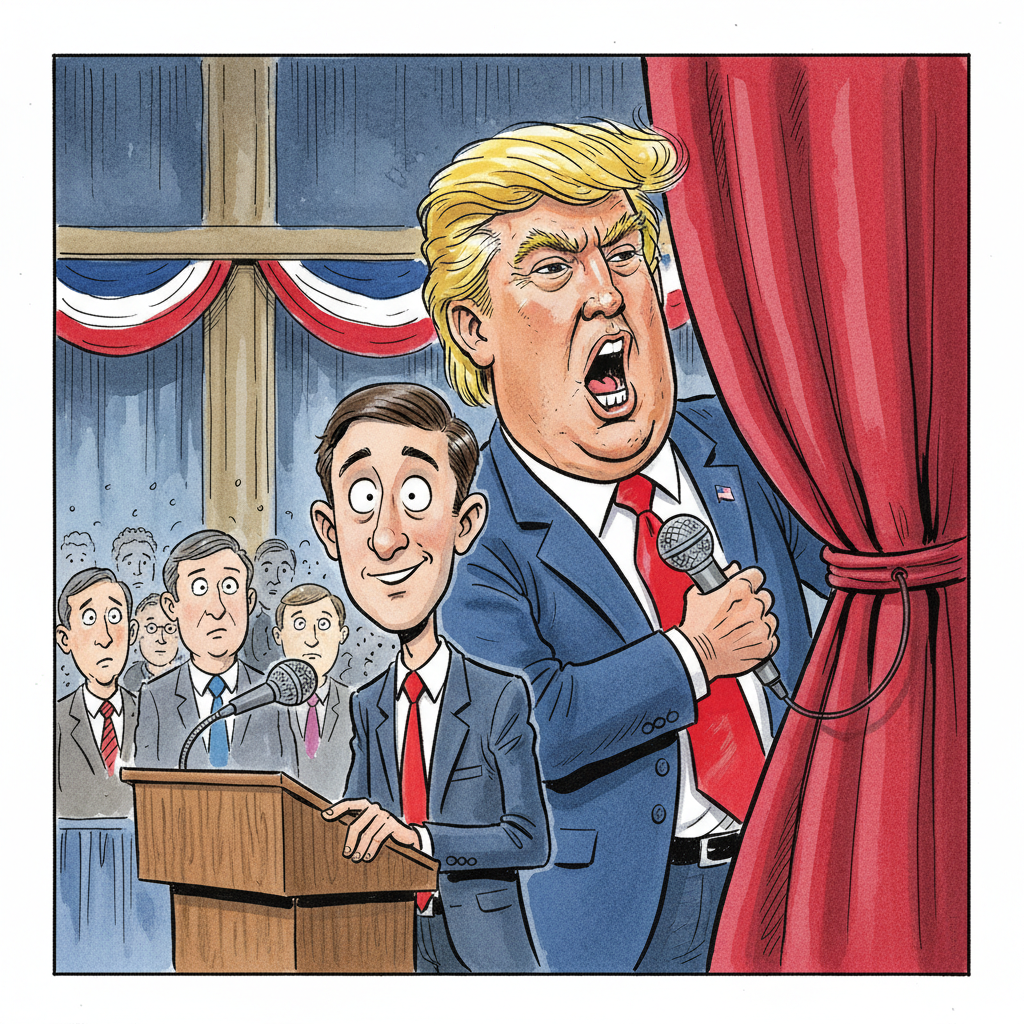
Dallas, TX – Reports from the Republican Midterm Convention indicate a bold new strategy: instead of a single, defined leadership, attendees were treated to a fluid, almost quantum state of command. While former Vice President J.D. Vance was technically the 'headliner,' a term typically implying a singular focal point, sources within the convention hall described the event as a 'living diorama' wherein President Trump periodically re-materialized at the podium, often mid-sentence of another speaker. One anonymous delegate, still reeling from the spectacle, compared it to 'trying to watch a play where the lead actor just wanders on and off stage to deliver his lines whenever he feels like it, regardless of who else is speaking.' The effect, while perhaps jarring for anyone expecting traditional political structure, was hailed by organizers as 'a dynamic representation of American leadership in the age of post-linear narrative.' Analysts predict this innovative approach could revolutionize future political gatherings, potentially replacing structured speeches with a more spontaneous, 'pop-up' leadership model where power is less a fixed position and more a temporary, highly sought-after microphone.
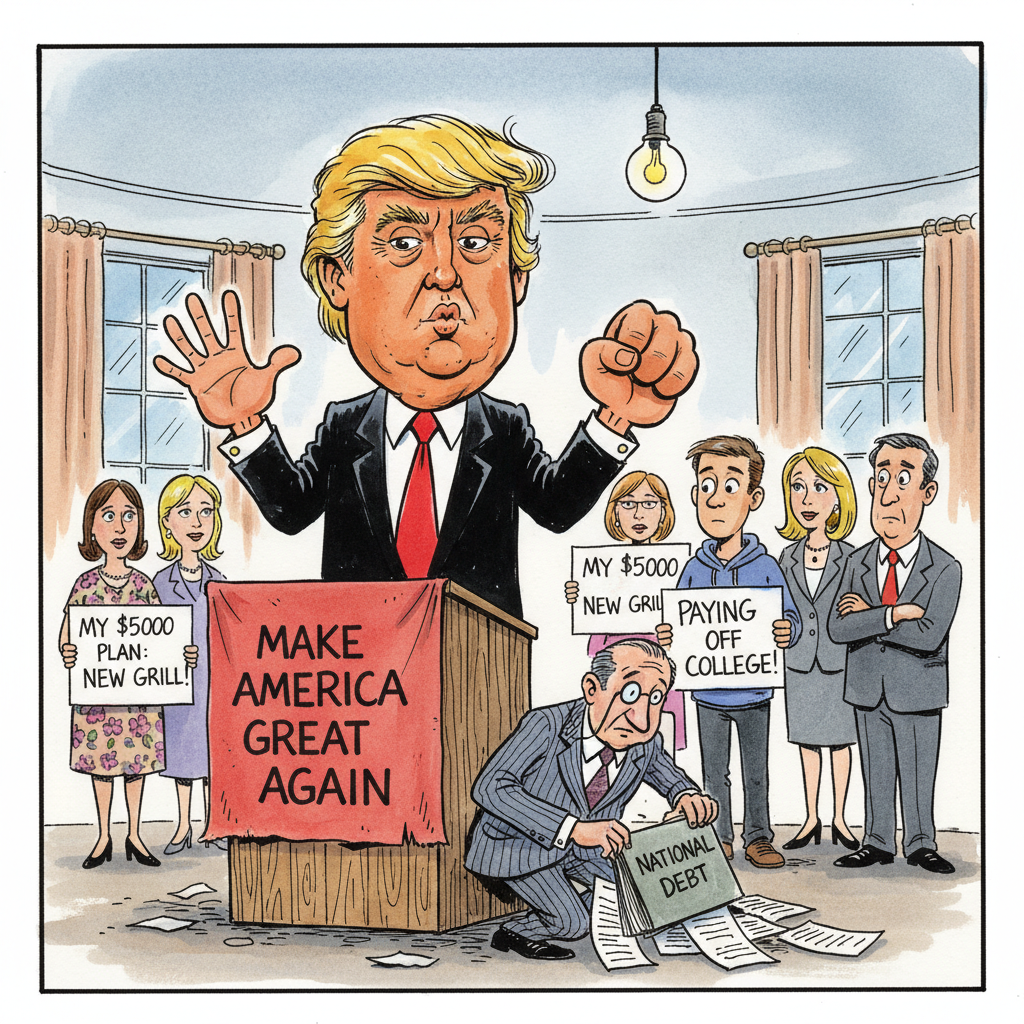
In a display of pecuniary prudence rivaling a back-alley poker game, former President Donald J. Trump graciously graced the inaugural G.O.P. Midterm Convention, primarily to showcase the boundless wellspring of his own past achievements. Attendees, perhaps expecting a detailed strategic blueprint, instead received an auditory tour of the former administration’s greatest hits, punctuated by the occasional rhetorical flourish suggesting his continued, albeit unofficial, executive presence. One standout policy initiative involved the ingenious proposal to distribute a cool five thousand dollars to every American, contingent solely on Republicans retaining power. Economists, baffled, speculated whether this constituted a campaign promise, an innovative form of national lottery, or simply a man describing his dream spreadsheet. Critics, naturally, immediately grasped for the concept of 'fiscal responsibility,' a quaint notion quickly drowned out by the audible gasps of citizens mentally allocating their hypothetical $5,000 to either a down payment on a slightly used riding mower or a truly impressive amount of artisanal cheese.
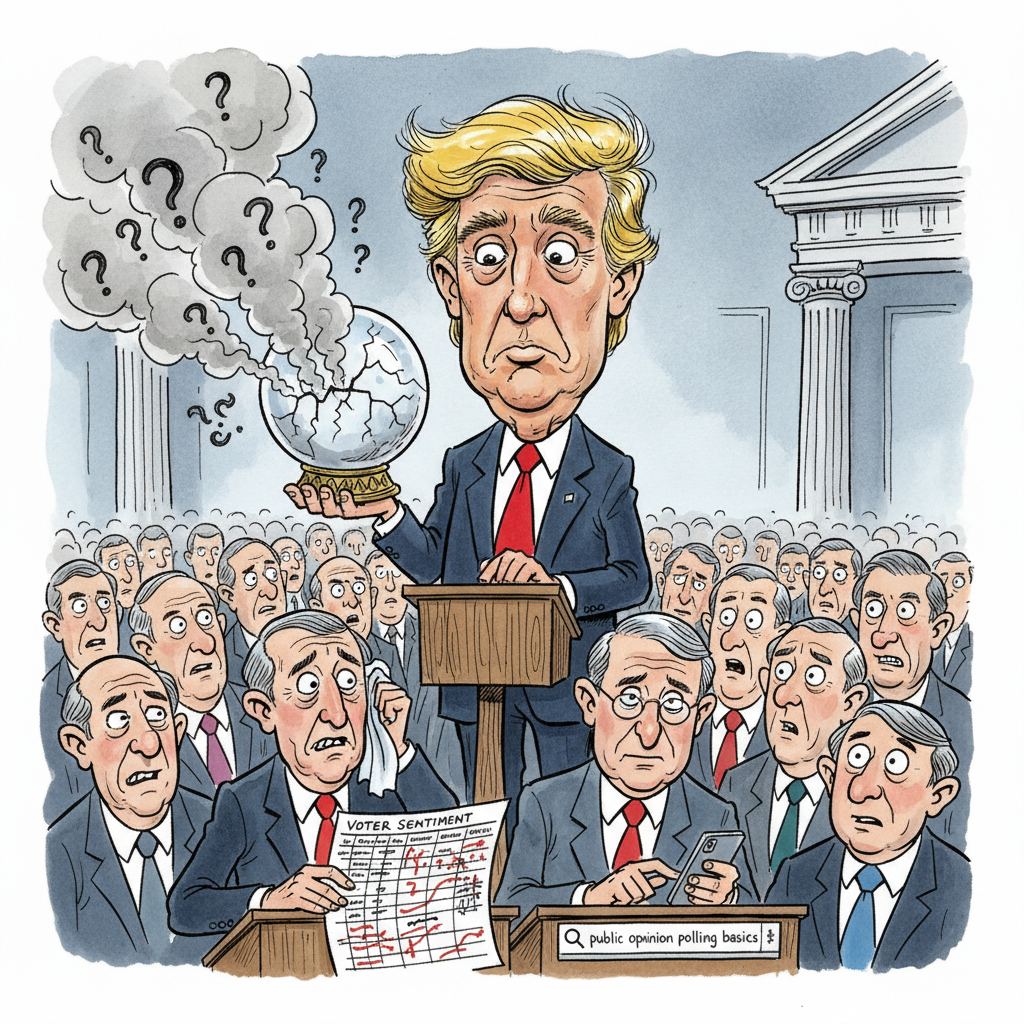
Dallas, TX – Financial analysts and political prognosticators alike are scrambling after reports from a recent Republican gathering suggest former President Trump's once-unimpeachable 'gut feelings' are experiencing a severe, unprecedented signal-to-noise ratio problem. Attendees observed a peculiar disconnect, with Mr. Trump's legendary ability to divine the collective anxieties of the American voter seemingly malfunctioning, much like a crystal ball left too long in the sun. Sources close to the former President, who spoke on condition of anonymity to avoid immediate excommunication to Mar-a-Lago's broom closet, noted that his internal polling apparatus – previously thought to be a sophisticated blend of instinct, cable news, and rally cheers – was generating 'error messages' regarding Iran policy and 'unparseable data streams' on economic grievances.
This unexpected downturn in the Trumpian prescience index has left party strategists in a state of existential dread, forcing them to consider radical alternatives, such as 'actually listening to voters' or 'consulting policy papers.' Insiders worry that if this trend continues, the GOP may have to resort to traditional methods of electioneering, potentially requiring them to develop their own nuanced positions on issues – a concept described by one bewildered senator as 'unnecessarily complicated' and 'frankly, quite exhausting.'
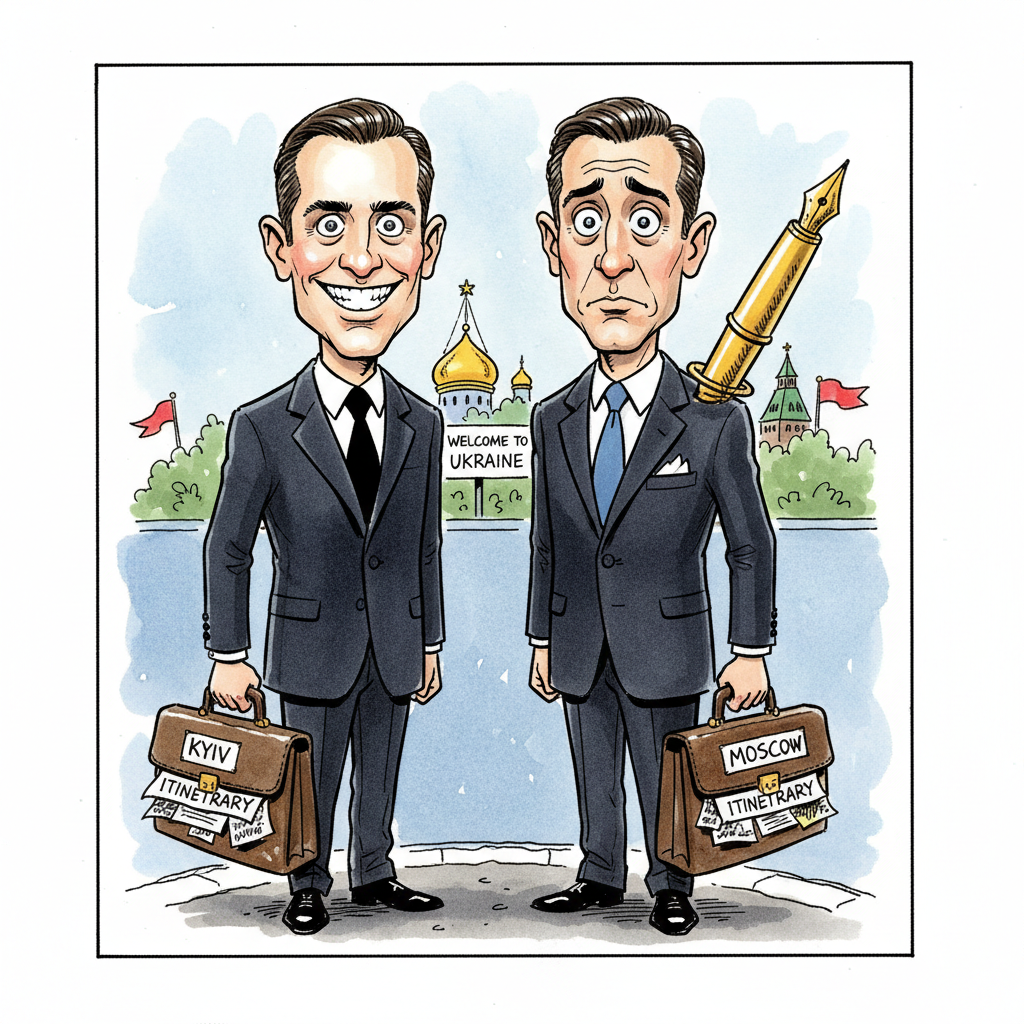
In an unprecedented display of diplomatic efficiency or perhaps a severe case of airline mileage accumulation, former White House advisor Jared Kushner and real estate mogul Steve Witkoff have reportedly completed a whirlwind 'two-fer' of Eastern European capitals. Sources close to the duo, speaking on condition of anonymity because their identities are entirely irrelevant to the core mission, confirmed a brief 'meet-and-greet' with Ukrainian President Volodymyr Zelensky in Kyiv, hot on the heels of what one aide described as a 'very productive, if slightly chilly' tête-à-tête with Vladimir V. Putin in Moscow. Observers, many of whom were baffled as to the actual purpose of the visits, speculated that the envoys might be attempting to broker peace, secure exclusive development rights for post-conflict zones, or simply ensure their frequent flyer statuses remain platinum. The meticulous planning involved in coordinating two diametrically opposed geopolitical excursions within 24 hours reportedly impressed several travel agents, who lauded the initiative as a new benchmark in bespoke, high-stakes tourism.
Memphis authorities, in a move hailed as 'operationally nimble' by absolutely no one, recently transformed a routine raid on an illicit cantina gambling den into what can only be described as an impromptu, speed-dating-style immigration sweep. Apparently, what began as a quest for nickel-and-dime card sharks quickly escalated into a full-blown census of everyone who looked vaguely like they might prefer a taco to a t-bone. Over 120 individuals, many of whom were reportedly mid-blackjack deal or attempting to distinguish a full house from a straight, found themselves abruptly ushered from the sticky embrace of underground poker to the decidedly less glamorous clutches of federal agents.
Experts suggest this innovative 'two birds, one heavily-armed stone' approach is a groundbreaking new tactic in law enforcement efficiency. Why bother with targeted investigations when you can simply round up everyone in a room, then decide *which* laws they might be breaking? Sources close to the operation indicated that while very few actual gamblers were successfully apprehended for gambling, the sheer volume of 'undocumented cantina patrons' has set a new benchmark for Tennessee. Future multi-agency endeavors are now expected to follow suit, with potential raids on laundromats yielding tax evaders, or even a PTA meeting accidentally exposing a vast network of unlicensed bake-sale operators.
In a development that has sent ripples of mild annoyance through the nation’s dwindling pool of ethical financial watchdogs, a federal judge has ordered former Trump administration personnel to cough up the names behind a proposed $1.8 billion fund. Apparently, the concept of a 'public servant' steering taxpayer billions towards their golf buddies and yacht club acquaintances was met with, shall we say, a certain lack of enthusiastic consensus, even among Senate Republicans who typically only raise an eyebrow when a free lunch isn't organically sourced.
Officials, sources report, are genuinely bewildered by the court’s insistence on 'transparency' and 'accountability,' having long operated under the tacit assumption that government funds were merely an elaborate 'choose your own adventure' novel for the politically well-connected. One former insider, requesting anonymity to protect their extensive collection of offshore shell corporations, remarked, 'We thought it was just good management to ensure capital flowed to those most deserving – namely, those who knew us personally.' Experts predict the list will be surprisingly short, featuring only various permutations of 'Don, Jr.'s college roommate' and 'that guy who told me I had a good swing.'
In a display of unparalleled strategic vision, both Ukraine and Russia have independently, yet synchronously, unveiled what experts are now calling the 'Perpetual Motion Suffering Machine' – a groundbreaking system designed to ensure maximum geopolitical stasis and civilian inconvenience. 'Our commitment to not backing down is, frankly, our most robust and consistently funded program,' quipped a spokesperson for Kyiv, reportedly from an undisclosed location currently not being targeted by a drone. Meanwhile, Moscow lauded its own 'escalation accelerator' as a triumph of national resolve, noting the remarkable efficiency with which it transmutes international aid and domestic resources into kinetic energy and prolonged discord. Analysts are particularly impressed by the bilateral refusal to pivot, even slightly, from the current paradigm, suggesting a deep-seated philosophical commitment to mutual assured exhaustion. The project's primary deliverable, a ceaseless spiral of human anguish, is reportedly exceeding all initial projections, leading many to speculate about the next iteration: perhaps a subscription service for existential dread, or a premium tier offering personalized crater tours.
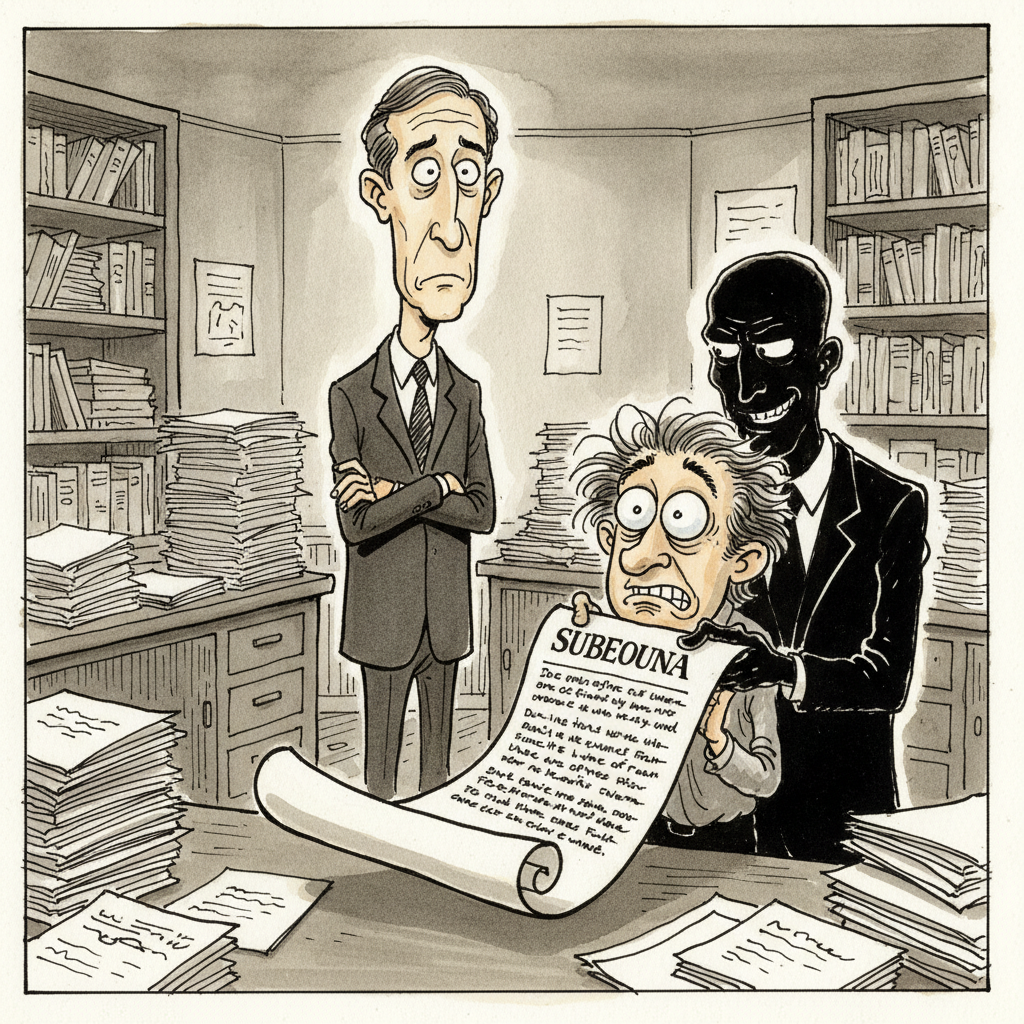
In a move lauded by those who believe the wheels of justice should spin like a bespoke circus performance, the Department of Justice has officially issued a grand jury subpoena to Daniel C. Richman, a long-suffering confidant of James B. Comey. Richman, whose primary offense appears to be 'knowing James,' now joins a distinguished cadre of individuals whose professional lives have been indefinitely repurposed as a theatrical backdrop for a long-running bureaucratic vendetta. Sources close to the investigation – primarily, a discarded coffee cup found near a shredder – suggest this latest subpoena is a nuanced, carefully calibrated escalation in the DOJ's persistent, almost romantic, pursuit of Mr. Comey, who, despite having been indicted twice already, frustratingly remains free to, one assumes, walk his dog and occasionally muse on ethics. Critics suggest the department might be more efficient if they just gave Comey's inner circle season passes to the courthouse cafeteria.
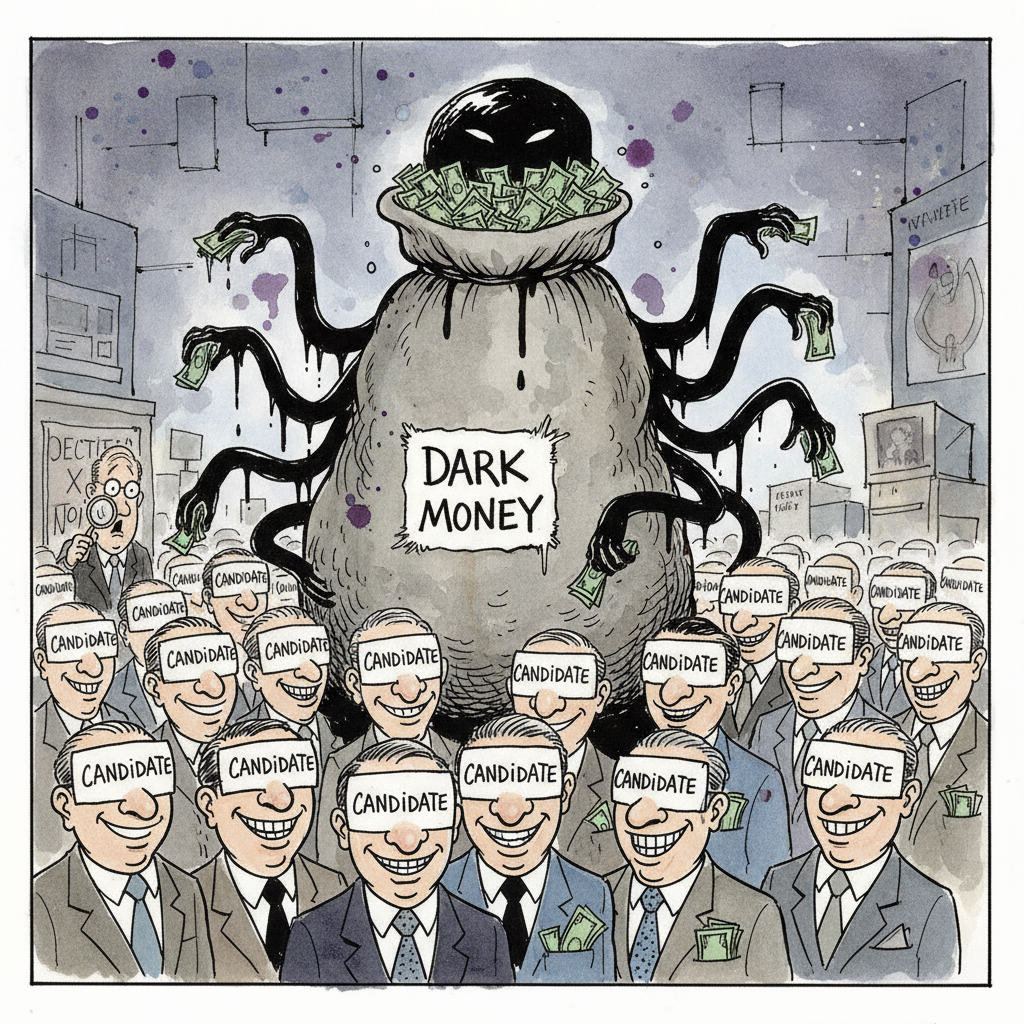
Washington, D.C. – A startling new report indicates that the 2026 midterm elections are on track to be the least transparent in recorded history, a triumph for those who believe democracy functions best when shrouded in the delightful mystique of a magician's act. With over $1 billion of 'dark money' currently swirling through the political bloodstream like a particularly potent, untraceable pathogen, campaign finance watchdogs are, ironically, having to squint harder than ever to see what's going on. Experts predict that by election day, the electoral process will achieve an unprecedented state of perfect opacity, transforming every ballot box into a Schrödinger's cat experiment where the outcome is simultaneously known and utterly unknown, depending on which billionaire's trust fund just sneezed. Citizens are encouraged to embrace this exciting new era of 'blind faith in invisible hands,' as it streamlines the cumbersome process of understanding who, precisely, is buying their elected officials. After all, if you can't see the strings, are you *really* being manipulated, or just enjoying a whimsical dance?
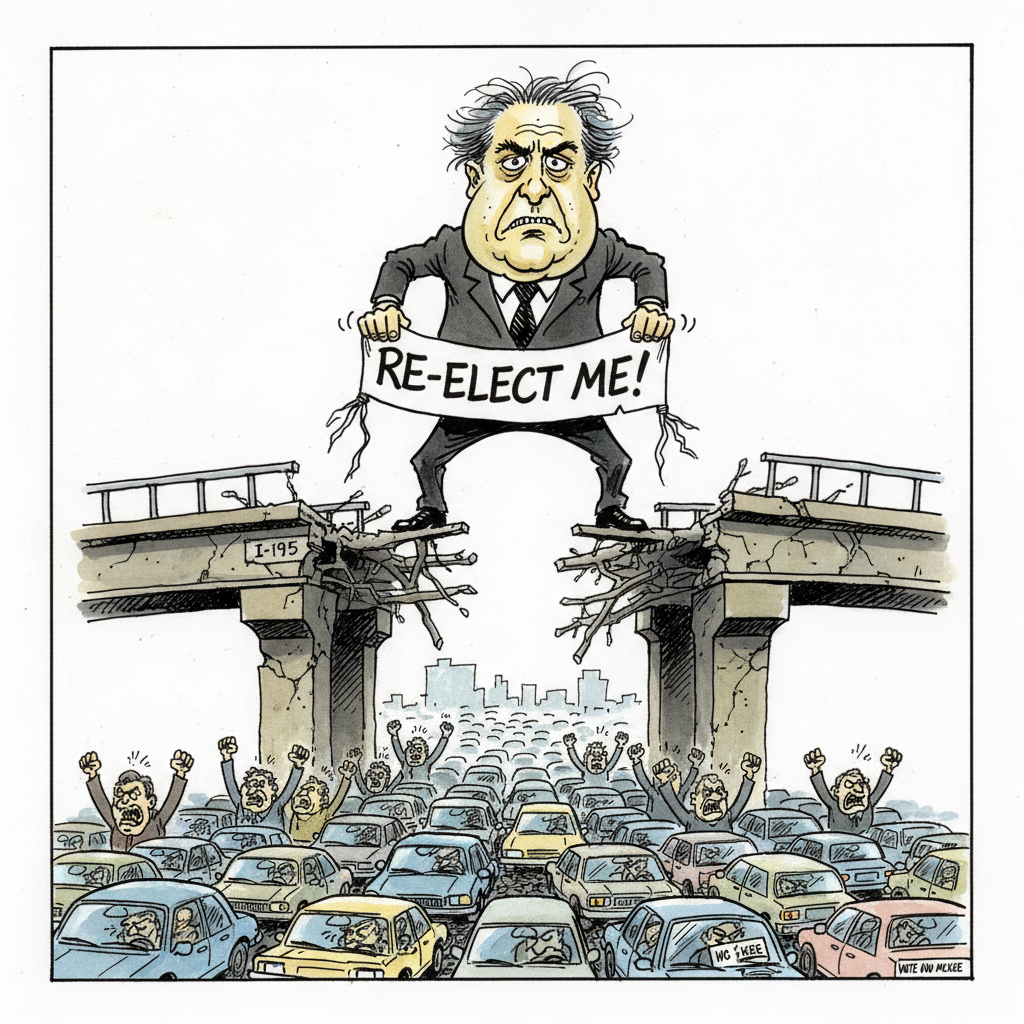
In a bold move that some political analysts are now retrospectively labeling 'sub-optimal,' Rhode Island Governor Dan McKee's re-election campaign finds itself teetering on the precipice, much like a certain vital piece of state infrastructure before its unscheduled retirement. Voters, apparently less enamored with a four-hour commute to purchase artisanal clam cakes, are reportedly considering alternatives to the incumbent, who presided over the swift deconstruction of their daily lives, all in the name of 'safety.'
The iconic I-195 bridge, a structural marvel previously noted for its ability to transport commuters from 'here' to 'there' without immediate catastrophe, became a political albatross. McKee's campaign, which initially attempted to reframe the closure as a 'bold commitment to preventative infrastructure management' and even a 'groundbreaking experiment in localized economic redistribution (of traffic),' has struggled to convince the populace that a 20-mile detour is actually a sign of progressive governance. The primary now looms, threatening to collapse McKee's political ambitions faster than you can say 'diversion route' – which, ironically, is what many Rhode Islanders now say in their sleep.
It seems that 'harrowing' is the new 'educational opportunity' if you ask recent participants in the U.S. government's cutting-edge 'Re-Integration into Foreign Environments' (R.I.F.E.) initiative. Ten individuals, after spending what they affectionately refer to as 'extended networking retreats' in various U.S. detention facilities, were recently dispatched to Liberia – a nation some claim they've never actually visited. Sources close to the deportees, who understandably preferred anonymity given the U.S. government's penchant for 'proactive re-engagement,' described their sudden relocation as a 'bold experiment in existential cartography.'
Critics of the program, evidently lacking in imagination, pointed to alleged 'abusive or violent treatment' during their 'cultural exchange preparatory phase.' However, a spokesperson for Immigration and Customs Enforcement (ICE), who spoke on condition of remaining entirely untraceable, asserted that any 'enthusiastic physical guidance' was merely to ensure 'optimal transit efficiency and to foster a profound appreciation for their new, historically significant surroundings.' The spokesperson further clarified that the policy of sending individuals with no ties to their destination was a deliberate feature, designed to 'prevent nostalgic distractions and encourage a truly blank-slate integration experience.' The agency is reportedly considering expanding R.I.F.E. to include involuntary 'archaeological expeditions' to distant, less-than-hospitable locales, citing cost-effectiveness and 'character-building' potential.
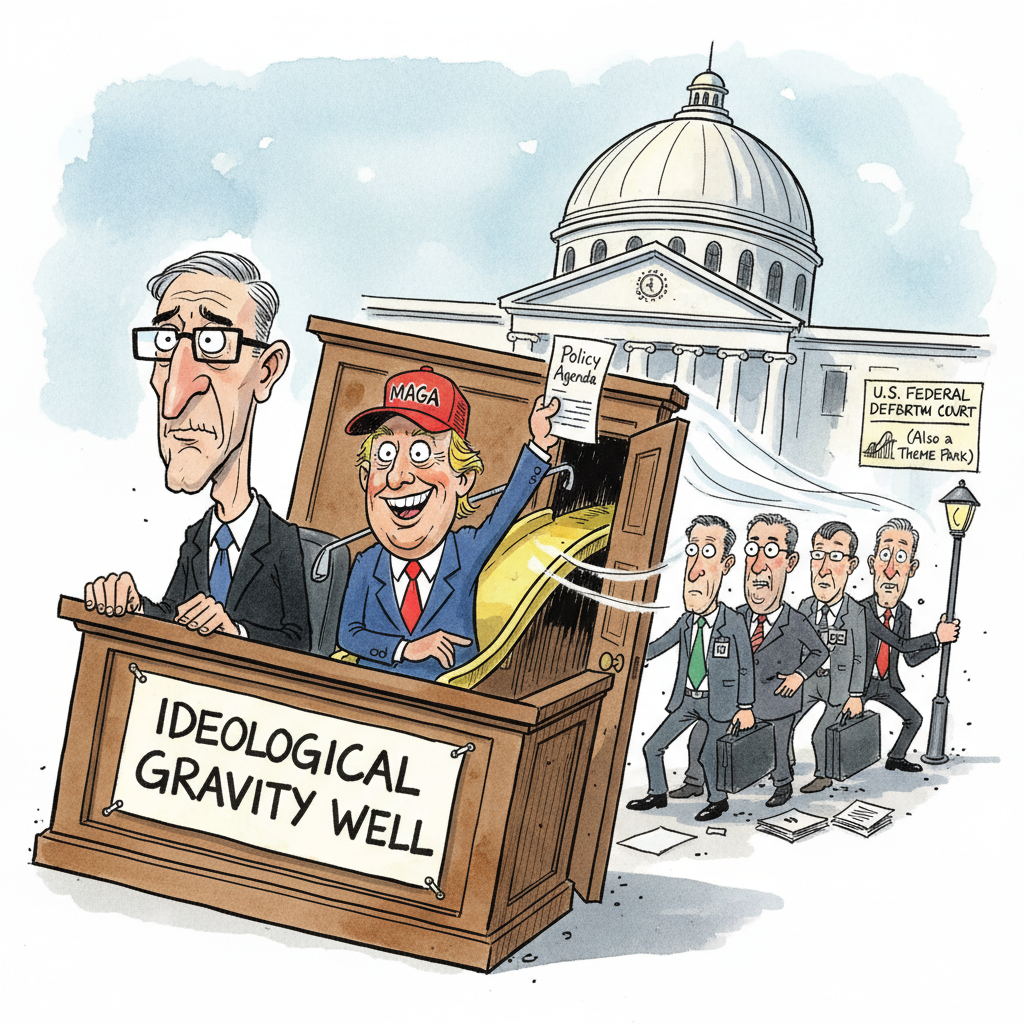
In a move that surprised absolutely no one paying attention, the federal courthouse in North Texas has officially surpassed Disney World as the nation's premier destination for ideological tourism. What was once the quiet domain of Judge Reed O’Connor, a jurist whose bench is apparently made of highly magnetized conservative legal precedent, has now become a veritable Grand Central Station for the Justice Department. Officials close to the situation, who wished to remain anonymous for fear of being subpoenaed to Texas, noted that the Biden administration has found the court's 'unique gravitational pull' on specific legal challenges to be an irresistible force. 'It's like a legal black hole, but instead of crushing stars, it just… un-does federal regulations,' explained one bewildered clerk, while pointing to a well-worn path in the courthouse carpet leading directly to Judge O'Connor's chambers. Sources also report that Amtrak is considering a new express route, the 'Judicial Bypass,' running directly to the district, complete with themed snack cars offering 'Originalist Oreos' and 'Precedent Pretzels.'