Music Industry: AI Theft Is Bad, But *Our* AI Theft Is 'Synergy'
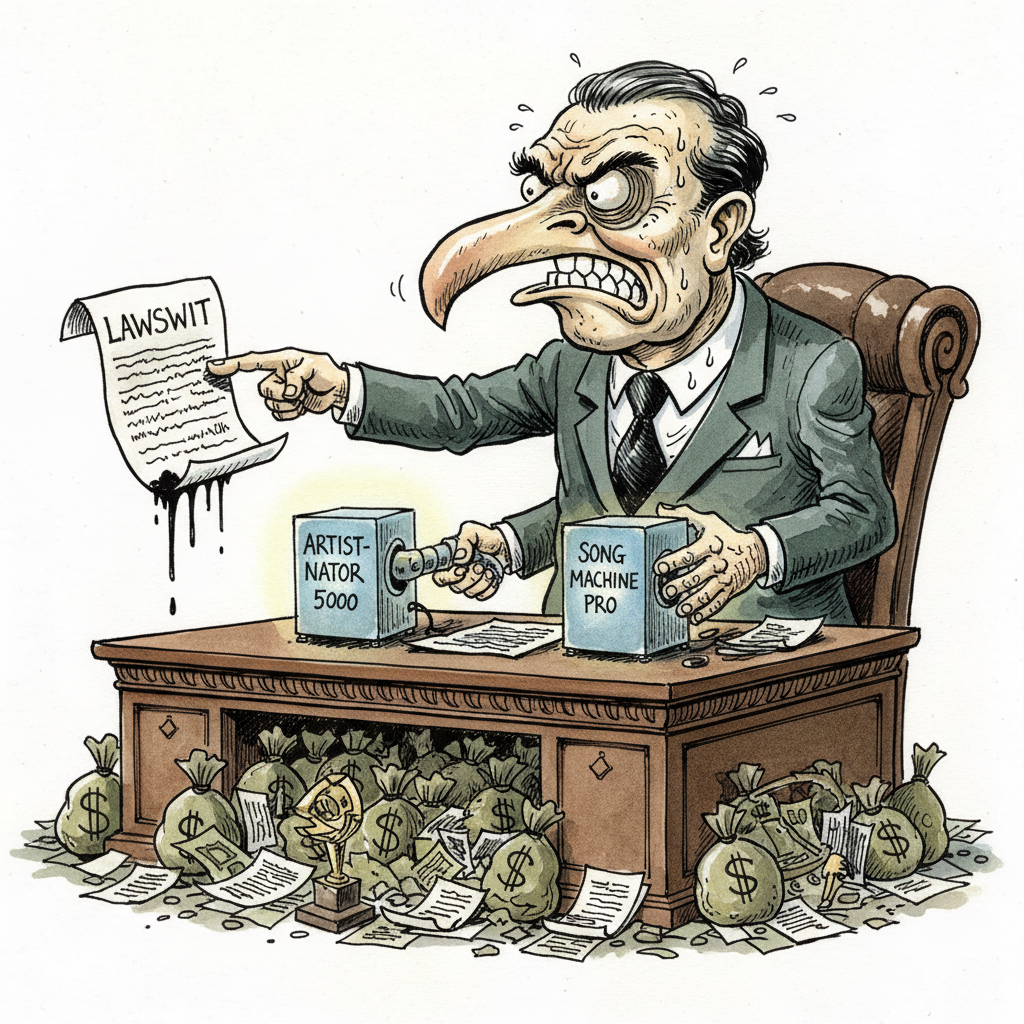
The Recording Industry Association of America (RIAA), fresh off a grueling decade of proving that downloading a song is essentially an act of international espionage, has found itself in a rather rhythmic pickle. On one hand, generative AI — which, let's be honest, sounds suspiciously like 'algorithmically-enhanced plagiarism' — is allegedly stealing intellectual property faster than a TikTok trend disappears. Naturally, lawsuits have been filed against these digital troublemakers, because copyright infringement is, as we all know, an industry's sacred cow, preferably one that milks itself. However, in a move that can only be described as a masterclass in 'having your cake and eating it too while simultaneously suing the baker for baking your cake,' some major labels are also eagerly partnering with the very same AI entities they're suing. One major conglomerate, exhibiting the kind of strategic agility usually reserved for chameleons on a plaid tablecloth, has reportedly done both. This bold, multi-pronged approach confirms what many have long suspected: innovation is only truly innovative when it's *their* innovation, and theft is only truly theft when *you're* the one doing the thieving, not when it's rebranded as 'exploring new creative avenues' or 'leveraging proprietary technology to unlock unprecedented value streams.' Expect a new legal brief soon, defining the precise pixel-count difference between 'unauthorized sampling' and 'strategic algorithmic collaboration'.