Liechtenstein Updates Succession Laws to Reflect Modernity, Now Allows All Sexes of Sentient Furniture to Rule
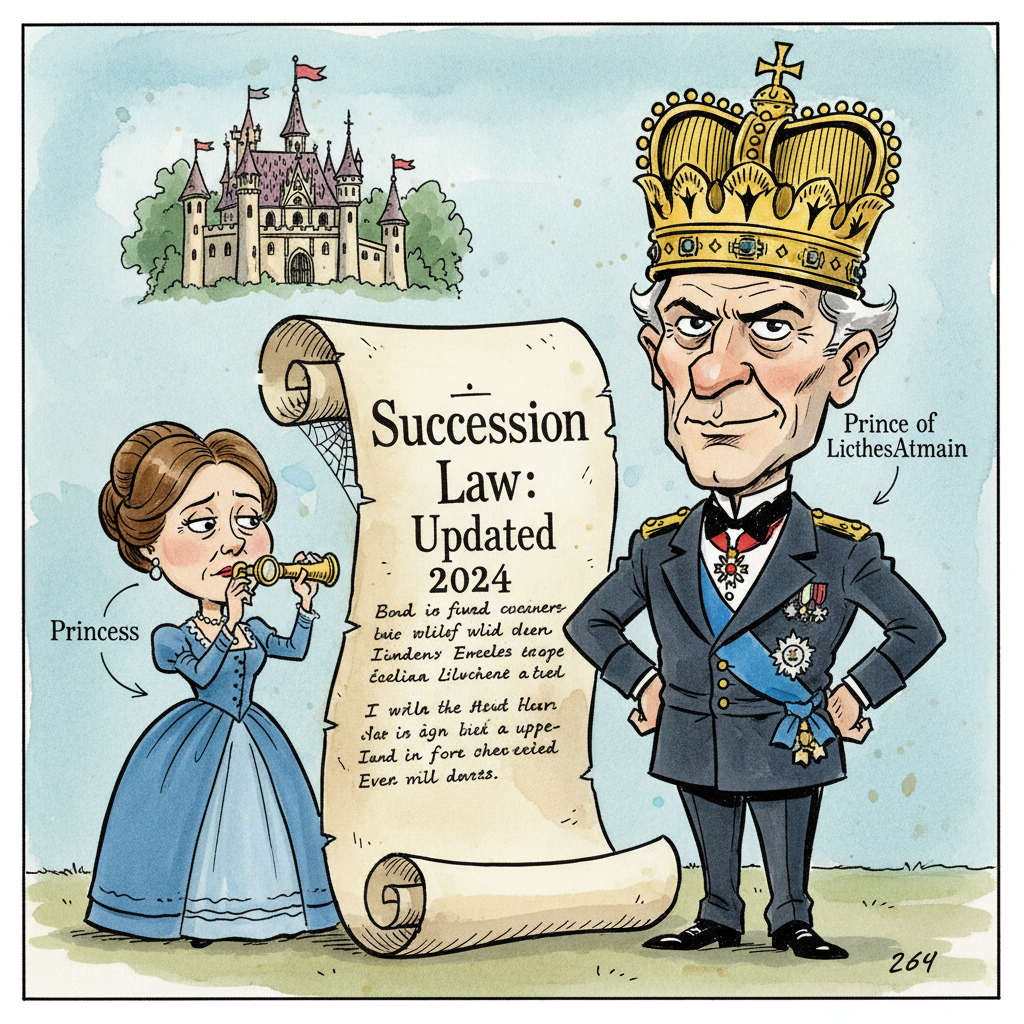
In a bold move that some are calling 'chronologically appropriate,' the tiny principality of Liechtenstein has finally modernized its ancient succession laws, now graciously permitting females of the human species to potentially ascend the throne. Historians are calling this a major leap forward, placing the micro-nation firmly in the late 19th century regarding gender equality — a full century and some change after most of its European royal peers. The Prince, who reportedly signed the bill with a quill pen he then immediately retired to a museum, lauded the change as a 'thoughtful and deliberate process,' emphasizing that such profound societal shifts cannot, and indeed should not, be rushed. Palace insiders whisper that the impetus for change came after a particularly embarrassing incident involving a visiting dignitary mistaking the current heir for a particularly well-dressed garden gnome. 'It became clear,' explained a spokesperson, 'that maintaining a 1,000-year-old law preventing roughly half the population from ruling was beginning to look… less 'quaint' and more 'quaintly anachronistic.'' Analysts predict that with women now technically eligible, Liechtenstein might, in the next 300 years, even consider allowing citizens to, say, suggest a color palette for the royal family's ceremonial sashes. The future, it seems, is blindingly slow.