Autonomous Cars: Too Smart, Too Soon, Says Bureaucracy
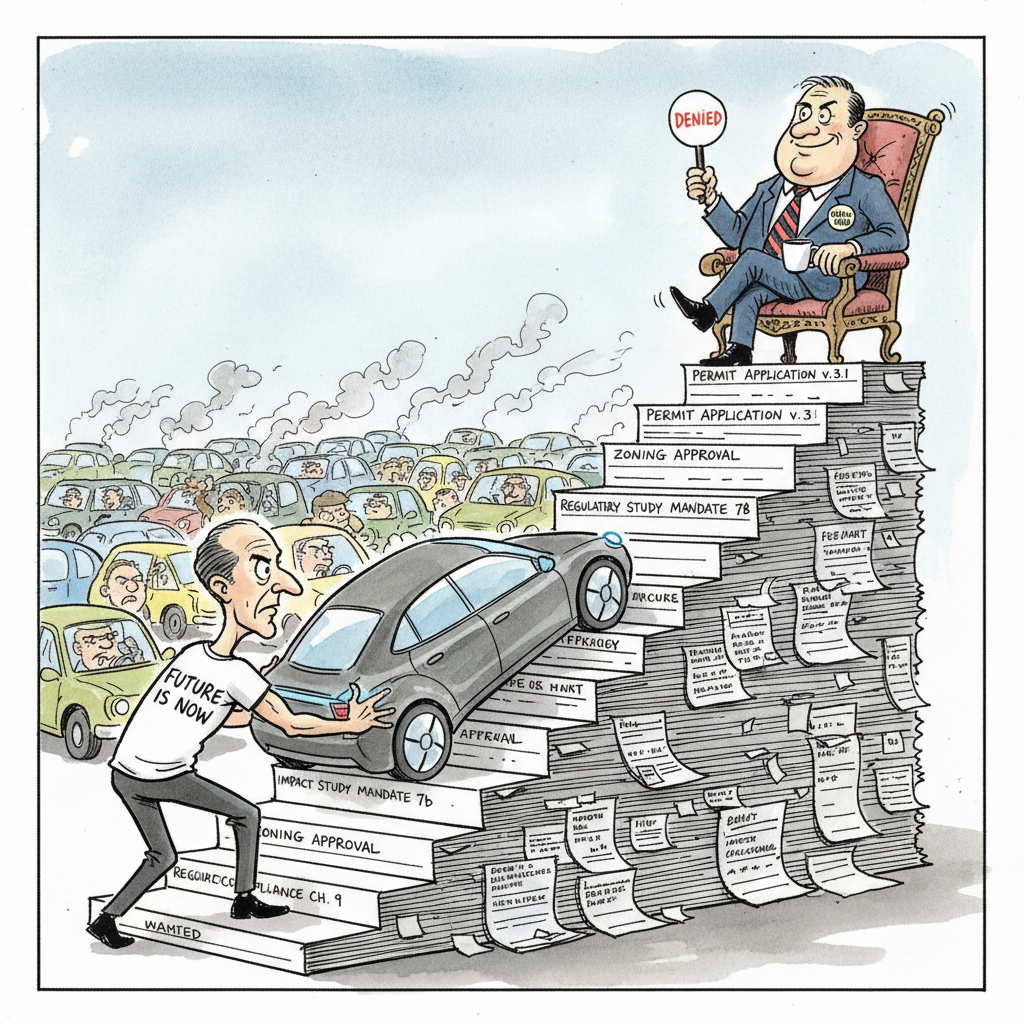
America's road-weary commuters, long accustomed to the comforting terror of human-piloted vehicles, can apparently breathe a sigh of relief as Waymo's robotaxi revolution grinds to a decidedly analog halt. The Silicon Valley darling, having masterfully navigated the treacherous terrain of software development and taxpayer-funded subsidies, has now encountered its true nemesis: the humble, yet architecturally complex, political 'roadblock.' Apparently, unleashing fleets of impeccably courteous, accident-avoiding automatons upon jurisdictions still struggling to coordinate traffic light timing feels, to some, like skipping several crucial steps – perhaps even the one where taxpayers get to vote on whether they want their existential dread mediated by artificial intelligence or just good old fashioned human incompetence. Sources close to the negotiations, primarily a discarded coffee cup found near a city council meeting, indicate that the core issue isn't safety, but rather the deeply unsettling prospect of a transportation system that actually works without requiring endless committees, public hearings, and the occasional backroom deal involving artisanal cheese platters. "It disrupts the natural order," stated a highly placed anonymous bureaucrat, polishing his 19th-century quill. "Where's the grit? The character-building near-misses? If cars just… drive, what will we complain about at family dinners?" Indeed, it seems the pursuit of technological progress has, once again, been outmaneuvered by the infinitely more complex and unpredictable algorithms of human inertia and the entrenched desire to simply have something to oppose.