Astronomical Anomaly Briefly Suggests Competent Public Sector
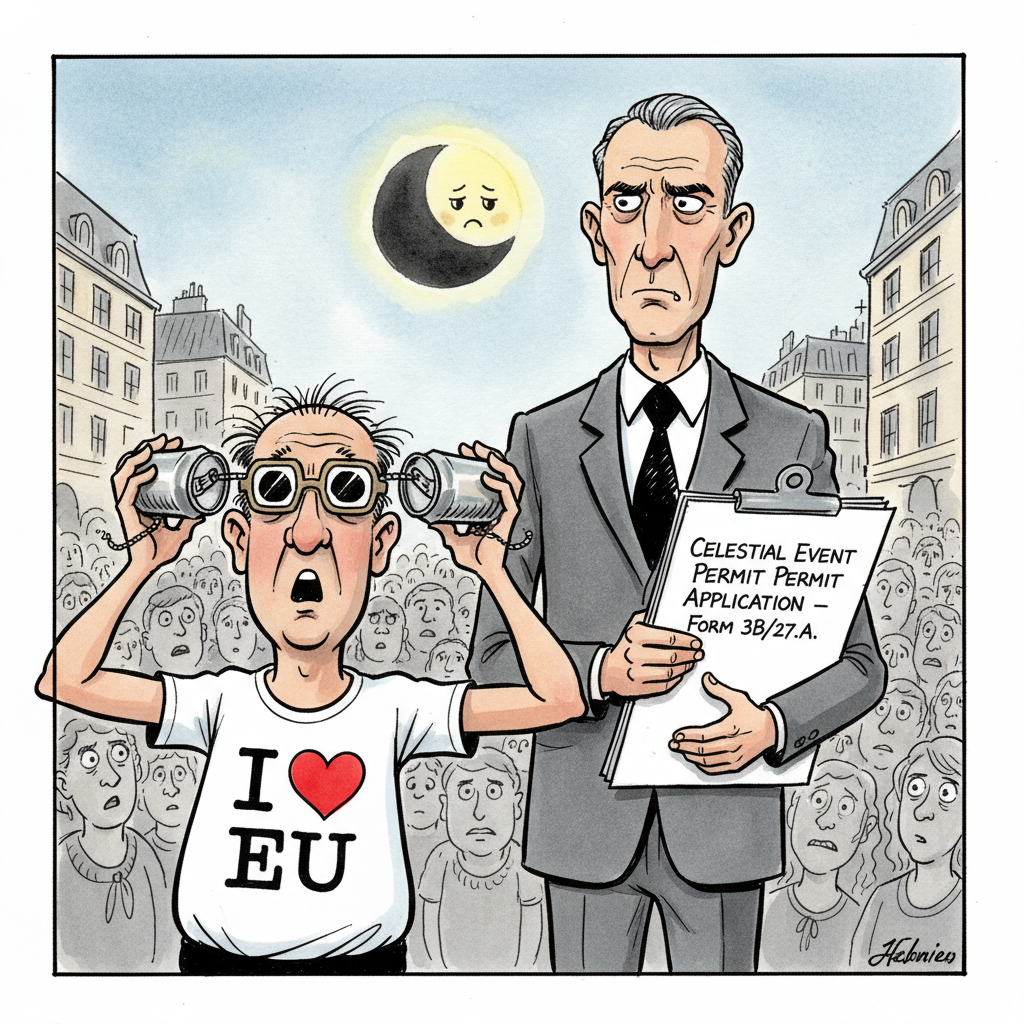
European citizens, long accustomed to bureaucratic delays and infrastructural shortcomings, were reportedly thrown into existential confusion this week when the sun, for reasons still debated by meteorologists and local councils, briefly *stopped working*. From the sun-drenched beaches of Spain to the perpetually-grey skies of Iceland, hordes of bewildered onlookers craned their necks skyward, many clutching repurposed welding masks or artisanal, single-use eclipse glasses purchased from pop-up artisanal stands at €25 a pop. The celestial spectacle, which saw the moon momentarily fulfill its contractual obligation to block out its much larger, brighter counterpart, caused a veritable panic among those who had grown complacent in their understanding of basic astrophysics and uninterrupted daylight. Reports indicate that for approximately 4 minutes and 30 seconds, societal norms were inverted: productivity plummeted, children stopped arguing, and even the perpetually-stressed financial markets briefly flatlined in what analysts are calling 'the most significant market correction involving a giant space rock since the dinosaurs.' Authorities later issued a statement assuring the public that the sun would, in fact, resume its duties, adding a stern reminder that 'disrupting the fundamental order of the solar system without prior notification is strictly prohibited under Article 7 of the EU Space Operations Treaty.' Many Europeans, however, remain skeptical, fearing this was merely a dress rehearsal for the next EU-mandated celestial event, probably involving a tax on moonlight.